
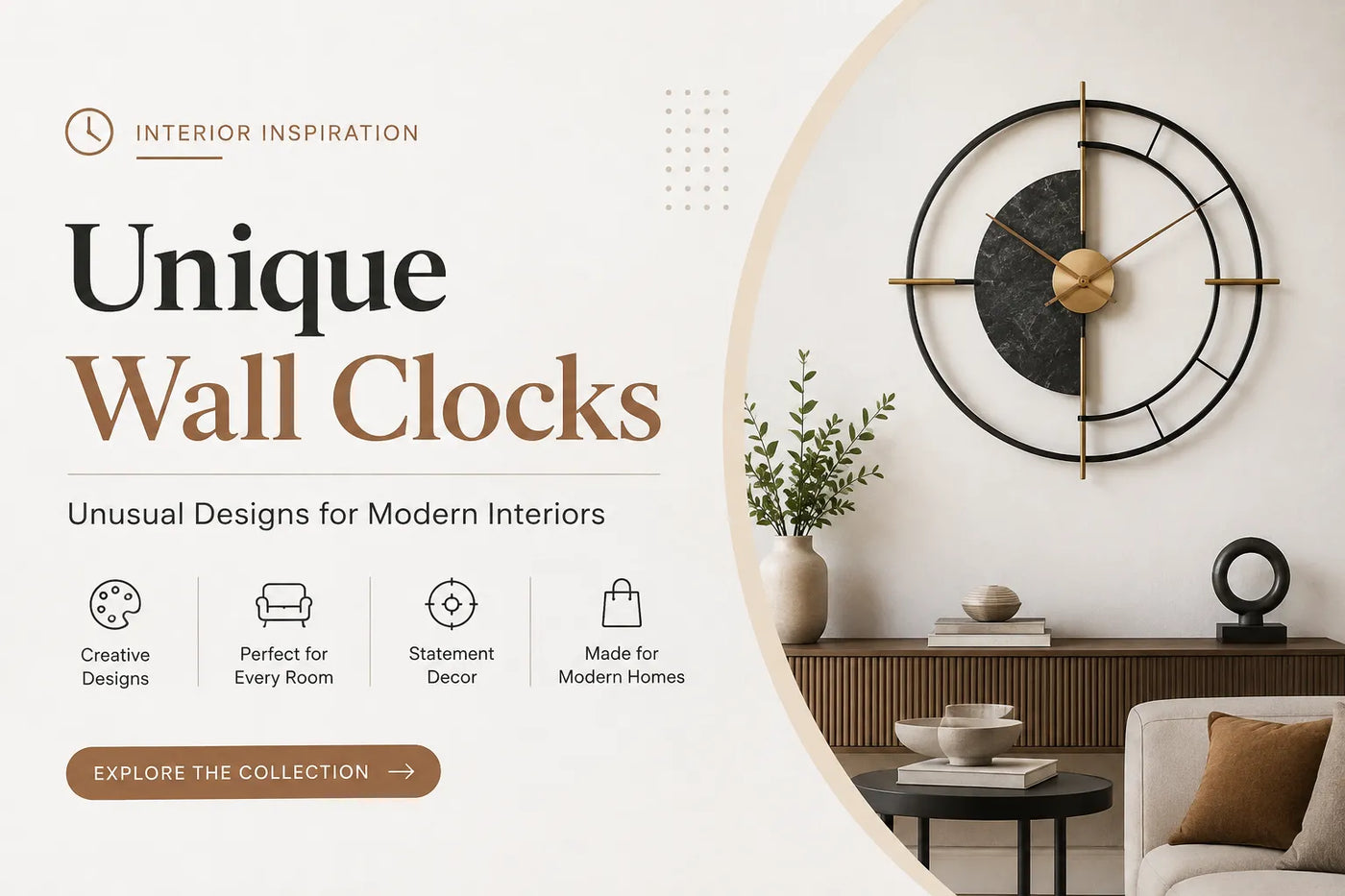
Unique Wall Clocks: Unusual Designs for Modern Interiors
A wall clock does not have to be the piece of décor you notice only when you need to know the time. In a well-designed interior, unique wall clocks can become focal points, conversation starters and visual anchors that give an otherwise ordinary wall much more personality. Instead of choosing a familiar round dial simply because it is practical, homeowners can now explore artistic forms, mechanical-inspired details, unusual proportions, distinctive finishes and statement-making designs.
This is particularly useful in modern homes, where clean furniture and uncluttered walls can sometimes leave a room feeling unfinished. A carefully chosen clock can fill that visual gap without requiring another large painting, shelf or collection of accessories.
For homeowners in Pakistan, online shopping also makes it easier to compare unusual clock designs from home. You can examine product photography, dimensions, finishes and specifications before deciding whether a design suits your living room, bedroom, office, dining area or entryway.
So what makes a clock genuinely distinctive? Which creative wall clocks work with modern interiors? How large should a statement clock be? And how can you choose a design that feels artistic without looking random?
This guide explores the answers, from design categories and styling principles to room-by-room ideas and practical advice for buying unique wall clocks online in Pakistan.
What Makes a Wall Clock “Unique”?
A unique wall clock is not necessarily the largest, most colourful or most elaborate clock in the room. Uniqueness is often created through a combination of design decisions that make a timepiece visually different from an ordinary clock.
A clock can stand out because of its:
-
Shape or silhouette
-
Unusual proportions
-
Materials and finishes
-
Decorative gears or dimensional details
-
Double-face or multi-view construction
-
Unconventional number placement
-
Textures
-
Contrast between colours
-
Sculptural elements
-
Mechanical-inspired appearance
-
Artistic interpretation of the clock face
-
Unexpected combination of function and decoration
The important distinction is between unique design and random design.
A random design may look unusual but have no relationship with the rest of the room. A successful statement clock, by contrast, feels intentional. Its scale relates to the furniture. Its colours connect with the interior palette. Its visual weight makes sense for the wall. Most importantly, it still works as a clock.
That balance is what makes unusual wall clocks useful as interior décor rather than simply novelty objects.
A distinctive clock can therefore be relatively restrained. A minimalist clock with an unexpected shape can be just as interesting as a highly decorative mechanical design. The goal is not maximum decoration. The goal is character.
Why Unique Wall Clocks Work So Well in Modern Interiors
Modern interiors often rely on simplicity. Clean-lined furniture, neutral walls, open layouts and limited accessories create a calm visual environment. But simplicity also creates large areas of negative space.
That is where a distinctive clock can make a difference.
A statement clock can:
-
Create a focal point on an empty wall
-
Add personality without filling the room with accessories
-
Introduce contrast to a neutral interior
-
Add texture and dimensional detail
-
Connect different colours already present in the room
-
Provide practical timekeeping
-
Replace a separate decorative object
-
Give a feature wall more visual structure
The principle is similar to choosing a piece of artwork. The clock becomes part of the room's visual hierarchy.
For example, a plain wall above a console may feel incomplete. Adding a sculptural or decorative clock can give the arrangement a clear centre. Likewise, a large sofa can visually anchor one part of a living room while an appropriately scaled statement clock creates balance on the wall above it.
This is one reason creative wall clocks can be especially effective in contemporary homes. They combine two roles: functional object and decorative feature.
One unusual clock can sometimes create more impact than several small decorative pieces because the eye immediately understands it as a single visual element.
For more inspiration on current styles, readers can also explore modern wall clock trends before choosing a design.
10 Types of Unique Wall Clock Designs to Consider
Different types of unique clock designs create very different moods. Instead of asking which clock is universally best, consider which design language fits your room.
1. Artistic Wall Clocks
Artistic wall clocks treat the clock face as part of a larger visual composition. They may use unusual shapes, layered details, decorative finishes or sculptural elements.
They work particularly well in contemporary living rooms, creative workspaces and feature walls where the clock is expected to contribute strongly to the décor.
Styling tip: Keep the surrounding wall relatively calm so the artistic details remain visible.
2. Oversized Statement Clocks
Large statement clocks are designed to command attention. Their scale makes them suitable for broad walls, open-plan interiors and rooms with substantial furniture.
They can work above sofas, sideboards or large consoles where a smaller clock would appear visually lost.
Styling tip: Measure the wall and furniture before buying. A large clock should feel proportional rather than simply large.
For more detailed advice on scale, see the guide to large wall clocks.
3. Industrial Gear Clocks
Gear-inspired designs bring mechanical character to a room. Exposed-looking gears, metallic accents, Roman numerals and layered circular details can create an industrial or steampunk-inspired aesthetic.
They suit modern industrial interiors, offices, studies and living rooms with metal, leather or darker wood accents.
Styling tip: Repeat one subtle metallic finish elsewhere in the room rather than surrounding the clock with several competing metallic objects.
4. Vintage-Inspired Clocks
Vintage-inspired clocks use elements such as Roman numerals, aged-looking finishes, classic proportions or traditional detailing.
They can soften a very contemporary room or complement interiors containing wood, leather and warm neutral tones.
Styling tip: Pair a vintage-inspired clock with modern furniture for contrast rather than trying to make every element look traditionally styled.
5. Double-Face Clocks
Double-face clocks introduce another level of visual interest because they are designed to be appreciated from more than one direction.
A station-style clock can work particularly well in wider entrances, transitional spaces or areas connecting two rooms.
Styling tip: Consider the clock from every viewing angle before installation. A design intended to be seen from multiple directions needs enough surrounding space.
6. Sculptural Clocks
Sculptural clocks blur the line between timepiece and three-dimensional décor. Their shape, depth or construction can become more important visually than a conventional dial.
These are suitable when you want the clock to function almost like a piece of wall art.
Styling tip: Give sculptural designs negative space. Crowding them with shelves, frames and accessories can reduce their impact.
7. Minimalist Unconventional Clocks
Minimalism does not have to mean ordinary. An unconventional clock can use a restrained palette while introducing an unusual silhouette, number arrangement or display concept.
These designs are ideal for minimalist bedrooms, offices and modern apartments.
Styling tip: Let the clock's unusual feature do the work. Avoid adding unnecessary decoration around it.
8. Map-Inspired Clocks
Map-inspired designs combine timekeeping with a sense of place and exploration. They can introduce visual storytelling while remaining functional.
They are particularly suitable for studies, home offices, travel-inspired interiors and living rooms where decorative objects already have a sense of narrative.
Styling tip: Pair the clock with a restrained selection of travel, wood or metallic accents rather than creating an overly themed wall.
9. Decorative Dimensional Clocks
These clocks use layers, depth, textured surfaces, decorative centres or dimensional elements to create visual interest.
They are useful when a flat clock face feels too plain for the room.
Styling tip: Side lighting can help dimensional details become more visible, but avoid positioning reflective surfaces where strong glare makes the dial difficult to read.
10. Luxury or Premium Statement Clocks
Luxury-inspired clocks generally rely on stronger finishes, refined detailing, metallic accents or elaborate construction to create a more formal presence.
They can suit elegant living rooms, dining areas, offices and interiors where furniture and lighting already have a polished character.
Styling tip: Premium-looking styling usually comes from restraint. Give the clock room to breathe instead of filling the surrounding wall with equally elaborate objects.
Readers looking for more guidance can also use this premium wall clock buying guide when evaluating more elaborate designs.
Unique Wall Clocks vs Traditional Wall Clocks
Traditional wall clocks generally prioritise familiarity. A conventional round face, standard numerals and simple frame make the object easy to understand and integrate.
Unique wall clocks add another layer: visual expression.
| Feature | Unique Wall Clock | Traditional Wall Clock |
|---|---|---|
| Appearance | Distinctive or unconventional | Familiar and restrained |
| Function | Timekeeping + décor | Primarily timekeeping |
| Visual impact | Often high | Usually moderate |
| Focal-point potential | High | Varies by design |
| Personality | Stronger design statement | More neutral |
| Styling flexibility | Depends on design | Usually easy to coordinate |
| Decorative value | Often significant | Usually secondary |
Neither approach is automatically better.
A traditional clock may be the right choice for a calm bedroom or highly decorated wall. A unique design may be better when the clock needs to become part of the room's identity.
The right question is not, “Which clock looks more impressive?” It is, “What role should the clock play in this room?”
How to Choose a Unique Wall Clock for Your Interior
Choosing an unusual design becomes easier when you evaluate the room before evaluating the clock.
1. Start With the Room Style
Look at the furniture, flooring, lighting and existing décor. A mechanical-inspired clock may complement an industrial room, while a sculptural minimalist clock may work better in a clean contemporary space.
2. Measure the Available Wall Space
Do not estimate size from product photographs. Measure the usable wall area and note nearby doors, windows, shelves, artwork and lighting.
3. Consider Clock Size
A clock that is too small can disappear above a large sofa. A clock that is too large can dominate a compact wall.
4. Look at Furniture Proportions
The clock should relate visually to whatever sits beneath it. A very small clock above a wide console may feel disconnected.
5. Examine the Colour Palette
The clock does not need to match the room exactly. It should, however, have a logical relationship with the colours already present.
6. Consider Materials
Metallic details can connect with lighting or furniture hardware. Wood-inspired elements may complement timber furniture. Textured finishes can add depth to plain walls.
7. Use Contrast Carefully
A dark clock can stand out against a light wall, while a light clock can create a quieter effect on a darker surface.
8. Check Readability
A beautiful clock is still a clock. Make sure the hands and numerals are visible from the distance at which you expect to use it.
9. Consider Viewing Distance
A clock across a large living room needs stronger visual clarity than one positioned beside a desk.
10. Evaluate Visual Weight
A heavily detailed clock needs more breathing room than a simple minimalist design.
For a broader decision framework, readers can refer to this wall clock buying guide.
How to Choose Unique Wall Clocks for a Living Room
The living room is often the strongest setting for unique wall clocks for living room because it typically provides enough wall area for a clock to become a decorative feature.
Above the Sofa
A statement clock above a sofa can create a clear visual anchor. Choose a size that relates to the sofa's width without making the wall feel crowded.
On a Feature Wall
A decorative or industrial clock can become the primary feature on a painted or textured wall.
Above a Console
A medium-sized artistic clock can work particularly well above a console. Add only a few supporting objects so the clock remains the visual centre.
Near the TV
Be careful here. If the television is already the strongest visual element, an elaborate clock immediately beside it may create competition. Consider a simpler unusual design or a separate wall.
On a Large Empty Wall
A broad empty wall can accommodate a larger statement clock or a carefully planned clock-and-art arrangement.
Your choice should also relate to the sofa, rug, curtains, lighting, shelving and accent colours. For more living-room inspiration, explore modern wall clock living room ideas and stylish wall clock ideas for living rooms.
9 Creative Ways to Style a Unique Wall Clock
1. Make the Clock the Hero of a Feature Wall
Use one distinctive clock as the primary decorative element and keep nearby objects minimal.
2. Pair It With Minimalist Furniture
A highly unusual clock can look more sophisticated when paired with clean-lined furniture rather than competing décor.
3. Use a Contrasting Wall Colour
Contrast helps a clock silhouette stand out. Test the relationship between the wall and clock before committing to the placement.
4. Create a Clock-Centred Gallery Wall
Treat the clock as the anchor and arrange artwork or photographs around it.
5. Pair It With Metallic Décor
If the clock has gold, silver or other metallic details, repeat the finish subtly through lighting, mirrors or hardware.
6. Use Negative Space
Do not assume every empty area needs to be filled. Space around a statement clock can make it appear more important.
7. Coordinate With Furniture Textures
A textured clock can connect with wood, woven fabrics, leather or other tactile elements already present.
8. Place It Above a Console
A console gives the clock a natural horizontal relationship with furniture below it. Keep accessories on the console lower and quieter than the clock.
9. Combine It With Plants and Natural Décor
Greenery can soften mechanical or metallic clock designs. Use plants as supporting elements rather than allowing them to cover the clock's silhouette.
How to Use a Unique Clock as a Focal Point
A focal point is not simply the largest object in a room. It is the element that receives visual attention first or helps organise the surrounding composition.
A statement clock can become that focal point through five principles.
Scale: A clock needs enough presence to be noticed from the main viewing position.
Contrast: Differences in colour, texture or finish can separate the clock from its background.
Negative space: Empty wall area around the clock helps define its importance.
Balance: The clock should relate to furniture and other major visual elements.
Repetition: Repeating a colour or finish elsewhere can make the clock feel connected rather than isolated.
Symmetry can create a formal effect, while asymmetry can feel more relaxed and contemporary. Neither is inherently better.
The most common mistake is adding too much around the statement clock. If the design already has gears, layered surfaces, unusual numbers or strong colour contrast, it may need less supporting decoration.
Unique Clock Designs for Different Interior Styles
Modern Interiors
Choose clean silhouettes, restrained colours and distinctive details. Black, white, silver and metallic finishes can work particularly well.
Avoid: Designs that introduce too many unrelated decorative themes.
Minimalist Interiors
Look for unconventional forms with limited ornamentation.
Avoid: Overcrowding the wall simply because the clock itself is understated.
Contemporary Interiors
Contemporary rooms offer flexibility. Artistic, sculptural and decorative clocks can all work when their proportions are appropriate.
Avoid: Choosing a clock that competes with already-bold artwork or lighting.
Industrial Interiors
Gear-inspired designs, metallic finishes and mechanical details can complement exposed textures, darker furniture and structured forms.
Avoid: Mixing too many industrial motifs in the same small area.
Vintage-Inspired Interiors
Roman numerals, aged finishes and traditional forms can reinforce the style.
Avoid: Forcing a highly futuristic clock into an otherwise historic-looking arrangement.
Luxury Interiors
Choose designs with refined detailing and finishes that connect with lighting, hardware or furniture accents.
Avoid: Excessive ornamentation around an already elaborate clock.
Eclectic Interiors
Eclectic rooms can accommodate more unconventional clocks because the style already welcomes contrast.
Avoid: Random combinations without a unifying colour, material or proportion.
Modern Pakistani Homes
Contemporary Pakistani homes can benefit from statement décor that adds character without requiring major changes to furniture or architecture. A distinctive clock can work especially well in living rooms, guest-facing spaces, dining areas, home offices and entryways.
The key is to judge the clock according to the room's actual proportions and existing décor rather than following a fixed design formula.
For more regional guidance, see the resource on premium wall clocks in Pakistan.
Unique Wall Clocks for Different Rooms
Living Room
Choose a design with enough visual weight to relate to the main furniture. Artistic, industrial, oversized and decorative clocks can all work.
Bedroom
Prioritise readability and a calmer visual presence. Confirm the movement and sound characteristics before selecting a clock for a sleeping area.
Dining Room
Choose a clock that complements the dining table, lighting and wall décor. Metallic and artistic finishes can work well here.
Home Office
Readability matters. A distinctive clock can add personality without distracting from the workspace.
Entryway
This is an excellent location for a memorable clock because visitors encounter it naturally. Double-face or sculptural designs can work especially well where there are multiple viewing angles.
Hallway
Consider wall width, depth and viewing angle. Avoid designs that project too far into a narrow passage.
For broader decorative styling inspiration, see these guides to designer wall clocks and decorative wall clock styles.
How Size Changes the Impact of a Unique Wall Clock
The same clock can produce completely different results depending on where it is installed.
A small statement clock can work on a compact wall, beside shelving or above a small console. Its unusual design becomes the main source of interest rather than its scale.
A medium decorative clock is often versatile enough for bedrooms, studies, dining spaces and average living-room walls.
A large statement clock needs stronger architectural context. It works best when the wall and furniture beneath it can support its visual weight.
An oversized clock becomes a major architectural feature. It should be selected only after considering ceiling height, wall width, furniture scale and viewing distance.
The key principle is proportion.
A clock should not be selected in isolation. Compare its dimensions with the wall, sofa, console or sideboard it will visually interact with.
Materials and Details That Make Wall Clocks Look Unique
Material and finish can completely change how a clock is perceived.
Resin can create layered, textured or artistic effects.
Metal can introduce industrial, contemporary or premium visual character.
Glass can create a lighter appearance and may work well in modern spaces.
Transparent elements can reduce visual heaviness.
Decorative gears add mechanical depth and visual movement, although you should check the individual product description to determine whether gears are functional or decorative.
Metallic finishes can connect a clock with lighting, mirror frames or furniture hardware.
Wood-inspired details can introduce warmth into otherwise cool or minimalist rooms.
Layered construction can give a clock greater depth and help it function as three-dimensional wall décor.
Always check the product page for exact material information. Product photographs can communicate the overall aesthetic, but they should not be treated as a substitute for specifications.
How to Choose the Right Color for a Unique Wall Clock
Colour can either integrate a clock into the room or deliberately make it stand out.
For a neutral interior, black can create strong definition, while gold or warm metallic details can add warmth. Silver can complement cooler grey, white or charcoal schemes.
For a dark wall, a lighter dial or metallic finish can improve contrast.
For a light wall, darker clocks tend to create a stronger silhouette.
For wood-heavy interiors, warm metallics, earthy tones or complementary neutrals can feel natural.
If your room already contains a strong accent colour, repeating that colour subtly in the clock can create cohesion.
Matching is not the goal. Coordination is.
A useful rule is to identify one or two existing colours or finishes that the clock can relate to. This makes an unconventional design feel deliberately selected.
Unique Wall Clocks as Conversation Pieces
Some home décor is noticed but rarely discussed. Distinctive clocks can be different because they combine function with visual storytelling.
An unusual design may prompt questions about where it came from, how it works or why it was chosen. That makes the object part of the social character of the room.
A conversation-piece wall clock can:
-
Reflect the homeowner's personality
-
Make an empty wall memorable
-
Add visual storytelling
-
Give guests something distinctive to notice
-
Make functional décor feel more curated
The goal should not be to create a room where every item demands attention. A better approach is to choose one or two pieces with personality and allow the rest of the interior to support them.
Common Mistakes When Buying Unique Wall Clocks
1. Choosing Uniqueness Over Usability
A clock may look interesting but still be difficult to read.
Solution: Check dial clarity and viewing distance before purchasing.
2. Ignoring Scale
A beautiful clock can look wrong simply because it is too small or too large.
Solution: Measure the wall and compare the dimensions with nearby furniture.
3. Overcrowding the Wall
A statement clock can lose its impact when surrounded by too many frames and accessories.
Solution: Start with the clock and add supporting décor only if the composition needs it.
4. Mixing Too Many Styles
An industrial clock, ornate mirror, rustic shelving and highly decorative artwork may create visual confusion when placed together.
Solution: Find one common thread such as colour, material or design period.
5. Ignoring Readability
Decorative detail should never make the clock impossible to use.
Solution: Check numerals, hands and dial contrast.
6. Choosing the Wrong Colour
A clock that clashes with the room can look disconnected.
Solution: Compare the finish with existing furniture, lighting and accent colours.
7. Ignoring Viewing Distance
A detailed clock may be attractive up close but difficult to read across a room.
Solution: Consider where people will normally view it from.
8. Buying Without Checking Dimensions
Lifestyle photography can distort perceived size.
Solution: Always check the listed dimensions.
9. Ignoring Existing Furniture
The clock should relate to the objects around it.
Solution: Consider the sofa, console, shelves and lighting as part of one composition.
10. Assuming Every Statement Clock Works Everywhere
A bold industrial clock may suit an office but overwhelm a calm bedroom.
Solution: Match the design's visual intensity with the room's purpose.
How to Create a Gallery Wall With a Unique Clock
A clock can serve as the anchor of a gallery wall because it combines a recognisable circular form with a practical purpose.
There are several approaches.
A symmetrical gallery wall can place the clock centrally, with artwork or photographs balanced around it.
An asymmetrical gallery wall can use the clock as the visual centre while allowing frames of different sizes to create a more relaxed composition.
You can combine the clock with:
-
Framed artwork
-
Family photographs
-
Abstract prints
-
Mirrors
-
Small decorative objects
-
Botanical artwork
Spacing matters. The clock should remain clearly identifiable rather than becoming one more object lost among frames.
For detailed layouts and spacing ideas, explore these gallery wall ideas with clocks rather than duplicating the entire gallery-wall planning process here.
How to Make a Unique Wall Clock Look Premium
A premium-looking result does not depend only on the clock itself. Styling can have just as much influence.
Start with correct placement. A well-positioned clock immediately looks more intentional than one placed wherever there happens to be empty wall space.
Then consider scale. A clock that relates correctly to the furniture below it usually looks more sophisticated.
Use clean surrounding space. Negative space gives decorative details room to breathe.
Coordinate the colour palette. A gold clock can look more integrated when small gold details appear elsewhere, while a black clock can connect with dark furniture or lighting.
Pay attention to lighting. Metallic and dimensional surfaces can become more visible when appropriately lit.
Finally, avoid clutter. A premium interior usually relies on proportion, consistency and restraint rather than filling every available surface.
Unique Wall Clocks Online in Pakistan: What to Check Before Buying
Shopping for unique wall clocks online in Pakistan gives you access to a much wider range of designs than simply choosing from the most familiar styles in a physical store.
Before placing an order, check:
-
Exact product dimensions
-
Product photographs
-
Available colours or finishes
-
Material information
-
Dial and numeral design
-
Movement information
-
Battery requirements
-
Installation requirements
-
Current price
-
Current availability
-
Delivery information
-
Packaging information where provided
-
Return or exchange information where applicable
Do not assume that two clocks with similar photographs have the same construction or mechanism.
The live product page should always be your final reference for current specifications, pricing and availability.
If you are comparing several options, it can help to create a simple shortlist based on design, size, room, colour, readability and budget rather than choosing solely from the photograph.
For additional shopping guidance, see wall clocks online in Pakistan.
How Much Do Unique Wall Clocks Cost in Pakistan?
The wall clock price in Pakistan can vary significantly because clocks differ in size, construction, movement, finish and decorative complexity.
Factors that can affect price include:
-
Overall dimensions
-
Material and construction
-
Complexity of the design
-
Decorative gears or dimensional details
-
Mechanism
-
Finish
-
Craftsmanship
-
Brand or seller
-
Installation or packaging requirements
Instead of looking only for the lowest price, consider value in relation to the role the clock will play.
A compact clock for a home office does not necessarily need the same budget as a major statement piece intended to anchor a large living-room wall.
Likewise, a visually complex design may justify a different price from a simple minimalist clock because you are buying both timekeeping functionality and decorative impact.
For current pricing information and a broader discussion of value, consult the wall clock price in Pakistan guide and then check the live product pages before ordering.
Featured Unique Wall Clock Designs From WeDecorators
If you are ready to move from inspiration to product comparison, WeDecorators offers several distinctive designs that illustrate different approaches to statement wall décor.
Double Face Station Clock
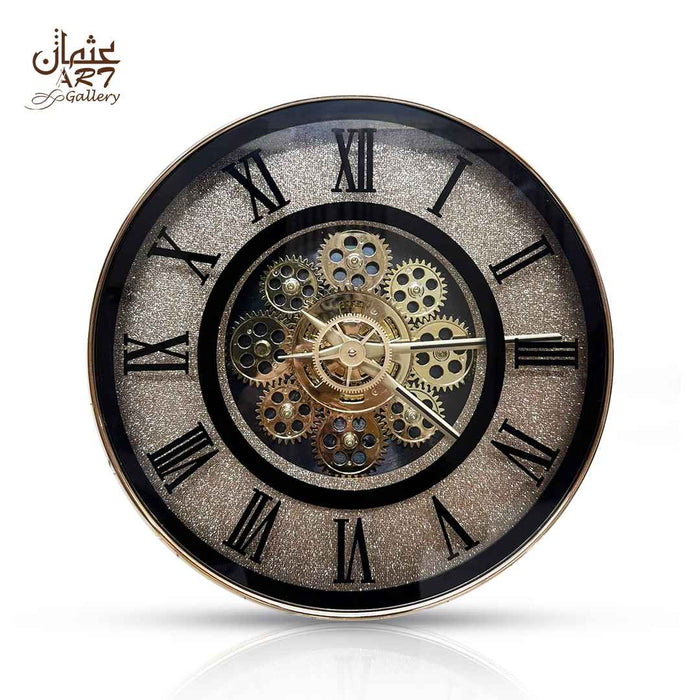
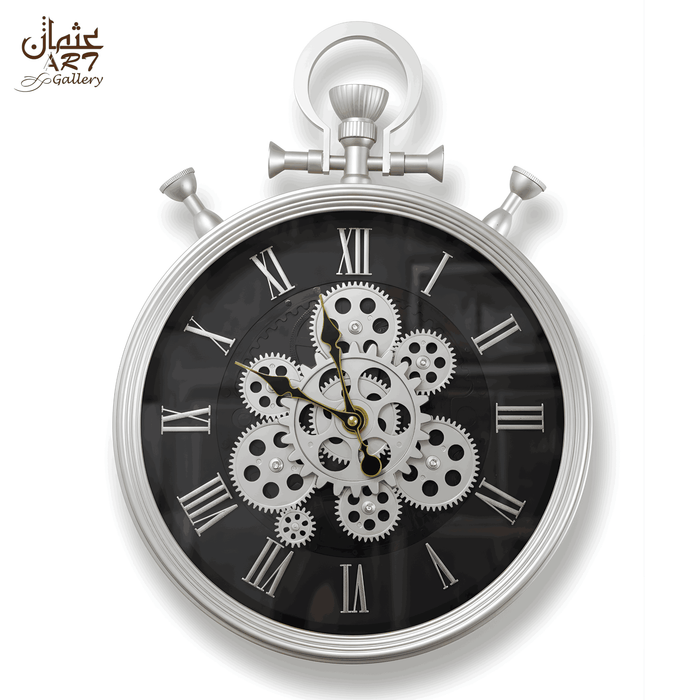
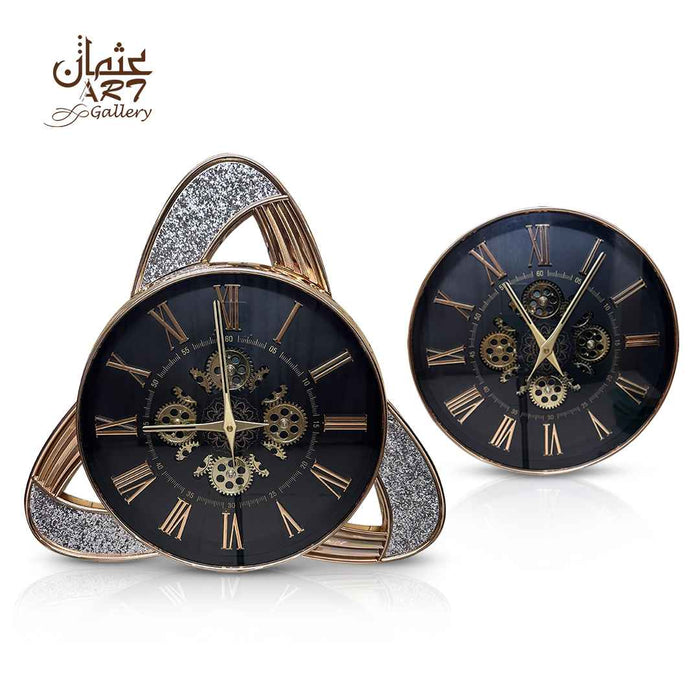
The Double Face Station Clock is a strong option for shoppers attracted to station-inspired and mechanical aesthetics. Its double-face concept gives it more visual interest than a conventional single-sided clock, making it particularly suitable for spaces where the design can be appreciated from different directions.
The product page describes a 10-inch design with a black-granite and gold finish, a front face using Roman numerals and a rear gear display. That combination makes it an interesting choice for an entryway, lounge, office or another area where the clock is intended to contribute strongly to the room's visual character.
Best suited to: shoppers who want a distinctive, station-inspired focal piece with vintage and mechanical influences.
Before purchasing, review the live page for current dimensions, finish options and other specifications.
Belt Clock
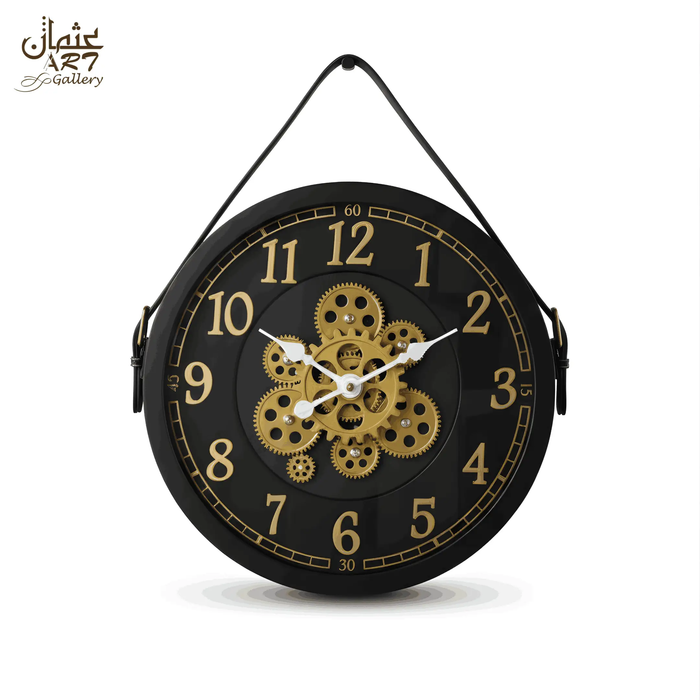
The Belt Clock takes a different approach to unusual design. Its hanging-strap silhouette, white Roman numeral dial and visible gear-style centre create a strong graphic composition.
The black-and-white palette can work particularly well with neutral furniture, contemporary interiors and spaces containing metal accents. Its listed 16-inch inner dial size also gives it a noticeable presence without relying on an oversized wall-clock format.
Best suited to: shoppers who want a bold but relatively easy-to-coordinate statement design for a living room, hallway, office, dining area or feature wall.
The live product page should be checked for the latest availability, specifications and pricing.
Lantern Gear Wall Clock
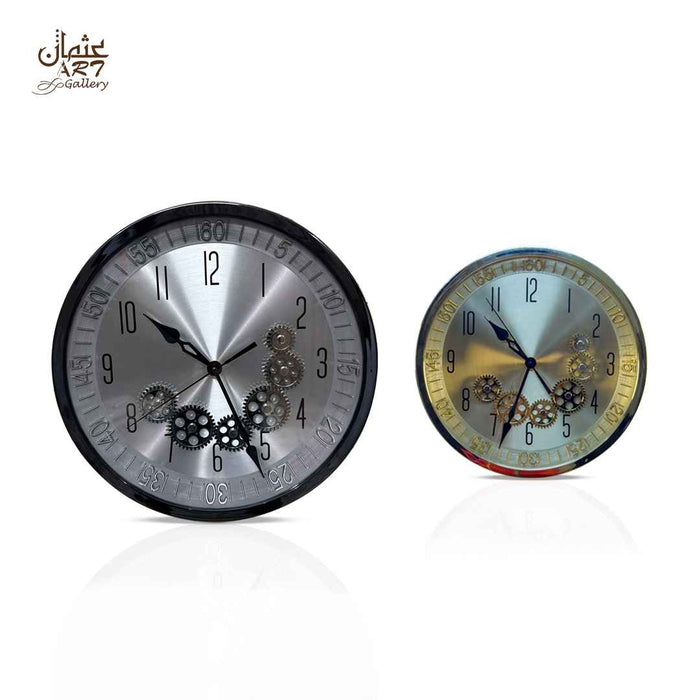
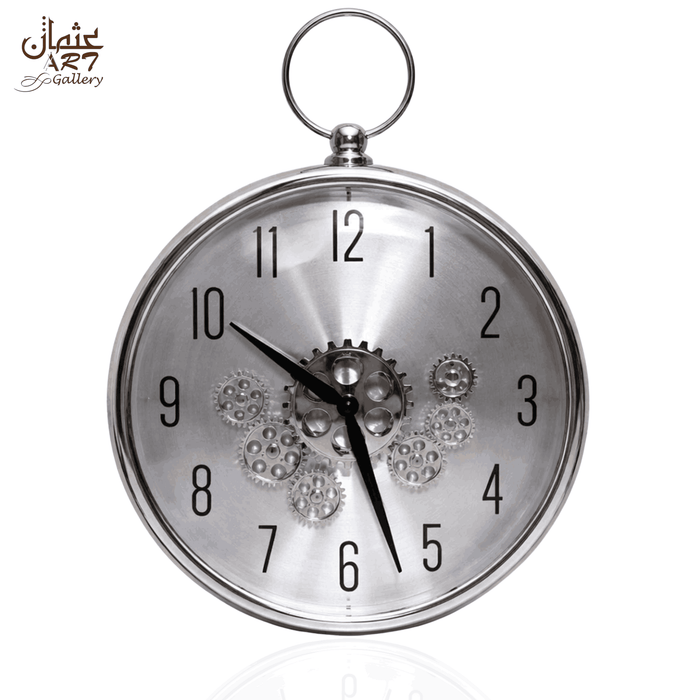
The Lantern Gear Wall Clock is aimed more directly at mechanical and industrial-inspired décor. The product page lists a 14-inch diameter and describes rotating gear details with metallic styling.
That makes it a natural candidate for modern industrial interiors, feature walls, offices and living rooms where mechanical details can become part of the décor.
Its design can also work as a bridge between contemporary and vintage-inspired interiors because metallic details can be paired with either clean modern furniture or warmer traditional materials.
Best suited to: shoppers looking for a gear-inspired statement clock with strong dimensional and mechanical character.
Because mechanisms, battery requirements and available finishes can change, confirm the current product information before ordering.
Map Gear
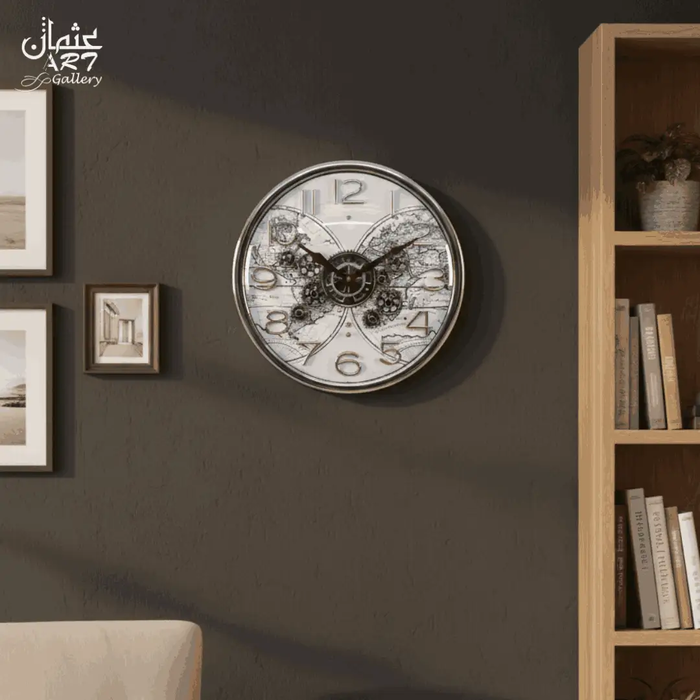
The Map Gear provides another direction for shoppers interested in distinctive gear-inspired décor. Its name and design concept combine the visual language of a map with mechanical-style clock detailing, giving it a more decorative identity than a plain analogue clock.
The listed size is around the medium statement-clock range, making it worth considering for living rooms, studies, offices or feature walls where you want noticeable detail without committing to an oversized clock.
Best suited to: shoppers who prefer decorative, mechanically inspired designs with a more expressive visual character.
Always review the live product page for the current colour selection, dimensions, product details and availability.
If you want to compare these styles with other designs, explore the wall clock collection and shortlist options according to your wall size and interior style.
Why Unusual Clocks Can Be Better Than Generic Wall Décor
A distinctive clock is not automatically better than a painting, mirror or other decorative object. Its advantage is that it can combine several functions in one piece.
A unique clock can provide:
-
Timekeeping
-
Decorative value
-
A focal point
-
Personality
-
Visual interest
-
Space-efficient décor
-
A conversation element
That combination is particularly useful when a room needs more character but does not have space for multiple decorative pieces.
A clock can also be easier to integrate into everyday life because it has an obvious practical purpose. The design does not need to be purely ornamental to contribute to the room.
The best choice depends on the space. If your wall already contains strong artwork, a restrained clock may be more appropriate. If the wall is empty and the room needs a focal point, a statement clock can be a particularly effective solution.
Unique Wall Clocks vs Wall Art
| Feature | Unique Wall Clock | Wall Art |
|---|---|---|
| Function | Timekeeping + décor | Primarily décor |
| Focal point | Yes | Yes |
| Practical use | Yes | Usually no |
| Styling flexibility | High | High |
| Statement potential | High | High |
A statement clock can therefore occupy a similar visual role to artwork while adding practical functionality.
The distinction matters when planning a wall. If you need both decoration and a useful timepiece, a distinctive clock can sometimes fulfil both requirements without requiring two separate objects.
How to Shop for Unique Wall Clocks in Pakistan
A simple purchasing process can prevent most common mistakes.
Step 1: Identify the Wall
Decide exactly where the clock will go. Consider nearby furniture, doors, windows, artwork and lighting.
Step 2: Measure the Available Space
Record the usable width and height. Do not rely on visual estimates.
Step 3: Choose Your Interior Style
Decide whether your room is modern, minimalist, industrial, contemporary, vintage-inspired, luxury or eclectic.
Step 4: Decide How Bold You Want the Clock to Be
A statement clock should have a purpose. Decide whether it will be the main focal point or a supporting decorative element.
Step 5: Check Product Dimensions
Compare the exact dimensions with your measurements and nearby furniture.
Step 6: Compare Materials and Design Details
Review the product description for confirmed materials, finishes, movement and other specifications.
Step 7: Check Current Pricing and Availability
Prices and stock can change. Use the live product page as the current reference.
Step 8: Review Delivery and Store Policies
Check the latest delivery, return, exchange, warranty and payment information applicable to your order.
Step 9: Choose the Right Placement
Make sure the clock will be visible from the room's main viewing positions.
Step 10: Style the Surrounding Space
Once installed, step back and evaluate the whole wall. Add or remove supporting décor according to the clock's visual weight.
For shoppers comparing options, the best wall clocks in Pakistan guide can provide another starting point before narrowing the choice to distinctive designs.
Final Checklist for Choosing a Unique Wall Clock
Before purchasing, ask yourself:
-
Is the design genuinely compatible with my interior?
-
Is the size appropriate for the wall?
-
Can I read the dial from the normal viewing distance?
-
Does the clock complement my furniture?
-
Does the colour work with the existing palette?
-
Does the material or finish suit the room?
-
Is there enough negative space around it?
-
Have I checked the exact dimensions?
-
Have I reviewed the current product information?
-
Have I checked the current price and availability?
-
Do I understand the movement and battery requirements?
-
Have I reviewed delivery and store policies?
-
Does the clock provide the visual impact I actually want?
The best unique wall clocks are not simply unusual for the sake of being unusual. They are designs that solve a real interior-design need while adding personality to the room.
Whether you prefer artistic forms, industrial gears, vintage-inspired details, double-face construction, map-inspired designs or understated unconventional shapes, the right clock can transform an empty wall into a deliberate part of the interior.
If you are ready to compare distinctive designs, explore modern and artistic wall clocks at WeDecorators. Start with the wall you want to decorate, measure the space, identify your preferred design language and choose a statement clock that feels like it belongs in your home.


