
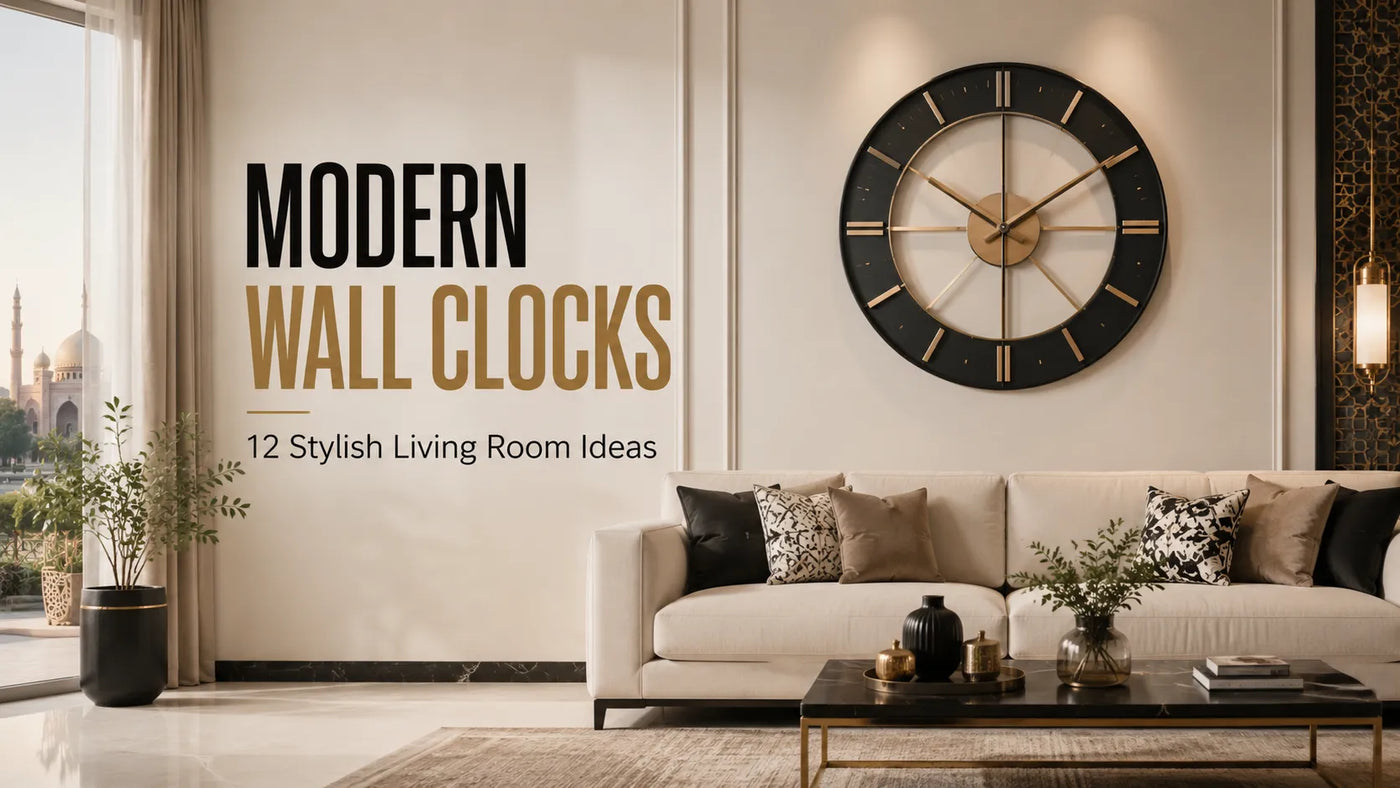
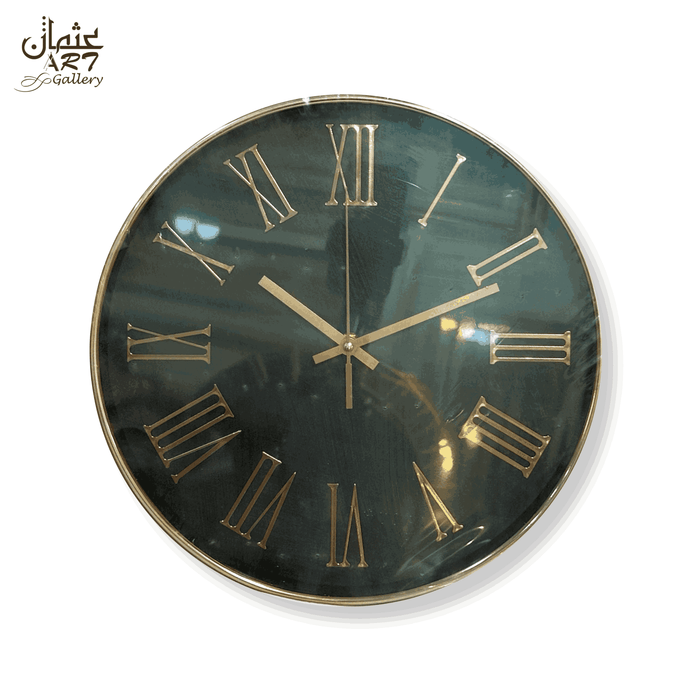
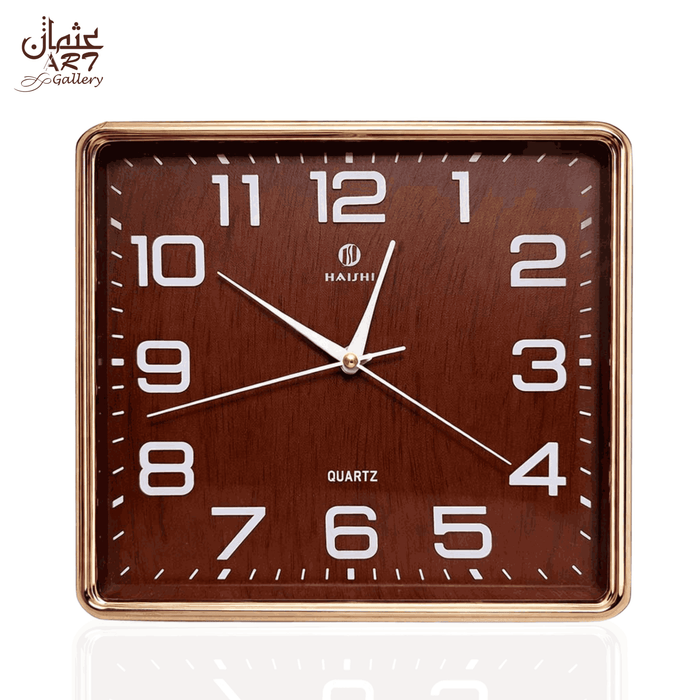
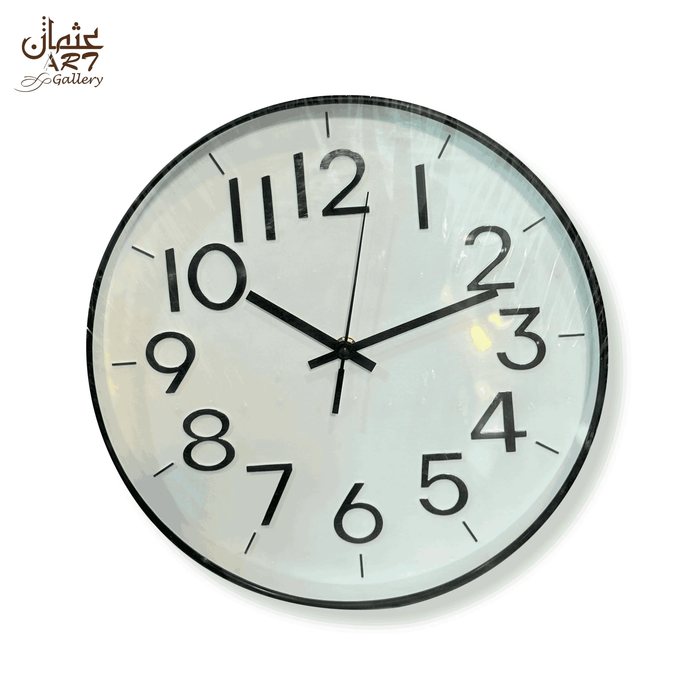
Modern wall clocks can do far more than fill an empty space. In a living room, the right clock can connect furniture, lighting and wall colour while giving the eye a clear focal point. The best result comes from choosing the clock as part of the room composition, not as an isolated accessory.
This guide covers twelve practical design ideas for modern living rooms, followed by proportion, colour, placement and buying guidance. It is written for Pakistani homes as well as broader contemporary interiors, with particular attention to apartments, larger family living rooms and the way clocks appear under both daylight and warm evening lighting.
Key Takeaways
- Choose clock scale according to the usable wall and nearby furniture, not room size alone.
- Large blank walls usually need more visual weight than narrow or already decorated walls.
- Black creates strong contrast, while gold adds warmth and silver supports cooler contemporary palettes.
- A decorative clock still needs readable hands and hour markers from the normal seating distance.
- Above a sofa or console, align the clock with the furniture composition rather than automatically centring it on the whole wall.
- Use one dominant statement piece and give detailed clocks enough negative space.
- Check exact product measurements before ordering because lifestyle photography can distort perceived scale.
Why Modern Wall Clocks Work So Well in Living Rooms
A living room has several jobs at once. It is a social space, a resting area and often the most visually considered room in the home. A wall clock suits this setting because it combines daily function with the ability to organise a blank vertical surface.
Modern clock designs can introduce a dark outline to a pale room, repeat a metallic finish from lighting, soften a geometric wall with a round shape or provide a decorative centre above a sofa. They can also reduce the need for extra wall art when one strong object is enough. If you want a separate view of changing finishes and forms, read the guide to current wall-clock trends.
How to Choose a Modern Wall Clock Before Styling It
Start with the wall, furniture and viewing conditions before choosing a design. The most attractive clock online can still look wrong if its scale, colour or visual weight conflicts with the room.
Consider Wall Size
Measure the clear area available for the clock. Exclude curtains, switches, wall lights, shelves, door frames and nearby artwork. A large wall does not automatically require the biggest clock, but a very small design can look detached when there is too much empty space around it.
Consider Nearby Furniture
If the clock will sit above a sofa, console or sideboard, treat that furniture as the visual base. The clock should feel connected to it while remaining clearly narrower than the furniture below in most arrangements. Test the outline with removable paper or tape before drilling.
Consider Viewing Distance
Look at the wall from the seat where you will most often check the time. A decorative face may look clear from one metre away yet become difficult to read across a large lounge. Strong contrast between hands, markers and background matters more as viewing distance increases.
Match the Interior Style
Minimalist rooms generally suit controlled shapes and limited detailing. Industrial spaces can carry darker frames, Roman numerals and gear-inspired forms. Glamorous interiors can support reflective silver or warm metallic accents, provided the wall is not already crowded.
Coordinate the Colour Palette
Decide whether the clock should blend or contrast. A black clock on an ivory wall creates definition, while a silver clock beside chrome or mirrored details creates continuity. Gold can warm beige, cream and wood-heavy rooms without requiring every metal in the space to match exactly.
Think About Readability
A living-room clock remains a timepiece. Check numeral size, hand contrast and reflections from windows or ceiling lights. Quartz describes a type of timekeeping movement, but it does not automatically confirm that a clock is silent.
Consider the Clock's Visual Weight
Two clocks with the same diameter can feel very different. A slim white face has less visual weight than a dark clock with thick numerals, layered frames or reflective decoration. Judge both physical size and how dominant the design appears.
For broader whole-home selection factors, use the guide to choosing a wall clock. Once you know your preferred scale, colour and style, you can also explore wall clocks for modern interiors and compare suitable designs.
Modern Wall Clocks for Living Rooms: 12 Stylish Design Ideas
1. Make a Large Statement Clock the Focal Point
A large statement clock works best on a wall that needs a clear visual centre. Wide sofa walls, double-height spaces, open-plan lounges and uncluttered feature walls can support stronger scale because the clock has room to breathe.
Keep competing objects restrained. If the clock is the hero, avoid placing a large mirror, television panel and several pieces of wall art at the same visual level. Use the sofa or console below to establish alignment, then leave negative space around the outer frame. For deeper advice on stronger decorative pieces, see the guide to choosing a statement wall clock.
2. Choose a Minimalist Clock for a Clean Interior
Minimalist wall clocks suit rooms where the furniture, rugs and architectural lines already provide enough interest. Look for clean faces, controlled hour markers and a limited palette such as white, black, grey or muted metallic tones.
In compact apartments, a visually light clock can add height without making the wall feel busy. Contrast still matters. A white face on a pale wall needs dark hands or a defined frame so the time remains visible.
3. Add Warmth with a Gold Wall Clock
Gold works naturally with beige, ivory, cream, tan and warm wood. It can also connect with brass-tone lighting, console handles, picture frames or small table accessories. The effect is strongest when gold is repeated selectively rather than used on every object.
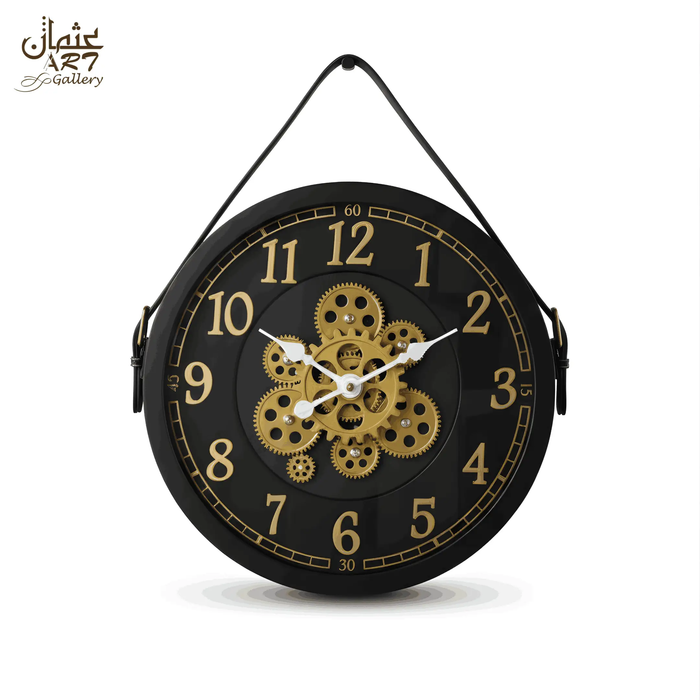
On a warm neutral wall, use enough contrast around the clock so the outline does not disappear. A black-and-gold design can create stronger definition, while a lighter gold design gives a softer result.
4. Use Silver for a Cool Contemporary Look
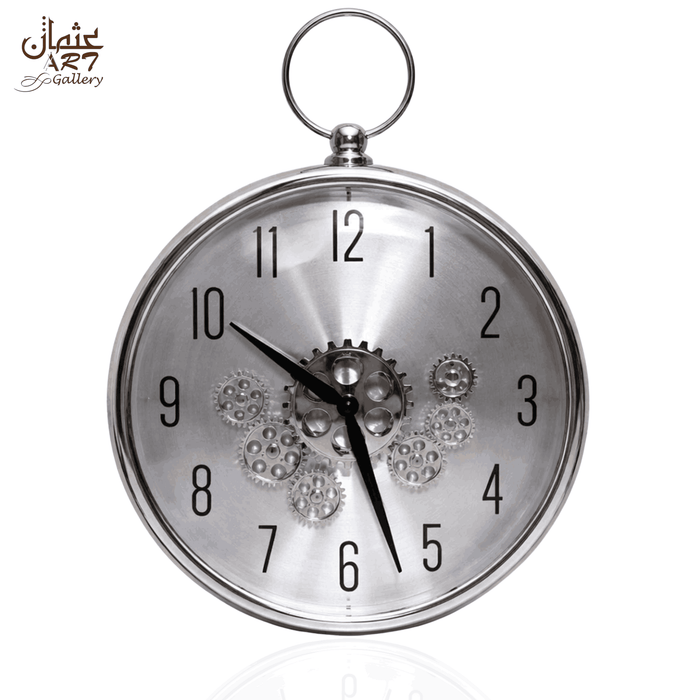
Silver wall clocks suit grey, white, charcoal, navy, glass and chrome-led interiors. They can make a room feel brighter because polished or crystal-inspired surfaces respond to surrounding light, although highly reflective finishes may also create glare.
Use silver as a visual connection to mirrored consoles, chrome legs or cool-toned lighting. On a pale grey wall, make sure the numerals and hands remain distinct. On charcoal or navy, a silver outline can become a stronger focal point.
5. Create Contrast with a Black Wall Clock
A black wall clock is particularly effective on white, cream, beige and pale grey walls because the silhouette is easy to recognise. It also helps connect black table legs, curtain poles, window frames, television units or lighting.
Avoid adding black purely for repetition. One or two supporting details are usually enough. If the room is already dark, choose a design with a lighter face or high-contrast markers so the clock does not visually disappear.
6. Use a White Clock for Subtle Minimalism
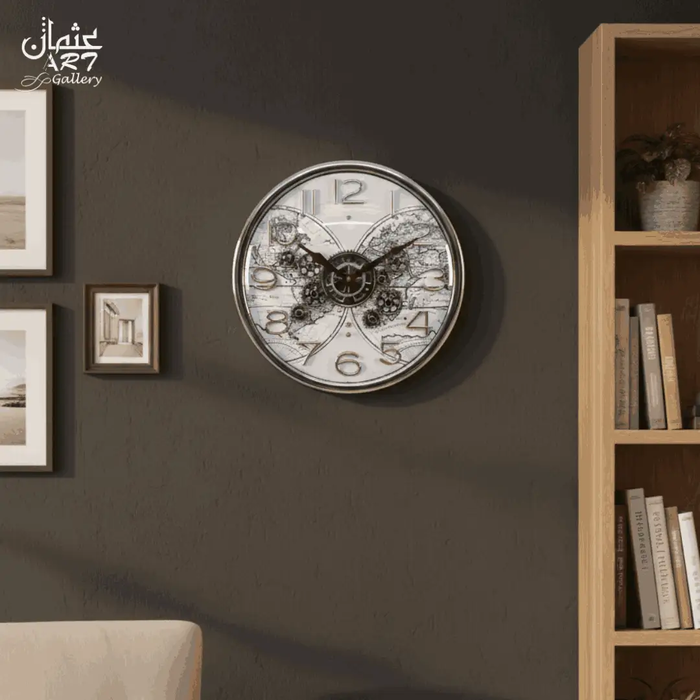
White clocks create a quieter effect and work well in Scandinavian-inspired, monochrome and softly contemporary rooms. They are especially useful against mid-grey, charcoal, muted blue or other darker walls where the face can remain visible without looking heavy.
On a white wall, the frame and markers need separation. Black hands, a defined rim or a slight tonal difference can keep the clock legible while preserving the restrained appearance.
7. Introduce Character with a Gear-Inspired Clock
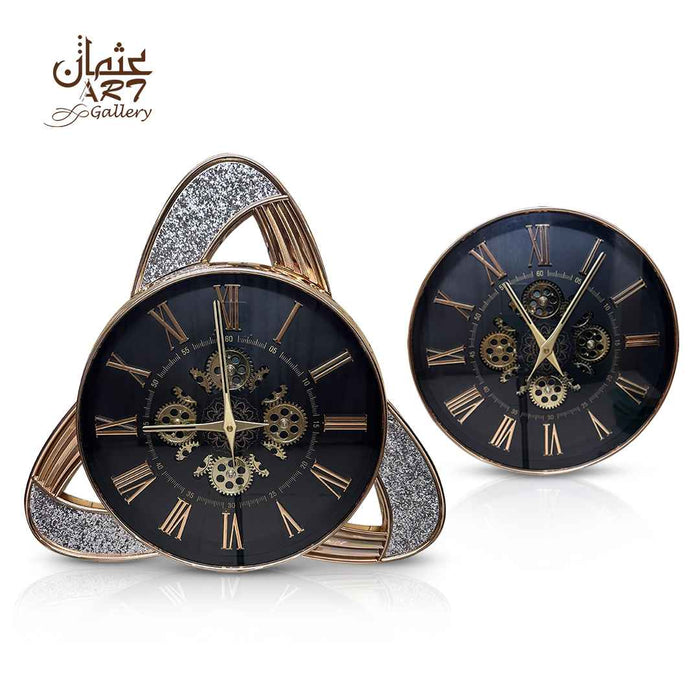
Gear-inspired clocks add mechanical detail and can suit industrial, modern-classic and statement-led living rooms. Roman numerals, black frames and gold-tone elements can give this style more architectural presence than a simple dial.
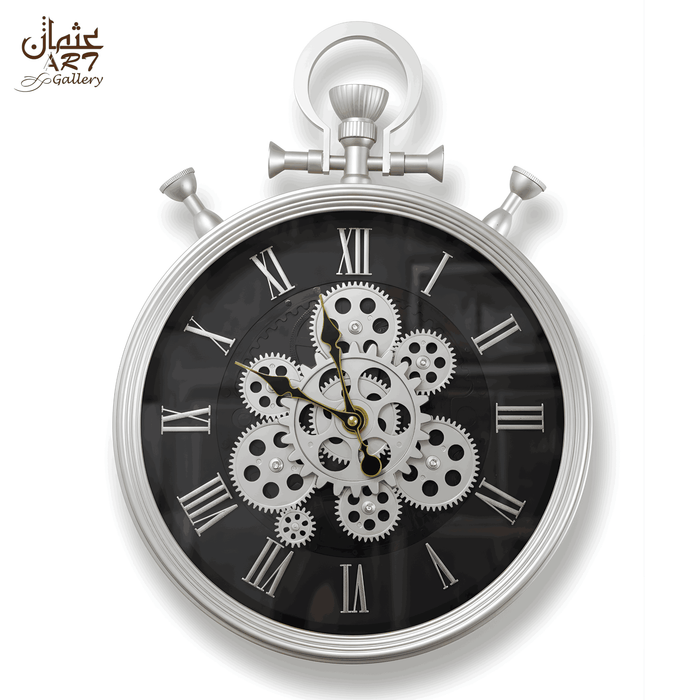
Use a calmer wall behind a detailed gear design so the face does not compete with busy wallpaper or multiple frames. Visible gears are not proof of mechanical timekeeping, and decorative gears should not be described as moving unless the individual product specification confirms that function.
8. Position a Modern Clock Above the Sofa
The sofa wall is one of the strongest positions for a living-room clock because the furniture provides a natural visual base. Centre the clock on the main seating composition, not necessarily the entire wall, and allow enough space between the sofa and the clock for the arrangement to feel deliberate.
For a wide sofa, a tiny clock can feel isolated. For a compact sofa, a dense oversized design may dominate. Use a paper template at the exact listed product size and photograph the wall from the room entrance before fixing it.
9. Style a Clock Above a Console Table
A console table creates an easy vertical composition. The clock provides height while lamps, vases, books or trays create a lower layer. The result can be symmetrical for a formal drawing room or slightly asymmetrical for a more relaxed contemporary interior.
Keep tall accessories away from the clock face. If two lamps flank the arrangement, make sure they support the clock rather than competing with it. A single lamp and lower decorative object can create better hierarchy in a smaller room.
10. Build a Gallery Wall Around a Clock
A clock can act as the anchor of a gallery wall when the surrounding frames share one or two visual features, such as black borders, similar metallic accents or consistent spacing. The clock does not need to be the largest item, but it should remain easy to read.
Plan the full arrangement on the floor or with paper templates before drilling. Keep the spacing rhythm deliberate and avoid placing artwork where it interferes with the hands or numerals. For more layouts, see these clock gallery wall ideas.
11. Match the Clock to Existing Metallic Finishes
A clock can make a room feel more connected by repeating an existing metal family. Gold can relate to brass lighting, silver to chrome or mirrors, and black to iron furniture frames. Exact matching is not necessary because interior finishes naturally vary in sheen and tone.
Use one dominant metal, then allow smaller supporting accents to differ slightly. Mixing polished silver with brushed silver is usually easier than combining several unrelated strong metallic finishes in equal amounts.
12. Use the Clock as Functional Wall Art
Modern clocks can work as timepieces, wall décor and visual anchors at the same time. This is useful when you want a finished wall without adding several decorative objects. A sculptural clock can replace a separate artwork above a console, sofa or feature wall.
The design still has to function. Check the hands from normal seating distance and consider glare, shadow and background pattern. The most successful functional wall art remains understandable as a clock even when its form is decorative.
Modern Wall Clock Size Guide for Living Rooms
The best wall clock size depends on the usable wall, furniture width, design complexity and viewing distance. Treat any measurement rule as a starting point rather than a universal formula. A dark, detailed clock can feel larger than a simple clock with the same diameter.
| Living-room situation | Suggested approach | Why |
|---|---|---|
| Compact wall | Small to medium, visually light clock | Prevents the wall feeling overcrowded |
| Above a narrow console | Clock clearly narrower than the furniture | Keeps the composition visually stable |
| Above a sofa | Medium or larger clock with enough presence | Helps the clock relate to the seating width |
| Large blank wall | Larger statement clock or stronger visual weight | Prevents the clock appearing lost |
| Gallery wall | Smaller or medium clock within the planned group | Allows surrounding artwork to remain balanced |
| Long viewing distance | Clear hands and visible markers | Improves practical readability |
Before ordering, mark the listed diameter or width on the wall with removable tape or a paper template. View it from the sofa, entrance and any adjoining dining area. This simple test is more reliable than estimating scale from a close product photograph.
How to Match Wall Clock Colours with Your Living Room
Choose a clock colour by deciding whether you want contrast or continuity. Contrast makes the clock more prominent, while continuity links it to furniture and accessories.
| Clock colour | Works well with | Design effect |
|---|---|---|
| Black | White, beige, light grey, pale wood | Strong graphic contrast |
| White | Charcoal, muted blue, grey, darker feature walls | Clean and restrained |
| Gold | Cream, ivory, beige, walnut, warm lighting | Adds warmth and decorative emphasis |
| Silver | Grey, white, navy, glass, chrome, mirrored finishes | Cool contemporary connection |
| Neutral | Soft modern and Scandinavian-inspired palettes | Low visual noise |
| Mixed metallic | Rooms already using two controlled metal families | Layered, collected appearance |
Wall colour is only part of the decision. Curtains, sofa fabric, lighting temperature and nearby finishes can change how the clock reads. Review reflective silver and gold designs in both daylight and evening lighting before fixing the final position.
Which Wall Clock Style Suits Your Interior?
| Interior style | Suitable colours | Furniture pairing | Clock direction |
|---|---|---|---|
| Minimalist | White, black, grey, neutral | Clean-lined sofas and simple consoles | Restrained face and slim detailing |
| Contemporary | Black, silver, white | Glass, metal, modular furniture | Geometric or clean analogue design |
| Glamorous | Silver, gold, black | Mirrored or polished accents | Reflective or decorative statement clock |
| Industrial | Black, bronze, gold-tone | Dark wood and metal frames | Gear-inspired or Roman numeral design |
| Monochrome | Black, white, grey | High-contrast furniture and textiles | Strong readable silhouette |
| Metallic | Gold or silver family | Metal lighting and table details | Finish-led decorative clock |
| Statement-led | Room-dependent | Simple supporting furniture | Larger or sculptural focal design |
The room does not need to fit one label perfectly. Use the dominant style as a guide, then let the clock connect through shape, colour or finish.
Where Should a Wall Clock Go in a Living Room?
Place a wall clock where it is easy to see and visually connected to the furniture around it. Above a sofa, console table, sideboard or on a clear feature wall are usually stronger choices than an awkward leftover corner.
- Above a sofa: align with the seating group and check scale from the main entrance.
- Above a console: use the furniture as the visual base and keep tall accessories clear of the face.
- Feature wall: choose enough contrast for paint, wallpaper or panelling.
- Between architectural elements: centre the clock within a panel, niche or balanced section rather than the full wall.
- Gallery wall: plan the clock as part of the group from the beginning.
There is no single correct installation height for every room. Keep the clock comfortable to view from normal positions and avoid pushing it so high that it becomes disconnected from the sofa or console below. The mounting point, ceiling height and furniture dimensions can all change the final position.
Modern Wall Clock Ideas for Small Living Rooms
Small living rooms benefit from control rather than simply choosing the smallest clock available. One clear, moderately sized clock can look calmer than several tiny wall objects competing for attention.
Use slim frames, readable markers and limited colours. A clock on a pale wall can add vertical interest without using floor space, which is useful in compact Pakistani apartments where the sofa, television unit and storage may already occupy most of the room. If the main wall is busy, consider a quieter console wall or adjoining dining wall instead.
Modern Wall Clock Ideas for Large Living Rooms
Larger living rooms can support stronger scale, but proportion still matters. A wide sofa, long console or tall feature wall may require a clock with more visual presence so it does not look isolated.
Open-plan spaces also create longer sightlines. Choose hands and markers that remain visible from more than one seating position. If the clock is highly decorative, leave surrounding wall space simpler so the focal point remains clear from across the room.
Recommended WeDecorators Options
The following examples illustrate four different design requirements. Product details should always be rechecked on the live page before ordering, especially where a listing does not provide a precise dimension.
For a Silver Contemporary Focal Point
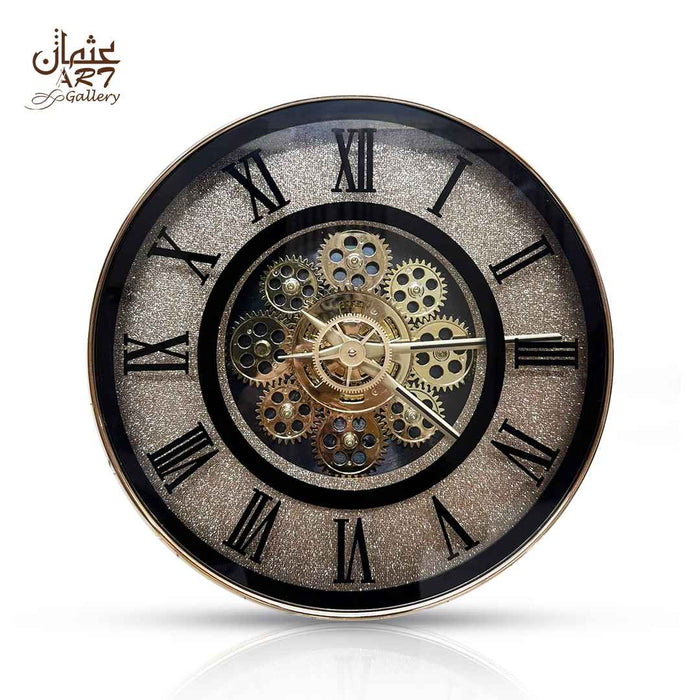
The 16-inch Silver Resin Wall Clock is listed with a silver finish, crystal-glitter resin face, raised silver numerals, chrome-effect rim and quartz movement. It may suit grey, white, navy, mirrored or chrome-accented rooms where a reflective statement is appropriate.
For a Minimalist White Direction
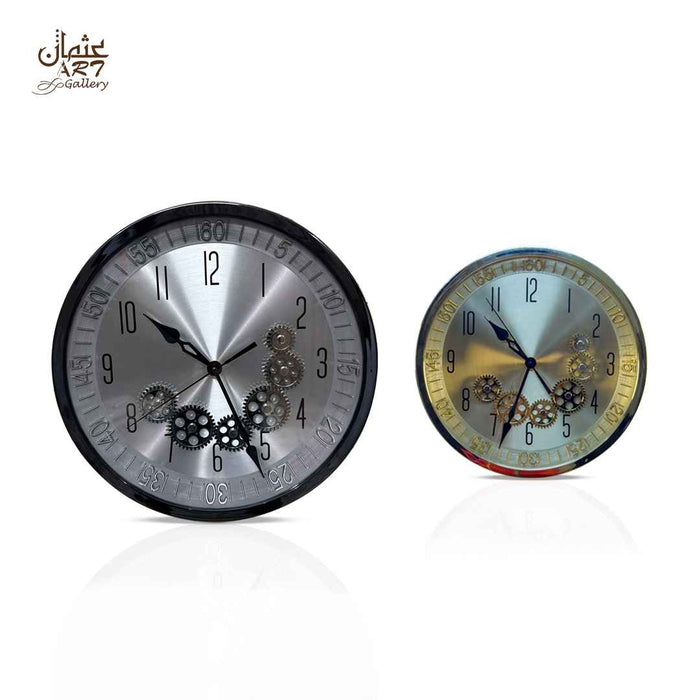
The minimalist White Quartz wall clock is described with a white background, slim black markers and quartz styling. The live listing shows its dimension as “Standard”, so confirm the exact size before planning a sofa or console arrangement.
For Black Contrast
The Black Quartz wall clock is described with bold numerals and a glossy finish, with black and white colour options shown on the page. It can support monochrome or light-wall schemes, but the exact diameter should be confirmed because the listing currently shows a standard dimension rather than a specific measurement.
For Gear-Inspired Character
The Roman numeral gear wall clock listing shows a 13-inch diameter, Roman numerals and gold-tone styling. The page does not clearly confirm that its decorative gears move, so treat the gear detail as visual styling unless WeDecorators confirms otherwise.
Common Wall Clock Styling Mistakes
- Choosing a clock that is too small: a tiny face can look disconnected on a wide sofa wall or large feature wall.
- Using an oversized clock on a crowded wall: strong scale needs negative space. Large art, shelving and a decorative clock can compete.
- Ignoring wall colour: low contrast can make the hands, numerals or frame hard to see.
- Combining too many statement pieces: decide which object should dominate and let the others support it.
- Hanging the clock too high: a clock close to the ceiling can feel detached from the furniture composition.
- Ignoring readability: an ornate face should still be practical from normal seating distance.
- Forcing exact metallic matches: controlled variation in gold, brass, silver or chrome often looks more natural than trying to match every finish.
- Assuming quartz means silent: check the product's sound description rather than inferring it from the movement type.
- Assuming visible gears move: decorative gear styling does not confirm functional rotating gears.
- Treating the clock as an afterthought: plan the clock together with lighting, furniture and surrounding wall décor.
Living Room Wall Clock Buying Checklist
- Measure the usable wall width and height.
- Compare the clock with the sofa, console or sideboard below.
- Check viewing distance and dial readability.
- Review wall colour and contrast.
- Note existing gold, silver, black or other metallic finishes.
- Consider furniture colour and material.
- Check the clock under daylight and evening lighting.
- Verify the movement type and any stated sound characteristics.
- Confirm dimensions, depth, mounting requirements and fixing method.
- Choose a design that supports the room's dominant style.
Buying Modern Wall Clocks in Pakistan
For online buyers in Pakistan, the most important step is to verify the product page rather than relying on a styled photograph. Check dimensions, colour options, movement information, mounting requirements and included components. If a critical specification is missing, ask before ordering.
Screen colours can differ from the real finish, particularly with gold, silver, black and reflective surfaces. Think about the room's actual lighting and mark the listed size on the wall first. Buyers in Karachi, Lahore, Islamabad, Rawalpindi and other cities should also check current delivery coverage, packaging information, payment choices and return or exchange terms at the time of purchase because these details can change.
For more Pakistan-specific selection factors, read the guide to choosing decorative wall clocks in Pakistan.
Frequently Asked Questions
Which wall clock is best for a living room?
The best living-room wall clock is one that suits the usable wall, furniture proportions and viewing distance while remaining readable. Minimalist clocks work well in restrained rooms, while larger metallic, black or gear-inspired clocks can become focal points on uncluttered walls.
What size wall clock is suitable for a living room?
Choose the size in relation to the wall and nearby furniture rather than using one universal diameter. A small wall needs controlled visual weight, while a wide sofa wall can support a larger clock. Mark the listed dimensions on the wall before ordering.
Where should a wall clock be placed in a living room?
Strong positions include above a sofa, console table or sideboard, on a feature wall or inside a planned gallery arrangement. The clock should be visible from the main seating area and feel connected to the furniture rather than placed in a leftover corner.
Should a wall clock match the furniture?
A wall clock does not need to match every item. It is usually enough to repeat one or two visual cues, such as a black frame, a gold lighting detail or a silver mirror finish. Deliberate contrast can work just as well as close coordination.
What colour clock suits a modern living room?
Black suits light walls and creates strong contrast. Gold adds warmth to beige, cream and wood-led rooms. Silver works naturally with grey, white, glass and chrome, while white suits darker or softly minimalist interiors when the hands remain clear.
Are large wall clocks still suitable for modern interiors?
Yes. Large clocks remain useful as statement pieces when the wall has enough space and the design relates to nearby furniture. They are less successful when squeezed beside large artwork, shelves or other dominant features. Scale should be judged within the complete room composition.
Are black wall clocks suitable for modern interiors?
Black wall clocks are especially effective in modern rooms with white, beige, cream or pale grey walls. They can also repeat black window frames, table legs or lighting. In darker rooms, select a face and markers with enough contrast for easy reading.
Do gold wall clocks work with neutral interiors?
Gold works well with warm neutral palettes such as ivory, cream, beige and tan, especially where the room includes warm wood or brass-tone lighting. Keep other gold accents limited so the clock feels connected rather than overly coordinated.
How high should a living-room wall clock be hung?
Hang the clock at a comfortable viewing height that relates to the furniture below. There is no single correct measurement for every room because sofa height, ceiling height, clock size and mounting point differ. Avoid placing it so high that it feels detached from the composition.
Can a wall clock be placed above a sofa?
Yes. Above a sofa is one of the most useful positions because the seating provides a strong visual base. Align the clock with the main sofa composition, choose enough scale for the furniture width and leave clear wall space around decorative designs.
How do I choose between a minimalist and statement clock?
Choose a minimalist clock when the room already has strong artwork, patterns or detailed furniture. Choose a statement clock when the wall needs a focal point and has enough negative space. In both cases, check readability and proportion before focusing on decoration.
Where can I buy modern wall clocks in Pakistan?
Modern wall clocks can be compared online through Pakistani home décor retailers, including WeDecorators. Before ordering, review the exact dimensions, colour, movement information, mounting requirements and current delivery and return terms rather than choosing from the product image alone.
Conclusion
Modern wall clocks work best when they are selected as part of the living-room composition. Start with the usable wall, the sofa or console below it, the viewing distance and the colours already present. Then decide whether the clock should blend quietly or act as a stronger decorative focal point.
Black, white, gold, silver, minimalist and gear-inspired designs can all suit contemporary rooms when scale, readability and visual weight are controlled. Before ordering, verify the listed dimensions and test the outline on your wall. If you are ready to compare styles, browse decorative wall clocks for your living room and choose the design that best fits your space.


