
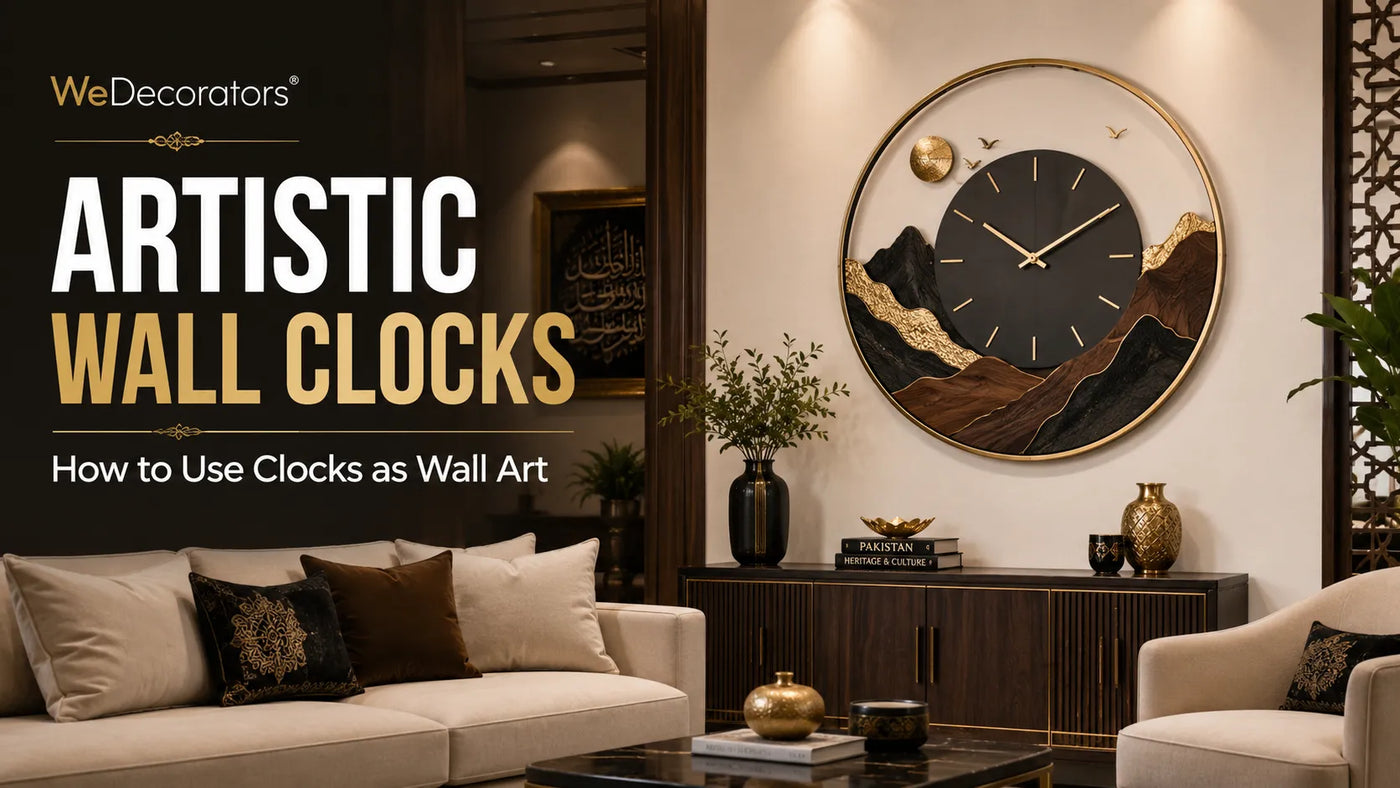
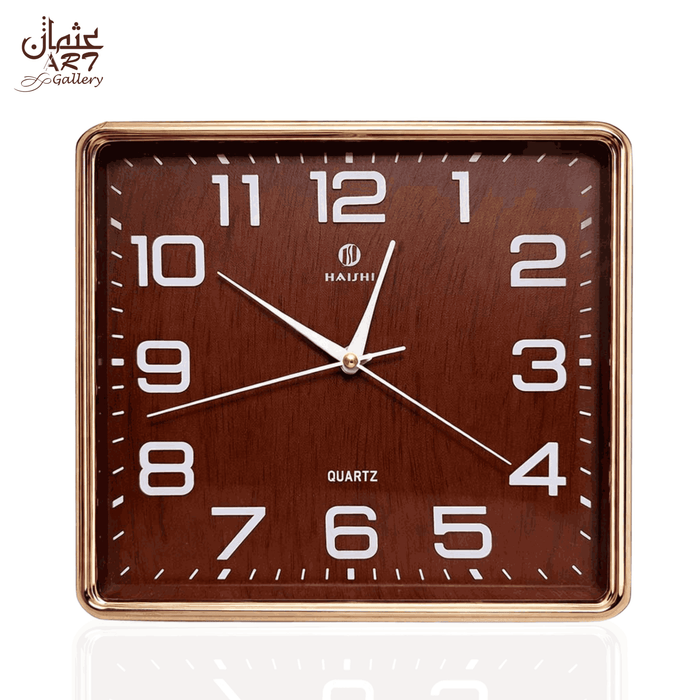
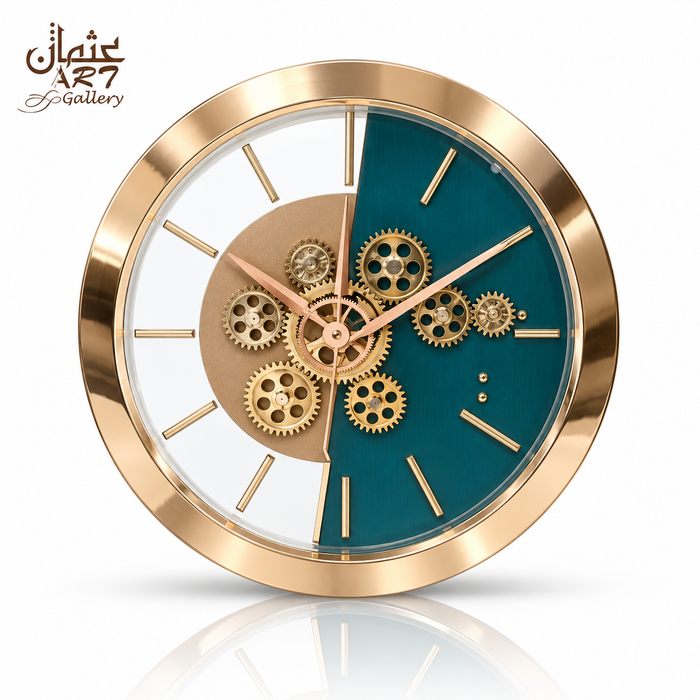
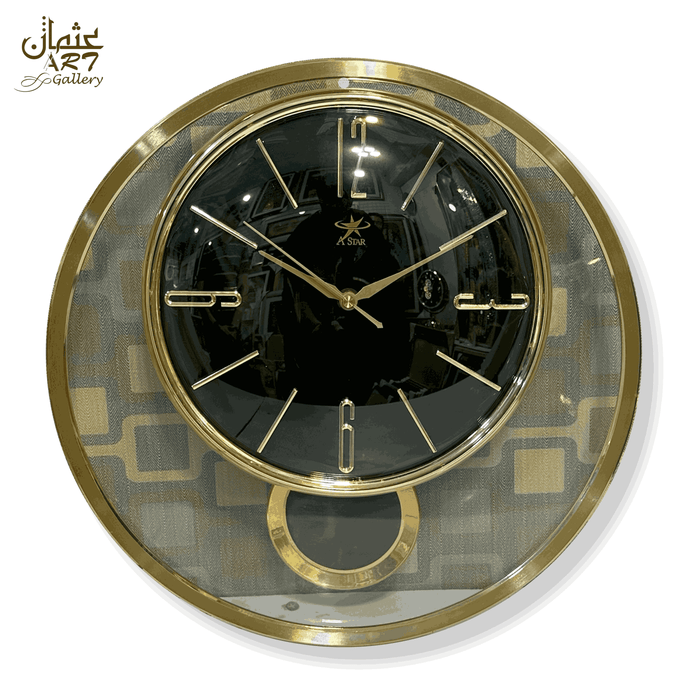

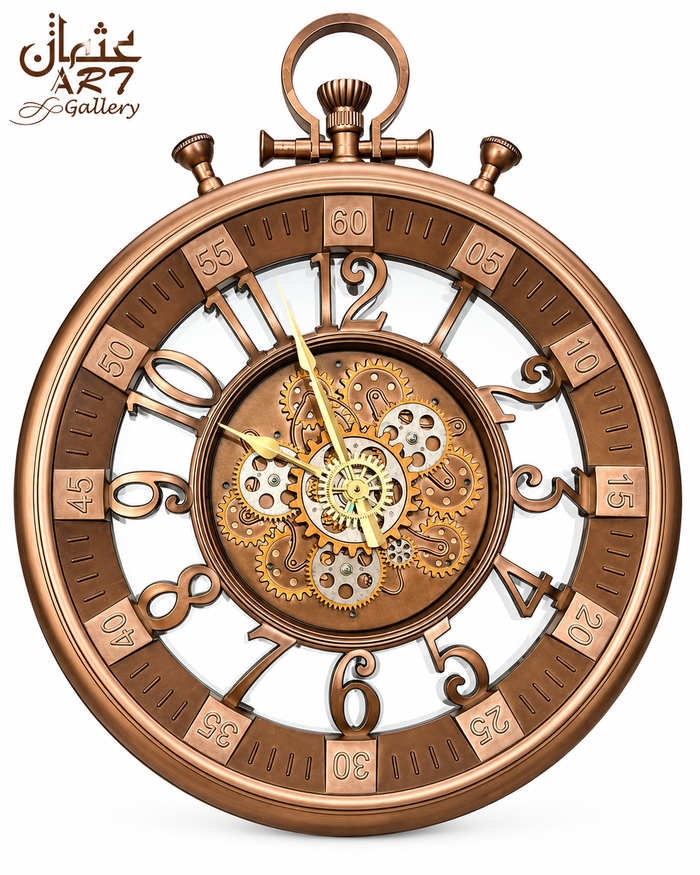
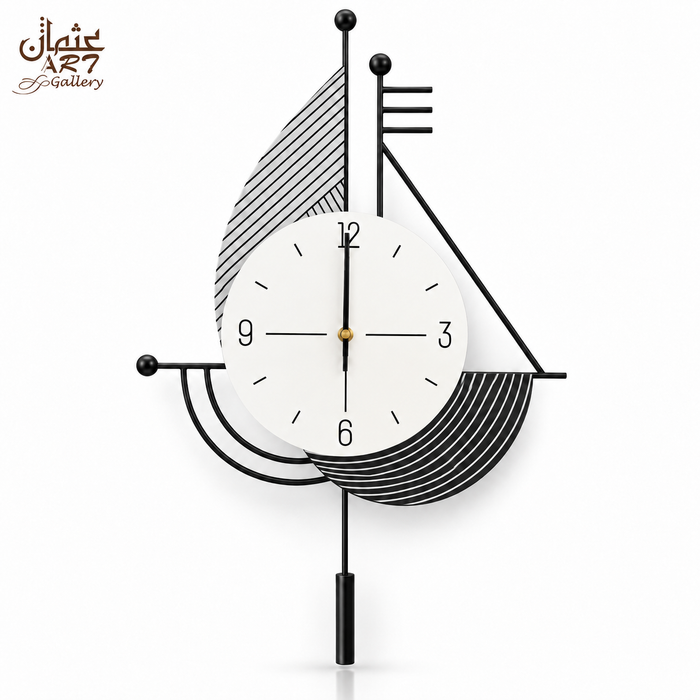
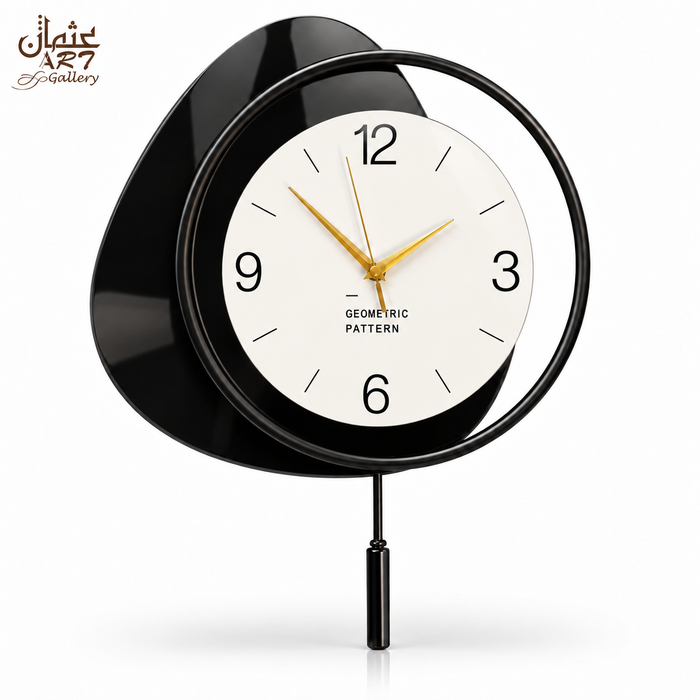
Artistic wall clocks can do much more than tell the time.
When chosen carefully, a wall clock can become one of the strongest decorative elements in a living room, dining area, hallway, office or reception space. Its scale, colour, silhouette, texture and position can completely change how an otherwise empty wall feels.
Instead of treating a clock as a practical accessory added after the rest of the room has been decorated, think of it as part of the wall composition itself.
A distinctive artistic clock can introduce warmth to a neutral room, repeat the gold detail of a lamp, add contrast against a dark feature wall or break up the straight lines created by sofas, consoles and cabinets.
Some artistic wall clocks can even replace paintings, mirrors and framed prints altogether.
The most successful result comes from considering several factors together. These include the size of the wall, furniture width, viewing distance, wall colour, visual weight, surrounding negative space and how detailed the clock itself is.
In this complete guide, you will learn how to:
-
recognise an artistic wall clock
-
use a clock as functional wall art
-
choose the correct size
-
understand visual weight
-
match clocks with furniture
-
select colours and finishes
-
style clocks above sofas and consoles
-
create controlled gallery arrangements
-
use resin and gear-inspired clocks
-
avoid common decorating mistakes
-
choose artistic wall clocks online in Pakistan
-
compare suitable WeDecorators clock designs
If you are redesigning an empty wall or simply want something more interesting than traditional framed artwork, artistic wall clocks offer an effective combination of design and everyday practicality.
Key Takeaways
Before exploring individual styling ideas, remember these principles:
-
An artistic wall clock should be assessed much like conventional artwork. Scale, colour, texture, silhouette and placement all matter.
-
Physical dimensions alone do not determine how large a clock appears. Dark colours, heavy frames, glitter, reflective metals and dense detailing can increase its visual weight.
-
Highly decorative clocks normally benefit from more clear wall around them.
-
Your clock does not need to match every item in the room. Repeating one or two colours, metals or material tones is often enough.
-
When hanging a clock above furniture, the relationship with the furniture usually matters more than the exact centre of the wall.
-
Supporting artwork works best when the clock is simple enough to share attention.
-
Visible decorative gears should not automatically be described as moving mechanical gears.
-
A beautiful clock still needs practical consideration. Check size, movement, readability, battery requirements and mounting information before purchasing.
-
A strong artistic clock can sometimes replace an entire group of wall decorations.
-
Negative space should be treated as part of the design rather than unused wall.
What Are Artistic Wall Clocks?
Artistic wall clocks are functional clocks designed to make a strong decorative contribution to an interior.
Unlike a basic clock that mainly prioritises time display, an artistic clock uses elements such as unusual geometry, resin finishes, raised details, decorative gears, metallic surfaces, unconventional numerals, layered faces or sculptural forms to create greater visual interest.
There is no strict technical definition of an artistic wall clock.
The easiest way to understand the category is to consider the role the object plays once it is installed.
A standard wall clock may simply occupy an available space and provide a convenient way to check the time.
A decorative wall clock adds styling through its frame, colours or face.
An artistic wall clock goes further. It can become an intentional focal point and contribute to the room in much the same way as a painting, mirror or wall sculpture.
That artistic quality does not always require heavy ornament.
Minimalist modern art clocks can also feel highly artistic when they use proportion, negative space, geometry and refined material finishes effectively.
Likewise, an elaborate resin clock may achieve its artistic character through texture, shimmer, layered surfaces and colour variation.
The category therefore includes everything from restrained contemporary pieces to decorative art clocks with stronger visual personalities.
If you want to compare the broader category first, explore WeDecorators' guide to decorative wall clock styles.
You can also compare more design-focused options through the guide to designer wall clock styles.
Why Artistic Wall Clocks Work as Functional Wall Art
The biggest advantage of artistic wall clocks is simple.
They combine decoration and utility within one object.
A painting adds colour and personality. A mirror adds visual depth. A sculpture introduces shape and texture.
An artistic clock can provide several of those qualities while still serving the practical purpose of displaying time.
They create a natural focal point
A clock face has an obvious visual centre.
This makes it particularly effective above furniture because the eye naturally understands where to look.
The circular form of many clocks also creates useful contrast with common rectangular objects such as:
-
sofas
-
television units
-
consoles
-
sideboards
-
dining tables
-
cabinets
-
doors
-
picture frames
That contrast between curved and straight forms can make an interior feel more balanced.
They introduce texture
Flat walls sometimes need more than colour.
A textured resin clock, raised numerals, polished rim or layered gear-style centre can add dimension that ordinary prints may not provide.
This can be particularly effective in neutral Pakistani interiors where beige, cream, ivory, greige, warm wood and subtle metallic finishes are already being used.
They connect different elements of a room
A wall clock can repeat colours already present elsewhere.
For example:
-
gold detailing can connect with lamp bases
-
black framing can relate to black furniture
-
silver finishes can complement mirrors
-
beige resin can relate to upholstery
-
warm metallic details can connect with wood furniture
Only a small degree of repetition is required.
The goal is not to make everything identical. It is to create enough connection that the clock feels intentionally selected.
They can reduce visual clutter
One artistic clock can sometimes replace several smaller frames, shelves or decorative ornaments.
This is particularly useful in contemporary and minimalist interiors.
Instead of filling an empty wall with multiple unrelated items, one visually strong clock can provide a clearer focal point.
| Feature | Ordinary Wall Clock | Artistic Wall Clock | Traditional Wall Art |
|---|---|---|---|
| Primary purpose | Time display | Time display + decoration | Decoration |
| Visual impact | Usually restrained | Moderate to very strong | Depends on artwork |
| Functional value | High | High | Limited |
| Texture | Often minimal | Resin, metallic or layered finishes possible | Varies |
| Role on wall | Supporting object | Focal point or anchor | Focal point or supporting art |
| Best use | Practical locations | Walls needing function and visual interest | Decorative walls |
8 Ways to Use Artistic Wall Clocks as Wall Art
1. Make One Artistic Clock the Main Focal Point
One of the easiest ways to use artistic wall clocks effectively is to stop treating them as secondary accessories.
Allow one clock to become the main feature of the wall.
This works particularly well when the clock already includes several decorative elements, such as:
-
raised numerals
-
gold or silver details
-
glitter surfaces
-
textured resin
-
layered centres
-
unusual silhouettes
-
decorative gear effects
-
highly contrasting faces
Start by looking at the wall from the room entrance.
Ask yourself:
What should someone notice first?
If the answer is the clock, do not surround it with several other objects demanding equal attention.
Instead, leave clear space around it.
This negative space visually separates the clock from nearby furniture, shelves and frames.
As a result, its shape becomes easier to understand.
This approach works particularly well:
-
on feature walls
-
above consoles
-
above sideboards
-
in dining rooms
-
in entrance areas
-
in offices
-
behind reception desks
A visually complex clock often becomes weaker when surrounded by unnecessary decoration.
Sometimes removing objects produces a better wall than adding more.
2. Position an Artistic Wall Clock Above a Console
A console table and an artistic wall clock are naturally compatible.
The console creates a strong horizontal line while the clock adds vertical height.
Together, they create a complete composition.
However, avoid assuming the clock must always be centred on the entire wall.
If the console sits slightly to one side because of a doorway, column or another architectural feature, centre the wall clock according to the furniture grouping instead.
The furniture becomes the visual anchor.
Keep the surface styling controlled
When the clock itself is highly decorative, limit what you place directly underneath it.
Possible accessories include:
-
one lamp
-
a simple vase
-
small decorative bowls
-
one or two books
-
restrained ornaments
Avoid placing several tall objects beneath the clock.
Their shapes may overlap visually with the lower part of the clock and make the composition feel crowded.
View the arrangement from several metres away.
Something that appears beautifully balanced while standing directly beside the console can feel completely different from normal viewing distance.
3. Use an Artistic Clock Above a Sofa
The space above a sofa is one of the most common places for wall decoration.
It is also one of the easiest places to choose the wrong clock size.
A clock that appears large while held in your hands may look surprisingly small once positioned above a wide three-seat or sectional sofa.
Why?
Because the eye compares the clock against the entire furniture arrangement.
It sees:
-
sofa width
-
cushions
-
side tables
-
lamps
-
surrounding wall
-
other furniture
-
ceiling height
This is why artistic wall clocks should never be selected using diameter alone.
Visual weight changes perceived size
Imagine two clocks measuring 16 inches.
One has a thin frame, plain white face and minimal numerals.
The other has a thick silver rim, glitter resin surface and raised numerals.
Although both have identical dimensions, the second design is likely to feel much more noticeable.
If a clock feels too isolated above your sofa, consider three options.
Option one: Choose a clock with greater scale or visual weight.
Option two: Add carefully selected supporting artwork.
Option three: Move the clock to a narrower furniture grouping such as a console or sideboard.
For more room-specific inspiration, explore these modern wall clocks for living room ideas.
4. Build a Gallery Wall Around the Clock
Wall clocks can also work inside gallery arrangements.
The key is hierarchy.
Before hanging anything, decide whether the clock will be:
-
the dominant anchor
-
a secondary object
-
an equal element within the gallery
If the clock is intended to dominate, surrounding pictures should normally support it.
For example, a black clock could be surrounded by restrained black frames.
A gold clock could connect with small gold details inside selected artworks.
A warm beige clock could sit among neutral photography or abstract prints.
Repeat one visual feature
You do not need everything to match.
Instead, repeat one element.
Good options include:
-
frame colour
-
metallic finish
-
neutral palette
-
circular shapes
-
black accents
-
gold accents
This gives the arrangement consistency without making it overly coordinated.
Before drilling into the wall, test the arrangement on the floor or use paper templates.
Gallery compositions depend heavily on spacing.
For complete configurations, see WeDecorators' dedicated guide to creating a gallery wall with clocks.
5. Use Metallic Artistic Wall Clocks to Repeat Interior Details
Metallic finishes can make artistic clocks particularly effective.
Gold, silver and chrome-effect surfaces interact with light and often have more visual presence than matte colours.
However, the clock does not have to match every metal in the room.
Instead, repeat selected details.
A gold wall clock might connect with:
-
a lamp base
-
cabinet handles
-
mirror edging
-
table legs
-
decorative accessories
A silver wall clock might connect with:
-
chrome fittings
-
mirrored furniture
-
silver picture frames
-
cooler light fittings
-
glass accessories
Mixed metals can still work
Using both gold and silver is not automatically a mistake.
Problems occur when too many strong finishes compete within the same small area.
Establish a hierarchy.
For example, gold may be the dominant metal while silver remains a minor accent.
That approach creates variation while maintaining visual order.
6. Introduce Texture Into a Neutral Interior
Neutral rooms are popular because they feel calm and flexible.
However, too many similar beige, white, cream and grey surfaces can make an interior appear flat.
Texture helps solve that problem.
Artistic wall clocks can introduce texture without introducing another strong colour.
Possible decorative features include:
-
resin patterns
-
raised numerals
-
layered faces
-
shimmer
-
glitter
-
polished edges
-
reflective rims
-
sculptural elements
This can work particularly well against:
-
warm white
-
ivory
-
cream
-
beige
-
greige
-
pale grey
A textured artistic clock naturally creates changing highlights as daylight and artificial lighting change throughout the day.
The piece may therefore appear slightly different in the morning, afternoon and evening.
If the clock provides significant texture, keep nearby wall decoration quieter.
The surface detail should remain visible rather than disappearing into surrounding visual noise.
7. Create Contrast Against a Feature Wall
Contrast determines how strongly an artistic wall clock separates visually from the wall behind it.
A black clock on an ivory wall may create a sharp silhouette.
A light silver clock against charcoal can appear dramatically brighter.
Warm gold against grey introduces both colour and temperature contrast.
However, contrast is not only about colour.
You can create contrast between:
-
reflective metal and matte paint
-
resin texture and smooth plaster
-
circular clocks and rectangular furniture
-
detailed clocks and minimal interiors
-
light faces and darker walls
-
black numerals and cream surfaces
Consider the feature wall itself
A feature wall already has decorative strength.
If the wall includes:
-
panelling
-
wallpaper
-
stone effects
-
moulding
-
strong colour
-
wood texture
you may not need the most elaborate artistic clock available.
A simpler silhouette can sometimes perform better.
The wall and clock should complement each other rather than compete.
8. Replace Conventional Artwork With an Unusual Clock
One of the strongest ways to style artistic wall clocks is to treat them as complete pieces of wall art.
Do not automatically add framed prints simply because you feel every wall needs multiple items.
Try hanging the clock alone.
Then look at:
-
the clock
-
furniture
-
empty wall
-
lighting
-
surrounding architecture
as a single composition.
If the clock creates enough balance and visual strength, the wall may already be complete.
This works especially well with decorative art clocks featuring:
-
distinctive silhouettes
-
resin surfaces
-
metallic frames
-
glitter effects
-
layered centres
-
bold numerals
In these situations, wall clock wall art can replace the role normally played by a canvas, painting, framed print or decorative mirror.
Artistic Wall Clock Style Matching Guide
Different interiors require different levels of detail.
| Interior Style | Recommended Clock Characteristics | Best Wall Direction | Supporting Décor | Avoid |
|---|---|---|---|---|
| Contemporary | Clean shape with one strong decorative detail | Neutral or feature wall | Black or metallic accents | Too many competing objects |
| Minimalist | Simple geometry and clear face | White, beige or muted wall | Very few accessories | Heavy ornamentation |
| Glamour-inspired | Silver, gold, glitter or reflective finish | Neutral or dark wall | Glass and mirrors | Too many metallic finishes |
| Industrial-inspired | Gear-style detailing and dark finishes | Grey, charcoal or brick-effect wall | Black metal and wood | Unsupported mechanical claims |
| Neutral modern | Beige, gold, resin or subtle texture | Cream, greige or ivory | Linen, wood and warm metals | Too many similar beige objects |
| Eclectic | Distinctive silhouette or unusual detail | Depends on palette | Curated art | Uncontrolled visual competition |
Choose the Artistic Style Before Choosing the Size
Many shoppers begin with dimensions.
A better process is to first decide what the wall actually needs.
Does it need:
-
warmth?
-
texture?
-
contrast?
-
industrial character?
-
metallic detail?
-
visual movement?
-
minimalist geometry?
-
glamour?
Once you know the visual role, choosing the right artistic wall clock becomes much easier.
Resin Art Clocks
Resin clocks are particularly suitable when you want texture.
Unlike a completely flat clock face, resin may provide variation in:
-
colour
-
shimmer
-
pattern
-
surface depth
-
reflection
That makes resin designs suitable for neutral walls that need decorative interest.
When the resin pattern is highly detailed, the surrounding wall should generally remain quieter.
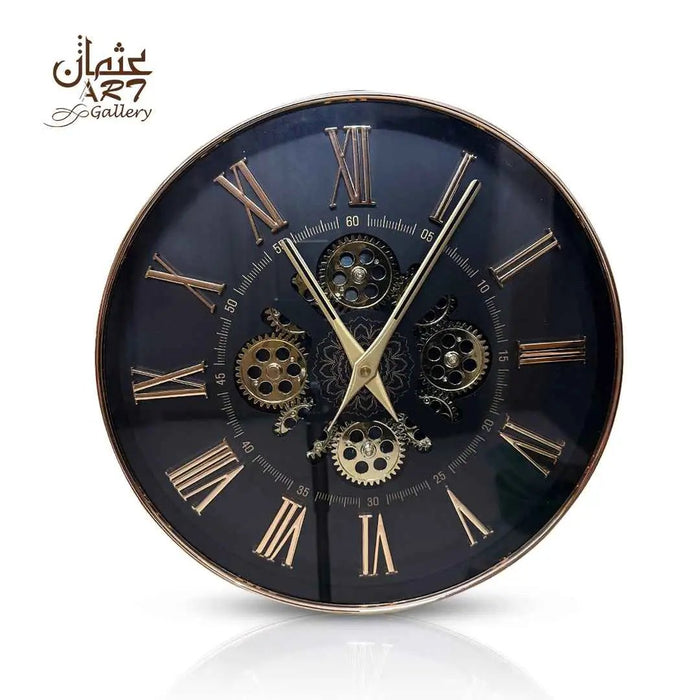
One example is the Resin Imported Clock.
Its warm decorative character makes it worth considering where you want gold-tone detail and resin styling without using an oversized piece.
Gear-Inspired Artistic Clocks
Gear-inspired designs introduce a mechanical visual language.
Circular gears, layered centres and contrasting structures can suit:
-
contemporary interiors
-
offices
-
industrial-inspired rooms
-
studios
-
reception areas
-
cafés
However, a crucial distinction must be made.
Decorative gears do not automatically mean mechanical movement.
Likewise, visible gears should not be called moving gears unless physical rotation is explicitly confirmed in the product specification.
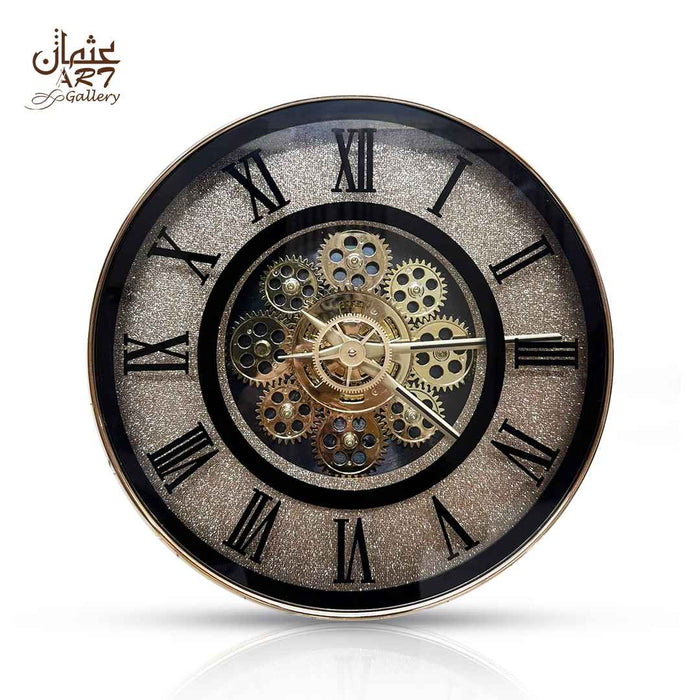
The Sparkle Gear clock uses a 20 × 20-inch format, a shimmering dial and gear-inspired centre.
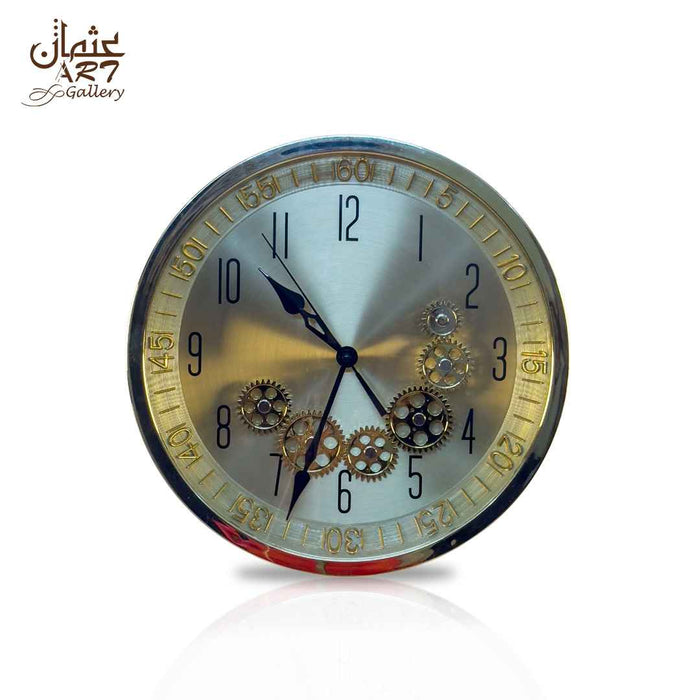
For something more compact, the Map Gear Wall Clock provides a 13-inch format with decorative gear-style detailing.
Metallic Statement Clocks
Metallic artistic clocks can dramatically change according to their surroundings.
Gold generally introduces warmth.
Silver and chrome-effect finishes usually create a cooler appearance.
Lighting matters considerably.
A metallic clock photographed under bright studio lighting may behave differently on your wall.
Before ordering, think about:
-
natural daylight
-
ceiling lights
-
lamps
-
surrounding wall colours
-
reflective furniture
-
mirrors
A metallic artistic clock can appear much stronger after dark when room lights begin reflecting from its surface.
Abstract and Sculptural Clocks
Some artistic wall clocks gain their character mainly from shape.
These designs may feature:
-
asymmetry
-
unusual geometry
-
unconventional layering
-
extended frames
-
sculptural surrounds
Their outline becomes part of the artwork.
For that reason, they generally need enough blank wall around them.
Placing shelves, frames or decorative objects too close to the outer structure can reduce the intended effect.
Minimal Artistic Clocks
Artistic does not have to mean elaborate.
Minimal modern art clocks can create impact through:
-
proportion
-
spacing
-
geometry
-
material selection
-
negative space
-
restrained colours
They are particularly useful when other elements in the room already demand attention.
For example, a room containing:
-
patterned curtains
-
statement furniture
-
colourful artwork
-
decorative cushions
-
textured wallpaper
may benefit from a quieter clock.
To compare additional options, browse WeDecorators' modern and artistic wall clock collection.
How to Choose the Right Artistic Wall Clock Size
Clock size should never be considered in isolation.
The appropriate size depends on:
-
usable wall area
-
furniture width
-
ceiling height
-
viewing distance
-
surrounding objects
-
clock colour
-
surface detail
-
contrast
-
visual weight
Physical Size vs Visual Weight
This distinction is extremely important.
Two clocks can measure exactly 16 inches but look completely different once mounted.
A plain clock with a thin frame may appear visually light.
A 16-inch artistic clock with:
-
thick edging
-
glitter
-
reflective metal
-
raised numerals
-
high contrast
-
dark colours
may appear significantly larger.
Therefore, do not purchase according to dimensions alone.
Test the actual size before ordering
Use removable paper or low-tack tape to recreate the full stated dimensions on your intended wall.
Do not simply make a small mark indicating the diameter.
Create the complete outer footprint.
Then view the wall from:
-
the room entrance
-
your normal seating position
-
across the dining table
-
the hallway
-
other important sightlines
This gives you a much more realistic idea of how the clock will feel.
If your wall is particularly large, read WeDecorators' guide to choosing large wall clocks.
The Five-Point Artistic Wall Clock Test
Before buying an artistic clock, evaluate these five areas.
1. Scale
How much of the available wall does the clock occupy?
Does it look proportionate compared with the furniture beneath it?
2. Contrast
Can the outer shape, hands and numerals be clearly distinguished from the wall?
A beautiful clock may lose impact if its colours disappear into the background.
3. Detail
How visually complex is the design?
More texture, layering and ornamentation generally increase apparent visual weight.
4. Surrounding Space
Will the clock have enough clear wall around it?
Highly artistic clocks often need more negative space.
5. Furniture Relationship
Does the clock connect visually with the sofa, console, sideboard or desk?
If four factors work but one feels noticeably wrong, investigate that factor before purchasing.
How to Match Artistic Wall Clocks With Wall Colours
There are two basic colour strategies.
Coordination creates a softer relationship.
Contrast makes the clock stand out.
| Wall Colour | Clock Direction | Expected Effect |
|---|---|---|
| White / Ivory | Black, gold, silver, resin | Strong flexibility |
| Beige / Cream | Gold, black, warm resin | Warm and coordinated |
| Grey | Silver, black or gold | Cool coordination or warm contrast |
| Charcoal | Silver, gold or light face | Strong visual contrast |
| Wood Panelling | Black, gold or restrained metallic | Rich material combination |
| Textured Wall | Cleaner contrasting silhouette | Reduces competition |
| Colourful Feature Wall | Neutral, black or repeated accent | Controls colour competition |
White and Ivory Walls
These offer excellent flexibility.
Black creates strong definition.
Gold adds warmth.
Silver provides cleaner reflective contrast.
Decorative resin can introduce texture without requiring another dramatic wall colour.
Beige and Cream Walls
Warm interiors naturally support:
-
gold
-
black
-
beige-gold
-
warm resin
-
darker contrasting clocks
A gold artistic wall clock on beige can feel coordinated rather than highly contrasting.
Black provides a stronger focal point.
Grey Walls
Grey offers considerable flexibility.
Silver creates a cooler monochromatic relationship.
Black produces strong definition.
Gold introduces warmth and often becomes more noticeable.
Charcoal Walls
Darker walls usually need enough contrast for the clock to remain visible.
Silver, polished metallic finishes and light faces can work particularly well.
Wood Panelling
The undertone of the wood matters.
Warm walnut and similar finishes often work naturally with:
-
black
-
gold
-
bronze-like tones
However, strong wood grain already contains considerable visual detail.
A highly ornate clock may create too much competition.
How to Match a Wall Clock With Furniture
Do not try to match everything.
Instead, create visual links.
Examples include:
-
gold clock + gold lamp
-
black clock + black console
-
silver clock + mirrored cabinet
-
warm resin + beige upholstery
-
gold detailing + walnut furniture
The relationship does not need to be exact.
For example, a slightly different gold tone can still feel intentional if it belongs to the same warm metallic family.
This controlled variation can make a room feel more natural than selecting everything from identical finishes.
Should Artistic Wall Clocks Stand Alone?
Usually, the more complex the clock is, the more likely it should stand alone.
| Situation | Clock Alone? | Supporting Artwork? |
|---|---|---|
| Highly detailed artistic clock | Usually yes | Only with restraint |
| Small simple clock | Sometimes | Often useful |
| Textured feature wall | Often | Limited |
| Large blank wall | If clock has enough weight | Useful if clock feels isolated |
| Narrow console | Often ideal | Minimal |
| Existing gallery wall | Usually integrated | Yes |
There is no absolute rule.
Instead, consider visual hierarchy.
If someone enters the room, which object should they notice first?
If the answer is unclear because six objects compete for attention, the wall probably needs simplification.
Best Places for Artistic Wall Clocks
Above a Sofa
A sofa provides a broad anchor.
Choose enough size or visual strength to prevent the clock from appearing lost.
Above a Console
One of the easiest placements.
The table creates a clear base and the clock provides height.
Above a Sideboard
Sideboards are generally wider than narrow consoles.
Choose moderate visual presence and coordinate one finish with the furniture.
On a Feature Wall
Use contrast carefully.
A heavily textured wall may need a simpler clock.
Dining Room
Dining walls often provide excellent space for decorative art clocks.
Consider the clock alongside the dining table and pendant lighting.
Hallway
Prioritise silhouette and readability.
Hallways often have shorter viewing distances and narrower sightlines.
Home Office
A gear-inspired or contemporary artistic clock can introduce character while retaining practical time display.
Reception Area
A decorative wall clock can help a reception feel more considered while still remaining functional.
4 WeDecorators Artistic Wall Clocks to Consider
These examples demonstrate how size, finish and detail affect the role a clock plays.
1. Resin Imported Clock
The Resin Imported Clock measures 13 inches edge to edge.
Current colour options include Black and Gold and Pure Gold.
Its decorative resin styling, Roman numerals and gold-tone details make it suitable where you want warm decorative character without choosing a very large clock.
A 13-inch design should be considered carefully above extremely wide furniture.
It may work more naturally:
-
above a narrow console
-
in an office
-
in a hallway
-
on a medium wall
-
within a controlled wall arrangement
2. Sparkle Gear
The Sparkle Gear measures 20 × 20 inches.
Its design combines gold and beige with a shimmering dial and gear-inspired centre.
The larger footprint and layered appearance give it stronger wall-art potential.
Its colour direction can naturally complement:
-
beige
-
cream
-
taupe
-
ivory
-
warm white
-
neutral interiors
Because the design already contains strong decorative information, additional artwork should be added carefully.
The visible gears should be treated as decorative unless actual rotation is explicitly confirmed.
3. Map Gear Wall Clock
The Map Gear Wall Clock measures approximately 13 inches edge to edge.
Current listing information shows white and black options with decorative gear-style detailing through the centre.
Its mechanical-inspired appearance can suit:
-
offices
-
contemporary rooms
-
industrial-inspired décor
-
studios
-
compact feature walls
The current listing does not confirm that the visible gears rotate.
Therefore, they should not automatically be described as moving gears.
4. Silver Resin Wall Clock
The Silver Resin Wall Clock measures 16 inches.
It combines:
-
crystal-glitter resin face
-
raised silver numerals
-
silver-tone chrome-effect rim
Because reflective materials respond strongly to room lighting, this 16-inch design may have more visual weight than a plain clock with identical physical dimensions.
Its palette can work particularly well with:
-
white
-
grey
-
charcoal
-
black
-
glass
-
mirrored furniture
-
cooler metallic details
The listing specifies a quartz movement powered by one AA battery, with the battery not included.
| Clock | Size | Style | Decorative Feature | Suitable Direction |
|---|---|---|---|---|
| Resin Imported Clock | 13 inches | Warm resin | Roman numerals and gold details | Neutral interiors, console, office |
| Sparkle Gear | 20 × 20 inches | Statement gear-inspired | Shimmering dial | Beige and gold walls |
| Map Gear Wall Clock | 13 inches | Mechanical-inspired | Decorative gear centre | Contemporary and office spaces |
| Silver Resin Wall Clock | 16 inches | Contemporary glamour | Crystal-glitter resin | Grey, white and mirrored interiors |
12 Common Artistic Wall Clock Styling Mistakes
1. Choosing Only by Diameter
Problem: Equal dimensions do not create equal visual impact.
Solution: Compare texture, frame thickness, colour, contrast and detailing.
2. Ignoring Visual Weight
Problem: A smaller ornate clock can dominate more than a larger minimalist one.
Solution: Judge the whole silhouette rather than only reading the measurement.
3. Crowding the Clock
Problem: Nearby artwork competes with an already complex clock.
Solution: Remove surrounding pieces and reintroduce only what is necessary.
4. Poor Contrast
Problem: Hands and numerals disappear against the wall.
Solution: Consider individual face, numeral and hand colours.
5. Centring on the Wall Instead of Furniture
Problem: The clock appears disconnected.
Solution: Centre according to the furniture grouping when appropriate.
6. Using Too Many Metals
Problem: Gold, silver, chrome and mirrored surfaces compete.
Solution: Establish one dominant metallic direction.
7. Adding the Clock as an Afterthought
Problem: A strong design gets squeezed into leftover wall space.
Solution: Plan the focal wall early.
8. Ignoring Readability
Problem: An artistic dial becomes difficult to read.
Solution: Test readability from the intended viewing distance.
9. Assuming Quartz Means Silent
Problem: Quartz describes movement technology, not necessarily sound performance.
Solution: Look for explicit silent, sweeping or non-ticking information where sound matters.
10. Assuming Decorative Gears Are Mechanical
Problem: Gear styling is mistaken for functional clock mechanics.
Solution: Check the product specifications.
11. Combining a Busy Wall With a Busy Clock
Problem: Wallpaper, shelves and an ornate clock compete.
Solution: Allow either the wall or the clock to carry most of the complexity.
12. Ignoring Evening Lighting
Problem: Metallic and glitter surfaces may become significantly brighter under artificial light.
Solution: Consider how nearby lamps and ceiling lighting will affect the clock.
How to Buy Artistic Wall Clocks Online in Pakistan
Buying a wall clock online gives you access to more styles, colours and designs, but you cannot physically judge scale before ordering.
That makes specification checking important.
Before purchasing artistic wall clocks online in Pakistan, confirm the following.
Actual Dimensions
Never rely entirely on lifestyle photographs.
Check the stated dimensions.
Then reproduce them on your own wall.
Edge-to-Edge Measurements
Where possible, confirm whether dimensions refer to the complete outer clock or only the central face.
Colour Variants
Some products may have several variants.
Confirm the selected colour before checkout.
Movement Type
Check whether the listing specifies:
-
quartz
-
mechanical
-
sweeping
-
silent
-
another movement
Do not infer a feature that is not stated.
Battery Requirements
Determine:
-
battery type
-
number of batteries
-
whether batteries are included
Mounting
Check available information about how the clock needs to be mounted.
Your wall construction may affect the fitting method.
Product Photographs
Look at close-up images where possible.
Pay attention to:
-
surface texture
-
numeral construction
-
reflective effects
-
rim thickness
-
depth
-
decorative details
Finish
Silver, gold, beige and glitter surfaces can look different depending on lighting and display settings.
Screen colours should therefore be treated as approximate.
Availability and Delivery
Confirm current stock and delivery information before ordering.
Returns and Exchanges
Review the current return or exchange policy before purchase, particularly if colour matching is important.
For broader guidance, see WeDecorators' article about buying wall clocks online in Pakistan.
You can also use the complete wall clock buying guide for Pakistan.
Artistic Wall Clock Buying Checklist
Before ordering, confirm that:
-
I measured the available wall.
-
I recreated the clock dimensions on the wall.
-
I viewed the mock-up from normal viewing distance.
-
I considered furniture width.
-
I evaluated visual weight rather than size alone.
-
I checked contrast against the intended wall.
-
I selected one or two room finishes to coordinate.
-
I decided whether the clock should stand alone.
-
I checked readability.
-
I reviewed movement information.
-
I checked battery requirements.
-
I reviewed mounting information.
-
I checked delivery information.
-
I checked current return or exchange terms.
Frequently Asked Questions About Artistic Wall Clocks
What is an artistic wall clock?
An artistic wall clock is a functional clock whose design contributes strongly to the appearance of a room.
Its artistic character may come from its silhouette, texture, resin surface, metallic detail, layering, geometry, numerals or decorative surrounding structure.
Rather than acting only as a timepiece, it also functions as an intentional decorative element.
Can wall clocks be used as wall art?
Yes.
Wall clocks can work as wall art when their size, finish, shape and position give them enough visual presence to contribute meaningfully to the wall.
A decorative clock can replace a painting, mirror or group of framed prints when the overall composition feels balanced.
What are the best artistic wall clocks for living rooms?
The best artistic wall clocks for living rooms depend on the room's scale and decorative style.
Neutral modern interiors may suit gold, beige or resin clocks.
Contemporary rooms can work well with black or metallic designs.
Glamour-inspired rooms may suit silver, crystal-glitter or polished finishes.
The most important consideration is whether the clock's visual weight suits the available wall and furniture.
How do I make a wall clock the focal point?
Place it where the architecture or furniture already creates a natural visual anchor.
Then:
-
provide sufficient contrast
-
leave negative space
-
remove competing objects
-
coordinate one or two finishes
-
use appropriate scale
A focal clock should be easy to identify as the dominant object in the composition.
Should I put pictures around an artistic wall clock?
You can, but the clock's complexity should determine how much supporting artwork you add.
Highly decorative art clocks generally work better with more breathing space.
Simple clocks can often participate effectively in gallery arrangements.
If pictures are added, connect the objects through colour, finish, frame style or spacing.
What size artistic wall clock should I choose?
Consider the wall, furniture and viewing distance rather than relying on one universal clock size.
A broad sofa usually requires greater visual strength than a narrow console.
Remember that a highly decorative 16-inch clock may appear much larger than a simple 16-inch clock because visual weight changes perceived size.
What size clock works above a sofa?
There is no single size suitable for every sofa.
Instead, compare the clock with the complete furniture arrangement.
A small clock may look isolated above a very wide sofa.
In that situation, you might choose a larger clock, a design with more visual weight or a controlled supporting composition.
Where should I place an artistic wall clock in a living room?
Useful locations include:
-
above the sofa
-
above a console
-
above a sideboard
-
on a feature wall
-
near a dining area
-
on another wall that naturally faces the main seating area
The best position is normally the location where the clock connects most clearly with furniture and normal sightlines.
Should a wall clock match the furniture?
Not exactly.
Instead of matching every item, repeat one or two visual details.
A gold clock might repeat a lamp base.
A silver clock might relate to a mirror.
A black clock could connect with dark furniture legs.
This creates visual consistency without making the interior look overly matched.
What colour clock works best on a beige wall?
Several options can work.
Gold and warm resin create a softer coordinated appearance.
Black produces stronger contrast.
Silver introduces a cooler accent and may suit interiors containing chrome, glass or grey details.
Choose according to the wider room palette and the amount of contrast required.
What colour wall works with a gold artistic clock?
Gold can work effectively against:
-
cream
-
beige
-
ivory
-
white
-
grey
-
charcoal
-
dark green
-
warm neutral walls
Lighter warm walls create coordination.
Grey and darker walls generally produce stronger contrast.
Are resin wall clocks good as wall art?
They can be particularly suitable because resin surfaces may introduce texture, shimmer, colour variation and layered decorative effects.
Those characteristics can make the clock behave more like artwork.
Highly textured resin wall clocks often benefit from a quieter surrounding wall.
Are gear wall clocks suitable for modern interiors?
Gear-inspired clocks can work particularly well in:
-
contemporary spaces
-
industrial-inspired interiors
-
offices
-
studios
-
cafés
-
reception areas
Their layered circular patterns introduce visual interest.
However, decorative gears should not automatically be assumed to move.
Do gear clocks always use mechanical movements?
No.
A clock can feature decorative gears while using another type of movement.
Visible gears alone do not confirm that the clock is mechanically powered.
Always check the product specification rather than assuming the decorative appearance indicates the internal movement.
Do visible gears always move?
No.
Some visible gears are purely decorative.
Only describe them as moving gears when their physical rotation is clearly confirmed by the manufacturer or product listing.
Does quartz mean a wall clock is silent?
Not necessarily.
Quartz describes the clock's movement technology.
It does not automatically mean that the clock is completely silent or non-ticking.
If sound is important, look for explicit wording such as silent, sweeping or non-ticking.
Can I use an artistic wall clock on a gallery wall?
Yes.
A clock can become the anchor of a gallery wall or simply one element within the arrangement.
Determine the hierarchy first.
Then coordinate the pieces through spacing, frames, colours or finishes.
Avoid surrounding a highly ornate clock with too many equally strong pieces.
Are artistic wall clocks suitable for small rooms?
Yes, provided the scale and complexity suit the room.
A highly decorative oversized clock can overwhelm a small space.
A compact artistic clock can introduce character without taking up floor space, making wall clocks particularly useful where floor area is limited.
Can an artistic clock replace a painting?
Yes.
If the clock has enough size, texture, contrast and visual weight, it can perform the decorative role normally occupied by artwork.
Before adding a painting beside it, first view the clock on its own.
The wall may already feel complete.
Where can I buy artistic wall clocks online in Pakistan?
WeDecorators offers modern, decorative and artistic clock designs online for customers comparing wall clocks in Pakistan.
Before choosing a clock, assess the dimensions, style, movement information, wall colour, furniture relationship and current product details.
You can browse modern and artistic wall clocks at WeDecorators.
Final Thoughts: Treat Your Clock as Part of the Interior
The best artistic wall clock arrangements are rarely created by buying a clock first and looking for an empty space afterwards.
Start with the room.
Look at the furniture.
Measure the wall.
Consider the sightlines.
Decide whether the space needs colour, texture, contrast or simply one strong focal point.
Then consider how much visual weight the wall can handle.
A detailed resin clock may already function as complete wall art.
A metallic clock can introduce reflection and warmth.
A gear-inspired clock can add mechanical visual character.
A minimalist clock can provide structure without competing with existing décor.
Whatever style you choose, give the clock enough space to perform its role.
Remember that a successful interior does not require every finish to match.
Repeating one or two colours, materials or metallic details is often enough to make an artistic wall clock feel naturally connected to the room.
Most importantly, never evaluate decorative art clocks using diameter alone.
Scale, visual weight, wall colour, texture, contrast, surrounding negative space and furniture relationships all influence how the clock will appear once installed.
Before purchasing, recreate the dimensions on your wall.
View the mock-up from your normal seating or standing position.
Check how the clock will relate to the furniture beneath it.
Decide whether neighbouring artwork is genuinely required.
Then verify practical information such as movement, battery requirements, readability and mounting.
When these elements are considered together, an artistic clock stops looking like an accessory placed on an empty wall.
It becomes part of the room's architecture and decorative identity.
Some artistic wall clocks work best as bold standalone focal points. Others become useful anchors within carefully planned gallery walls.
Either approach can work.
The goal is simply to create a deliberate relationship between the clock, wall and furniture.
If you are currently comparing resin, metallic, gear-inspired, modern or decorative designs, explore the WeDecorators modern and artistic wall clock collection and evaluate each option using the five-point artistic wall clock test:
Scale. Contrast. Detail. Surrounding space. Furniture relationship.
That approach will help you choose an artistic wall clock that does much more than display the time.
It can complete the wall.


