
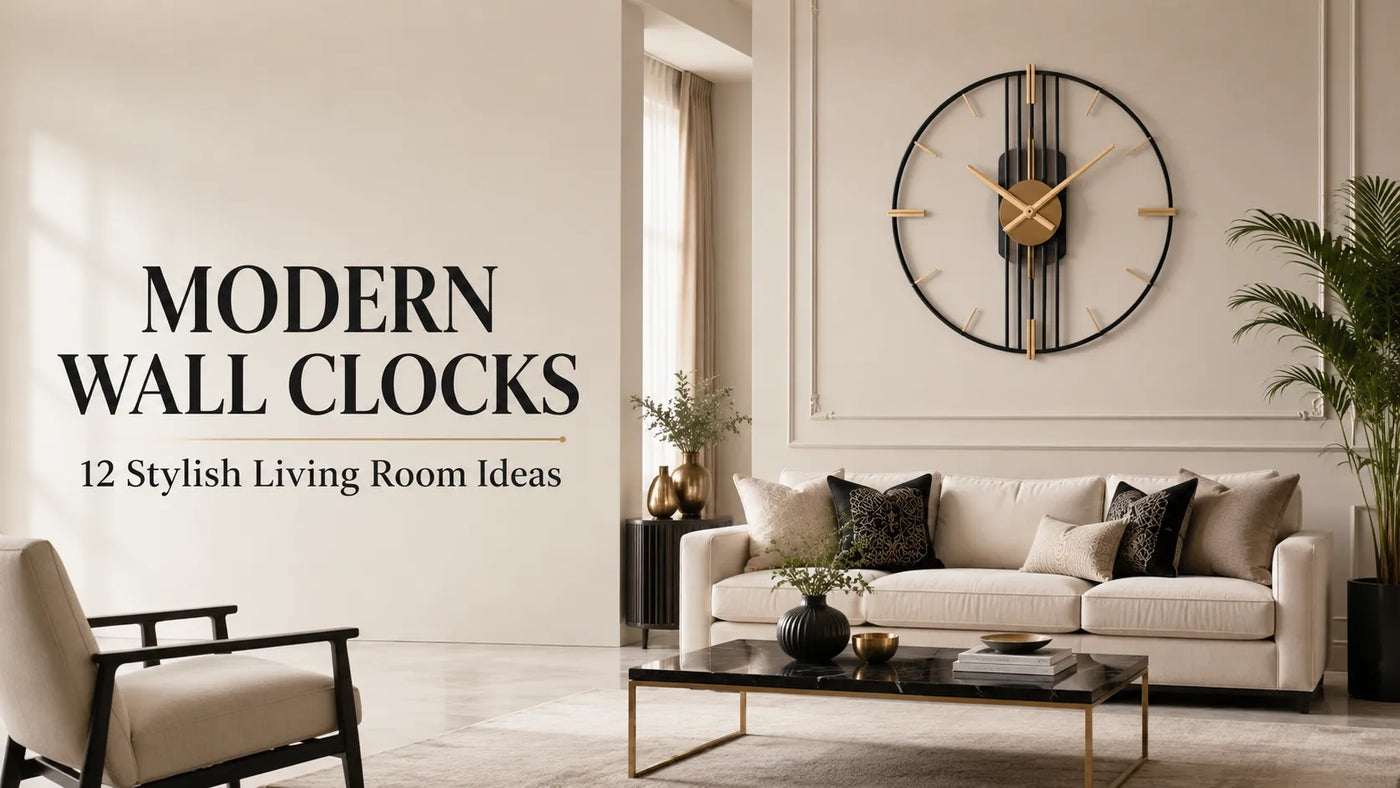
Modern wall clocks for living rooms should do more than display the time. In a well-planned interior, the clock becomes part of the room’s visual structure. It can introduce contrast, connect furniture finishes, balance an empty wall or create a clear focal point above a sofa or console table. The right design depends on the size of the wall, the width of nearby furniture, the colour palette, the room’s lighting and the level of attention the clock should receive.
This guide presents twelve practical wall-clock ideas for Pakistani living rooms, apartments, drawing rooms and open-plan spaces. It explains size, style, colour, placement and online buying checks, helping you compare minimalist, decorative, statement and gear-style designs.
Key Takeaways
- Choose according to the usable wall area and nearby furniture, not only the total room size.
- Use the sofa, console, shelving or feature wall as the alignment reference.
- Prioritise readability under both daylight and warm indoor lighting.
- Use contrast for impact or repeat an existing finish for continuity.
- Give large, reflective or detailed clocks sufficient surrounding space.
- Confirm dimensions in inches or centimetres because product images can distort scale.
- Do not assume visible gears are functional or part of the timekeeping movement.
- Confirm availability, delivery, mounting requirements and store policies before ordering in Pakistan.
What Makes a Wall Clock Suitable for a Modern Living Room?
A wall clock suits a modern living room when it combines balanced proportions, clear readability and a design language that fits the surrounding furniture, wall colour and decorative style. It may blend quietly into a calm interior or act as a statement piece, but it should look intentionally selected and placed rather than added simply because the wall felt empty.
Modern does not always mean plain. Minimalist, black, silver, Roman-numeral and gear-style clocks can all feel contemporary when their scale, finish and surrounding space are controlled.
Use the following six factors as a selection framework:
- Proportion: Compare the clock with the usable wall area and the furniture below it.
- Colour: Decide whether the clock should contrast with the wall or repeat a finish already used in the room.
- Readability: Check the hands, markers and dial from the main seating position.
- Decorative impact: Decide whether the clock should become the focal point or support another feature.
- Movement: Verify the timekeeping movement and any sound information shown on the product page.
- Placement: Align the clock with the furniture group rather than automatically centring it on the whole wall.
These factors help narrow the range of modern wall clocks in Pakistan to designs that fit your room.
How to Choose the Right Wall-Clock Size
The right size depends on the clear display area, the furniture beneath the clock, the viewing distance and the amount of visual detail in the design. A practical decorating approach is to let the clock occupy a meaningful part of the composition while leaving enough blank wall around it. This is guidance rather than a fixed scientific formula because frame thickness, colour, numerals, decorative layers and open spaces can all change visual weight.
Measure the usable wall after excluding curtains, switches, shelving, lights and artwork. Next, measure the sofa, console or sideboard below. After confirming the product dimensions, tape a paper outline to the wall and view it from the main seat, entrance and any adjoining dining area. This helps counter misleading scale in online photographs.
| Living-room situation | Practical size approach | Placement guidance |
|---|---|---|
| Compact apartment lounge | Choose a modest or medium size with a clear dial and controlled visual weight | Leave enough blank wall to maintain an open appearance |
| Above a narrow console | Select a clock clearly narrower than the furniture below | Centre it with the console or the complete accessory arrangement |
| Above a medium sofa | Use a size that feels connected to the seating width | Test the full outline before fixing the clock |
| Large feature wall | Consider a large modern wall clock or a visually detailed statement design | Preserve generous negative space around the clock |
| Wall with existing artwork | Use a supporting clock or redesign the whole group | Do not squeeze the clock into a leftover gap |
| Long viewing distance | Prioritise strong hand contrast and visible hour markers | Check readability from the furthest regular seat |
Diameter alone does not determine visual size. Dark frames, thick Roman numerals, reflective details and decorative gears can make similar-sized clocks feel very different. For broader advice, use the complete guide to choosing a wall clock.
Twelve Modern Wall-Clock Ideas for Living Rooms
1. Use a Minimalist Clock in a Calm Neutral Living Room
Best for: Minimalist, Scandinavian-inspired and softly contemporary interiors.
A minimalist wall clock completes a calm room without dominating it. Look for a clean face, slim markers and a restrained white, black or grey palette. These designs suit cream walls, beige sofas, light grey curtains and softly neutral rugs.
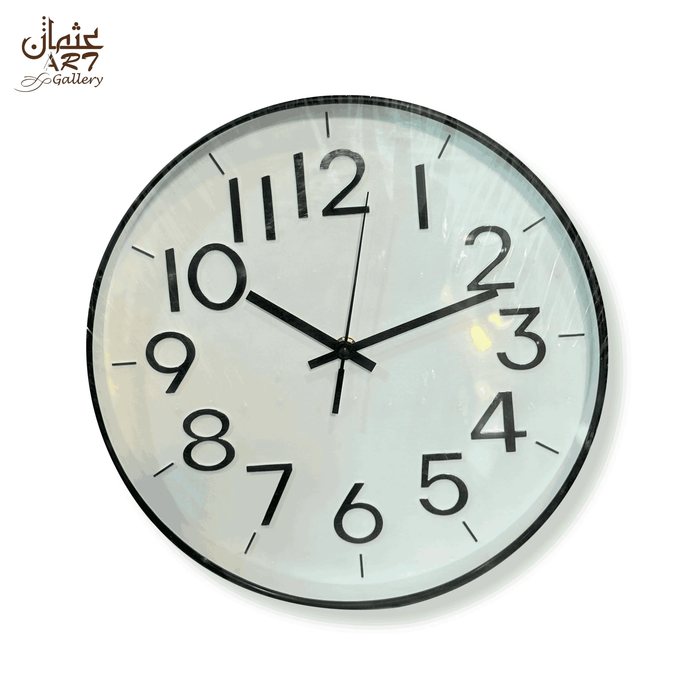
Place it above a compact console, beside open shelving or on a quiet wall that remains visible from the main seating position. The White Quartz page describes a white background, slim black markers and a quartz design suited to contemporary interiors. As the exact diameter is not stated, confirm the measurements before planning its position.
Practical tip: Repeat the black markers through one or two small details, such as a lamp base, curtain rod or slim picture frame. This creates a subtle connection without making the room feel heavily coordinated.
2. Add a Black Clock for Strong Contemporary Contrast
Best for: Monochrome living rooms, pale walls and interiors with black furniture accents.
A black wall clock creates a crisp outline against white, ivory, beige and light grey surfaces. It can connect window frames, table legs, television units or lighting, making it a versatile contemporary choice.
Keep the surrounding wall simple and repeat black once or twice elsewhere. Too little connection can make the clock look isolated, while too many black accessories can make the room feel heavy.
Consider placing a bold black clock above a console table, between two narrow wall lights or on a pale wall panel. The Black Quartz Clock is described on its live page as having bold numerals and a glossy finish. Its dimensions are shown only as “Standard”, so request or confirm the exact size before creating the final arrangement.
Practical tip: Review the clock under evening lighting. A black frame may stand out clearly, but the hands and numerals must also remain visible from across the room.
3. Create a Silver, Crystal-Inspired Focal Point
Best for: Glamorous modern interiors, mirrored furniture and cool neutral colour schemes.
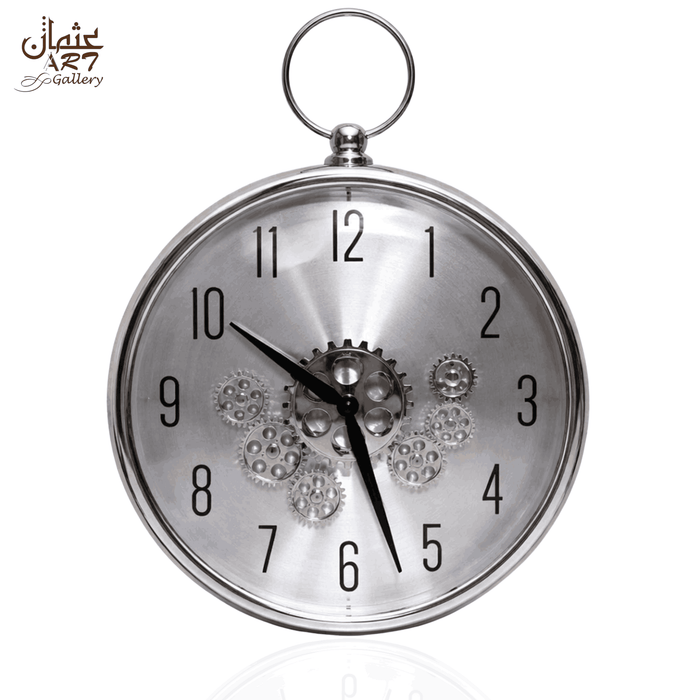
Silver and crystal-inspired detailing can make the clock the main feature. It suits glass tables, chrome legs, mirrored consoles and grey upholstery. Avoid surrounding it with several equally reflective objects.
Reflective finishes change with daylight and warm evening lamps, so assess the clock from the main seat as well as directly in front.
The Silver Resin Wall Clock has a verified 16-inch diameter, a silver colour, a crushed crystal-glitter resin face, bold silver numerals and quartz movement. Its polished chrome-silver outer rim gives the piece noticeable visual weight. It can suit a medium living-room wall, a console arrangement or a selected position above a sofa, depending on the surrounding furniture.
Practical tip: Limit other glittering or mirrored accessories on the same wall. Repeating the finish once through a lamp or small tray is usually enough.
4. Use a Large Statement Clock Above the Sofa
Best for: Wide living rooms, long sofas and uncluttered feature walls.
A large wall clock can organise the seating area and give an empty sofa wall a clear centre. It needs enough scale to relate to the furniture and enough blank space to remain distinct.
Do not automatically centre it on the whole wall. Align it with the sofa or dominant section of an L-shaped seating arrangement, while considering side tables, lamps and wall panelling.
Large modern wall clocks usually work best with clear surrounding space. On a panelled wall, centre the clock within a panel or repeated architectural feature. For broader design developments, see current modern wall-clock trends.
Practical tip: Photograph a taped paper outline from the room entrance. This view often reveals whether the clock feels centred within the space better than standing close to the wall.
5. Pair a Gear-Style Clock with Industrial-Modern Décor
Best for: Dark wood, black metal, ribbed panels, exposed textures and vintage-modern interiors.
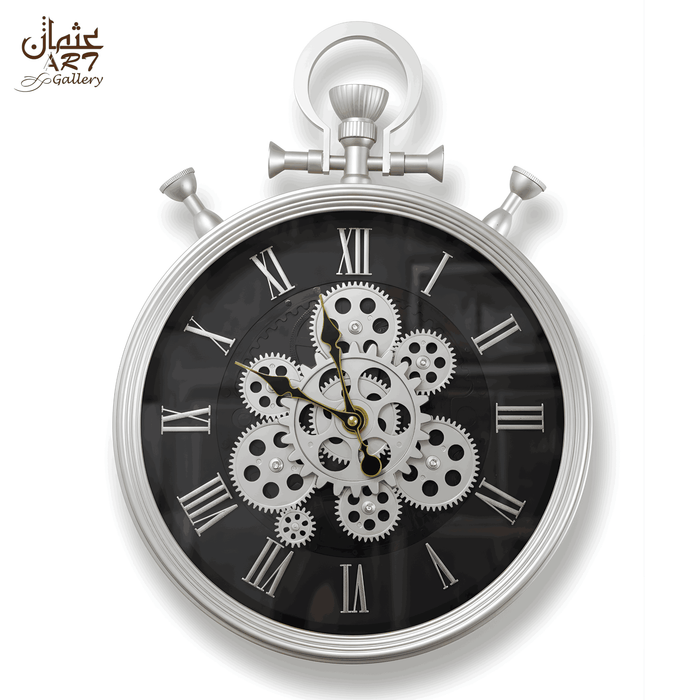
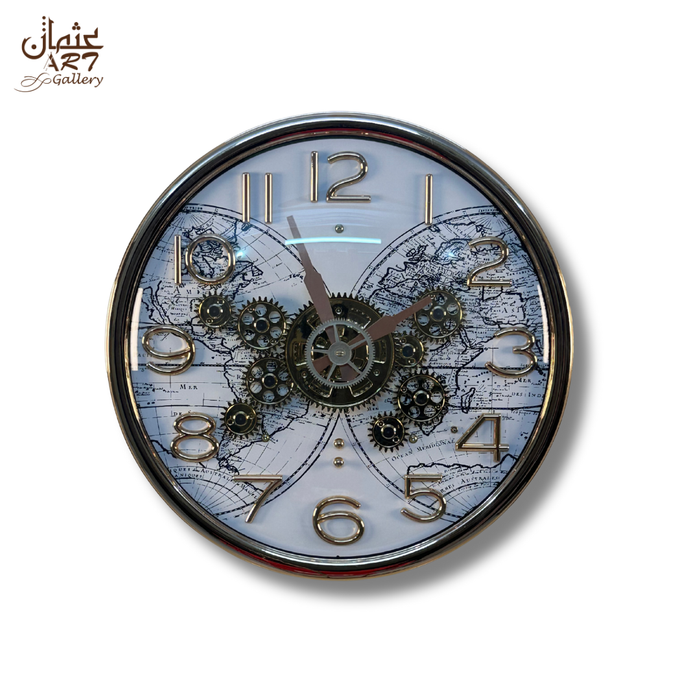
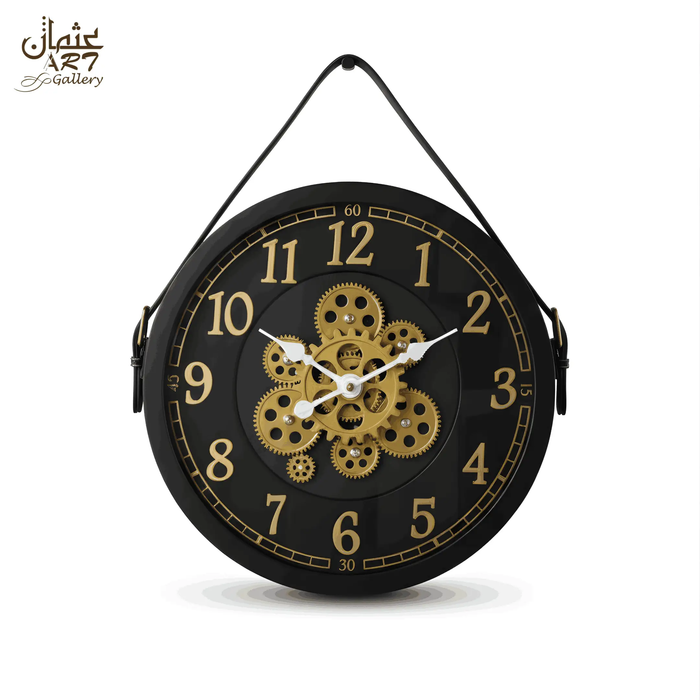
Gear-style clocks add layered, mechanical character. They work with metal shelving, dark timber, brick-style finishes and warm industrial lighting. Roman numerals can add a modern-classic note.
Gear-inspired designs contain more detail, so use a calm charcoal, beige, stone or wood-toned background. Busy wallpaper or a crowded gallery wall may reduce readability.
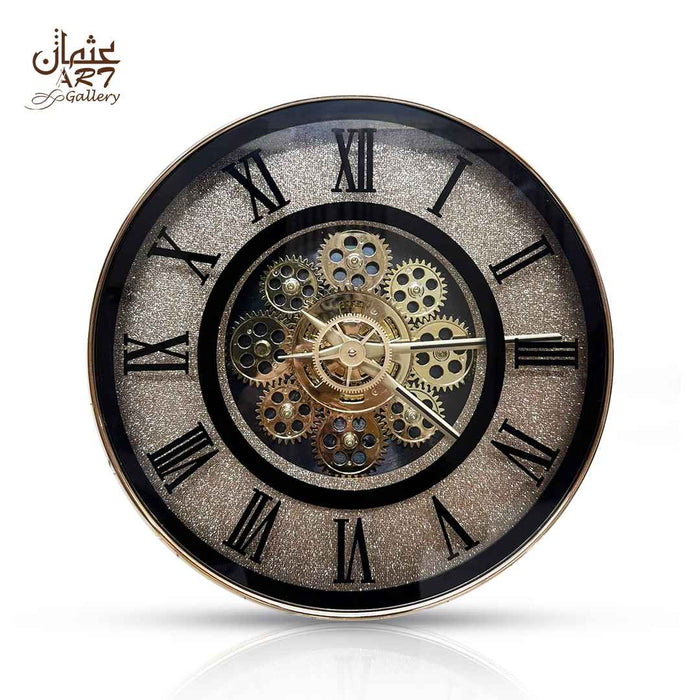
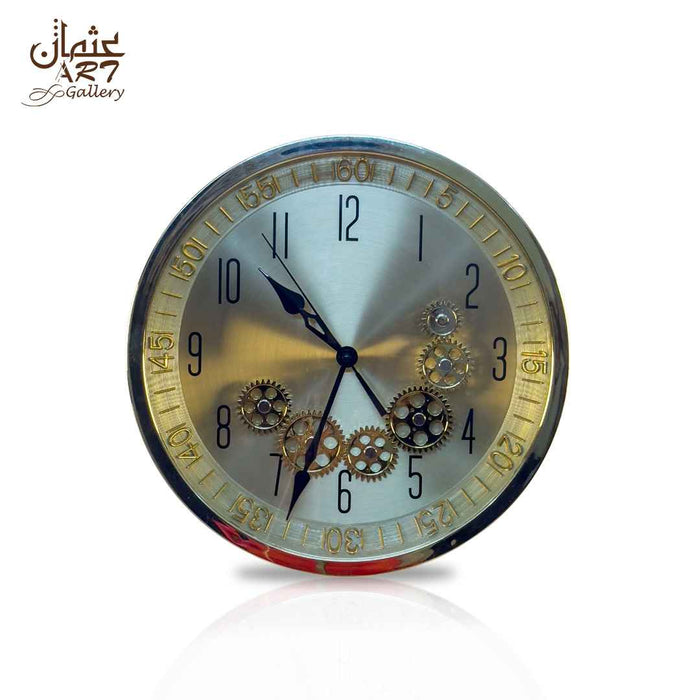
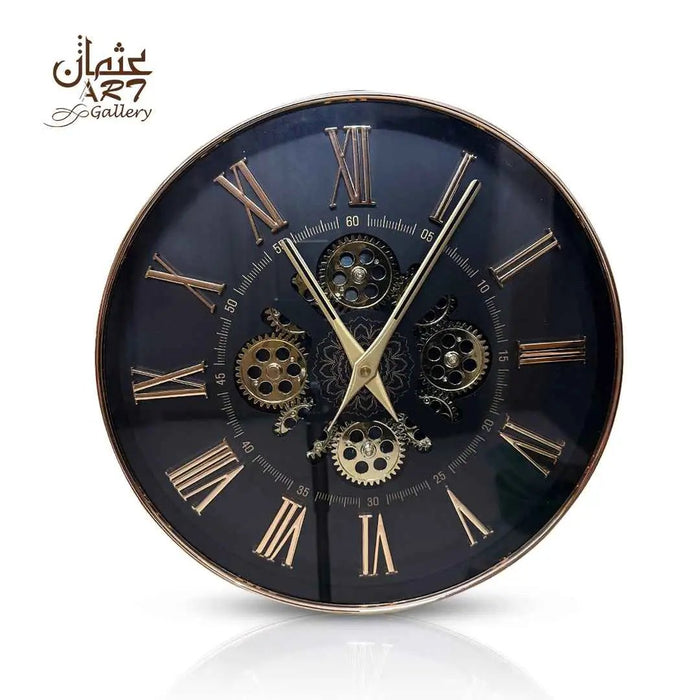
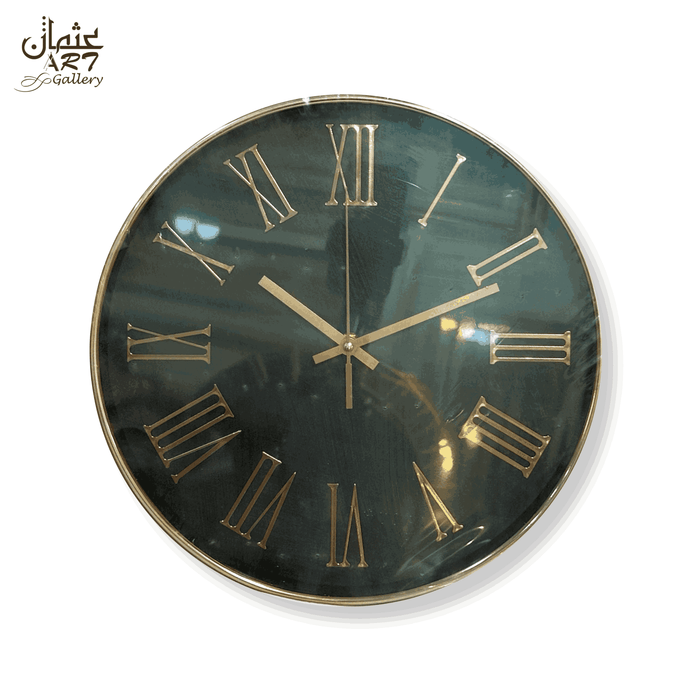
The Premium Gear Clock listing verifies a 13-inch diameter, visible Roman numerals and gold-tone detailing. The product description uses mechanical language, but the page does not clearly confirm that the decorative gears move or identify a mechanical timekeeping movement. Treat the gears as a visual feature unless the store confirms their operation.
Practical tip: If moving gears are important to you, ask for written confirmation before ordering rather than relying on photographs or product naming.
6. Coordinate the Clock with Metallic Furniture Accents
Best for: Contemporary, modern-classic and softly glamorous living rooms.
Repeat an existing metal finish to connect the room. Silver relates to chrome and mirrors, black echoes iron frames, and gold-tone details connect with warm lamps or table bases.
The finishes need not match perfectly. Polished silver, brushed silver and grey can belong to one family, just as warm gold and antique brass can. Choose one dominant metal and use competing finishes sparingly.
Practical tip: Repeat the clock finish once at a lower level and once at a different height. A lamp base and a small table accessory usually provide enough connection.
7. Choose Geometric Shapes for an Architectural Room
Best for: Modern rooms with panelling, arches, angular furniture or structured layouts.
Geometric wall clocks suit interiors that already use strong shapes and clean lines. A round clock can soften rectangular wall panels, straight shelving and boxy furniture. A square, open-frame or angular design can reinforce a more graphic, architectural room.
Let the shape respond to the architecture. A circular clock inside a rectangular panel creates controlled contrast, while an angular clock can reinforce repeated lines. Limit nearby accessories so the silhouette stays clear.
Practical tip: Take a straight-on photograph of the wall. Alignment errors and competing shapes are often easier to identify in a flat image than when viewed while moving around the room.
8. Build a Controlled Monochrome Composition
Best for: Black, white and grey living rooms that depend on contrast, texture and clean structure.
Monochrome styling does not require every item to be exactly black or white. The most successful rooms use different shades, textures and levels of contrast. A black clock on a white wall creates a strong graphic focal point, while a white-faced clock on a soft grey wall produces a quieter contemporary result.
Use upholstery, rugs and wall finishes to add texture, but protect dial contrast. Grey hands on a grey face may look refined in close-up yet become difficult to read from the sofa, especially under warm bulbs.
Practical tip: Print or display the product image at approximately the intended wall size, then stand at the normal viewing distance and check whether the hands remain clear.
9. Style a Clock Above a Console Table
Best for: Entrance-facing living-room walls, open-plan areas and formal drawing rooms.
A console table provides a natural foundation for a wall-clock arrangement. The clock introduces height, while a lamp, vase, tray or small decorative object balances the lower section. This makes the wall feel complete without requiring a large collection of artwork.
Use symmetry for a formal arrangement or slight asymmetry for a contemporary look. Arrange lamps and vases first so they do not overlap the dial or force the clock too high.
Practical tip: View the complete arrangement from the room entrance because this wall often becomes one of the first features visitors notice.
10. Include a Clock Within a Gallery Wall
Best for: Personal, eclectic and contemporary living rooms with photographs or artwork.
A wall clock can become the anchor of a gallery arrangement when it shares a frame colour, metal finish, shape or spacing pattern with the surrounding pieces. It may serve as the largest object, an equal member of the group or a smaller practical accent.
Plan the arrangement on the floor or with exact-size paper templates. Keep spacing consistent, protect dial readability and repeat one connecting feature, such as black frames or silver detailing.
For more detailed layouts, use the guide to creating a gallery wall with clocks.
Practical tip: Step back after positioning every template. Small spacing changes can significantly affect the overall balance.
11. Use Contrast on a Textured or Coloured Feature Wall
Best for: Wall panelling, limewash effects, wallpaper, wood finishes and dark paint colours.
A feature wall already contains visual information, so the clock needs a clear silhouette. On a charcoal, navy, deep green or brown wall, silver, white or warm metallic details may remain more visible than black. On pale textured walls, a dark clock can provide definition.
Open frames reveal the texture, while solid faces create a calmer break. Consider shadows too. Directional light can add depth but may interfere with thin hands or numerals under mixed daylight and warm ceiling lighting.
Practical tip: Test the clock image against both the darkest and lightest areas of the feature wall before choosing the final position.
12. Choose an Elegant Clock for a Compact Living Room
Best for: Apartment lounges, narrow walls and rooms containing several necessary furniture pieces.
A small living room does not always need the smallest clock. A clear, moderately sized design may look calmer than a tiny clock surrounded by several frames. Create one organised focal point.
Choose slim outlines, limited colours and readable markers. Use a compact console wall, the space beside shelving or an adjoining dining wall if the sofa wall already contains a television. Check depth as well as diameter, particularly in narrow circulation areas.
For additional buying considerations, use the guide to choosing premium wall clocks in Pakistan.
Practical tip: Select one main decorative wall and keep nearby surfaces simpler. This makes a compact room feel more controlled.
How to Match a Wall Clock with Your Living-Room Style
Match the clock with the room’s dominant design language, then use colour, shape or finish to connect it with existing furniture. The clock does not need to copy every element. One or two clear connections are usually enough to make it feel part of the composition.
| Living-room style | Suitable clock direction | What to avoid |
|---|---|---|
| Minimalist | Clean face, restrained frame and limited colours | Heavy ornament that competes with the calm scheme |
| Contemporary | Black, white, silver or geometric design with clear contrast | A dial that disappears into the wall colour |
| Glamorous | Reflective silver or carefully controlled decorative detailing | Several equally sparkly objects on one wall |
| Industrial-modern | Roman numerals, dark tones or gear-inspired styling | Assuming visible gears mean mechanical movement |
| Scandinavian-inspired | Simple white face, soft neutrals and light visual weight | Overly glossy or ornate detailing |
| Monochrome | Strong black-and-white contrast with readable markers | Low-contrast hands under evening light |
| Modern-classic | Balanced Roman numerals or warm metallic accents | Mixing several unrelated traditional motifs |
| Small-space modern | Clear dial, slim frame and controlled visual weight | Filling every remaining gap with decoration |
Repeat one or two visual cues rather than matching everything. A black frame may echo lighting, while a silver rim may relate to a mirror. For statement-led interiors, read how to select luxury wall clocks.
Choosing the Right Clock Colour
Clock colour should either create useful contrast or repeat an existing finish. Contrast improves visibility and helps the clock become a focal point. Coordination allows it to blend with furniture and accessories. The right balance depends on the wall tone, lighting and how much attention the clock should receive.
| Wall colour or finish | Clock-colour direction | Why it may work |
|---|---|---|
| White | Black for contrast, silver for a cool look or controlled gold-tone details | Most colours remain visible, so the wider room palette should guide the choice |
| Beige or cream | Black, warm metallic, brown or selected silver designs | Darker outlines add definition, while warm finishes connect with the base palette |
| Grey | White, black, silver or a warm accent finish | The clock can continue the neutral scheme or introduce temperature contrast |
| Black or charcoal | White, silver, light grey or warm metallic details | Lighter faces and markers generally improve visibility |
| Textured wall | A simple solid face or strong clean outline | Clear silhouettes reduce competition with the background |
| Wood panelling | Black, cream, silver or a metal finish already used in the room | Contrast prevents the clock from blending into the grain |
| Colourful interior | Neutral black, white or metallic finish, or one repeated accent colour | A restrained clock can stabilise a room containing several strong hues |
These are starting points, not rules. Similar colours can work when markers, shadows or a defined frame create separation. Judge every combination in the room’s actual daylight and evening lighting.
Best Places to Hang Modern Wall Clocks for Living Rooms
The best position is easy to see, connected to nearby furniture and free from competing objects. Use the room’s main sightlines and keep doors, curtains, shelves, lights and practical fixtures clear.
Above a Sofa
Align the clock with the seating composition, use enough scale to avoid a floating effect and leave clear wall around detailed statement designs.
Above a Console Table
Use the console as the visual base. Balance the clock with low accessories and prevent lamps or vases from covering the face.
On a Feature Wall
Choose a silhouette that remains clear against paint, wallpaper or panelling. Reduce surrounding decoration on strongly textured walls.
Beside Shelving
A clock can balance shelving when there is enough blank wall beside it. Repeat one finish from the display without creating a cramped arrangement.
Within a Gallery Wall
Plan the clock as part of the layout, maintain consistent spacing and keep the dial unobstructed.
On an Adjoining Dining or Open-Plan Wall
In an open-plan space, align the clock with its main furniture group while checking readability from both living and dining zones.
No single installation height suits every living room. Use comfortable sightlines, the furniture below, the product’s mounting point and the wall type. Follow the seller’s guidance and choose fixings suitable for the product weight and wall construction.
Common Wall-Clock Decorating Mistakes
- Choosing a clock that is too small: A tiny clock can look disconnected above a wide sofa or on a large feature wall.
- Overcrowding the wall: Decorative wall clocks need breathing space. Too many frames, shelves and signs weaken the focal point.
- Using poor colour contrast: Similar colours may make the hands and markers difficult to read under warm evening light.
- Mixing too many decorative styles: Gear details, floral artwork, mirrored letters and rustic shelving may compete rather than combine.
- Ignoring furniture alignment: Centring the clock on the wall can look wrong when the sofa or console sits elsewhere.
- Selecting an unreadable dial: Decorative numerals and open frames should still allow practical time checks.
- Treating a statement clock as an afterthought: Plan nearby lighting, artwork and accessories around the clock.
- Assuming every quartz clock is silent: Confirm sound characteristics on the individual product listing.
- Confusing decorative gears with the movement: Visible gears do not prove that a clock uses mechanical timekeeping or that the gears operate.
- Ignoring environmental guidance: Avoid placing a clock near heat, steam or moisture unless the seller confirms suitability.
Recommended WeDecorators Options
These products suit different living-room needs based on their current listings. Recheck dimensions, availability, delivery and policies before ordering.
Silver Resin Wall Clock
The Silver Resin Wall Clock suits medium walls, mirrored furniture and grey interiors. The listing identifies a 16-inch diameter, crushed crystal-glitter resin face, bold silver numerals, silver quartz hands, polished chrome-silver rim and quartz movement. Its reflective finish is designed to remain visually prominent.
White Quartz
White Quartz suits minimalist and Scandinavian-inspired rooms. The page identifies a white background, slim black markers and quartz styling. Its dimensions appear only as “Standard”, so confirm the exact diameter before planning placement.
Black Quartz Clock
The Black Quartz Clock suits pale walls and monochrome interiors. The listing describes bold numerals, a glossy finish and black quartz styling. Dimensions appear only as “Standard”, so confirm the scale before planning.
Premium Gear Clock
The Premium Gear Clock suits industrial-modern rooms. The listing identifies a 13-inch diameter, Roman numerals and gold-tone styling. It does not clearly confirm moving gears or the timekeeping movement, so request clarification if those features matter.
Compare the designs visually, then verify measurements, availability and ordering information before making a final choice.
Living-Room Wall-Clock Buying Checklist
- Measure the usable wall after excluding curtains, switches, shelving and nearby fixtures.
- Confirm the product dimensions in inches or centimetres.
- Compare the full outline with the sofa, console or sideboard below.
- Check whether the colour contrasts with the wall and remains readable under evening lighting.
- Select a design direction that matches the room’s dominant interior style.
- Review the stated materials and finishes rather than judging only from photographs.
- Confirm the timekeeping movement and any available sound information.
- Ask whether decorative gears, pendulums or visible elements operate if this matters to you.
- Check the product depth, weight, hanging point and any included installation components.
- Use suitable wall fixings for the product and wall construction.
- Review current availability, delivery coverage, returns and store policies directly with WeDecorators.
- For delivery to Karachi, Lahore, Islamabad, Rawalpindi or another city, confirm the current delivery options for your location.
Frequently Asked Questions
What type of wall clock is best for a modern living room?
The best wall clock fits the wall’s proportions, remains readable and supports the room’s style. Minimal white or black clocks suit restrained interiors, while silver, Roman-numeral and gear-inspired designs can create stronger focal points. Base the choice on furniture, wall colour, lighting and usable space.
What size wall clock should I choose for a living room?
Choose a size that relates to the usable wall and nearby furniture. Compact walls need controlled visual weight, while wide sofa walls can support larger designs. Measure both areas, confirm the product dimensions and test a paper outline before drilling.
Where should a wall clock be placed in a living room?
Place the clock where it is visible and connected to the main furniture group. Suitable positions include above a sofa, console, sideboard, feature wall or inside a planned gallery arrangement. Keep curtains, doors and practical fixtures clear.
Should a wall clock match the furniture?
A wall clock need not match every item, but it should connect with one feature such as colour, metal finish or shape. A black clock may repeat lighting, while a silver clock may relate to mirrors. Intentional contrast can work equally well.
Which clock colour works with a white wall?
Black creates strong contrast, silver supports cooler contemporary schemes and gold-tone details can suit warm lighting or wood accents. White clocks also work when dark markers or a defined frame preserve visibility. Let the wider room palette guide the choice.
Are large wall clocks suitable for small living rooms?
Large clocks can work in small living rooms when they have controlled visual weight and clear wall around them. One appropriately scaled clock may look calmer than several small pieces. Test the full outline and reduce nearby decoration.
Can a wall clock be included in a gallery wall?
Yes. Treat the clock as part of the full composition. Repeat a colour, shape or finish, maintain consistent spacing and keep the dial readable. Paper templates help establish the arrangement before making permanent holes.
Are quartz wall clocks suitable for living rooms?
Quartz clocks suit many living rooms because they provide practical battery-powered timekeeping in varied styles. However, quartz does not automatically mean silent. Check the individual listing for movement, battery and sound information.
How can I make a wall clock look like a statement piece?
Choose enough size or visual weight for the wall, preserve clear space and align the clock with the furniture below. Repeat one finish elsewhere and reduce competing decoration. Avoid lighting that creates glare across the dial.
Where can I buy modern wall clocks online in Pakistan?
You can browse modern wall clocks through WeDecorators and compare colour, size, movement details and style. Before ordering, verify availability, delivery coverage, installation needs and policies. Customers in Karachi, Lahore, Islamabad, Rawalpindi and other cities should confirm local delivery details.
Conclusion
Modern wall clocks for living rooms should make the wall more useful, more readable and more visually coherent. Start with the usable wall area, furniture alignment and viewing distance. Then decide whether the room needs a calm supporting clock, a bold black accent, a reflective silver focal point, a geometric design or a detailed gear-inspired statement.
Colour, contrast, visual weight and surrounding space usually matter more than following one trend. Measure before ordering, verify the live product details and check how the clock will look under the room’s normal daylight and evening lighting. To compare minimalist, decorative, Roman-numeral, gear-inspired and statement options, view the complete wall-clock collection.
