

Decorative Wall Clocks: Best Styles for Every Room
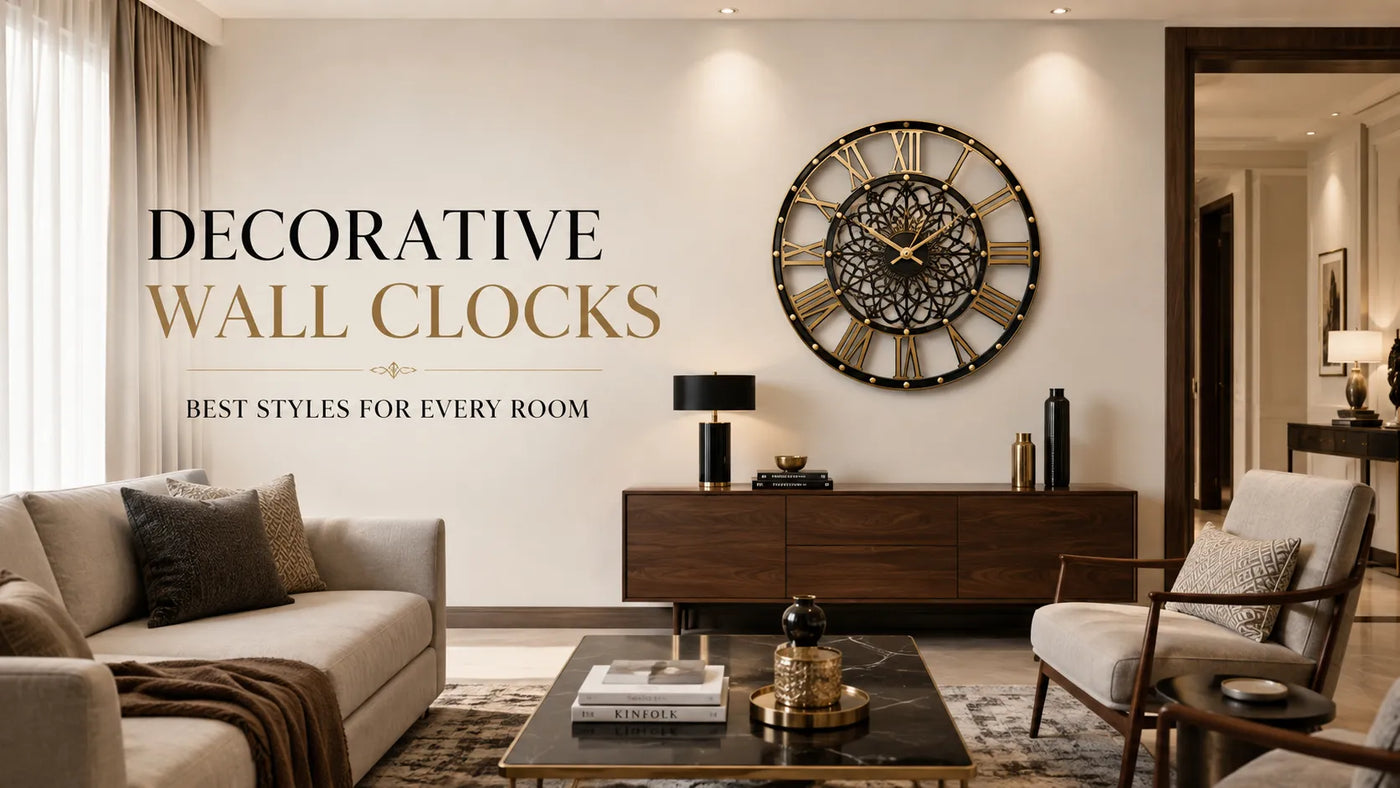
The best decorative wall clocks do more than tell the time. They give an empty wall purpose, connect furniture with the rest of the décor and, in the right position, become one of the strongest visual features in a room.
The challenge is choosing a clock that actually belongs in your space. A design that looks impressive in a large living room can overwhelm a compact bedroom. A gold statement clock may complement warm lighting and walnut furniture, while the same finish can feel disconnected in a cool, minimal interior.
That is why size, room proportions, material, colour, readability and placement should be considered together.
This guide explains how to choose decorative clocks for living rooms, bedrooms, dining areas, kitchens, offices and hallways. It also covers popular wall clock designs, styling techniques, sizing, common decorating mistakes and practical ways to make a clock feel like part of your interior rather than an accessory added afterwards.
Why Decorative Wall Clocks Matter in Interior Design
A standard clock primarily solves a functional problem. Decorative clocks have a second job: contributing to the design of the room.
A well-chosen decorative wall clock can perform several roles at once.
It can create a focal point.
A large clock on an otherwise simple wall immediately gives the eye somewhere to settle. This is particularly effective above a sofa, console table or sideboard.
It can fill difficult empty space.
Some walls feel unfinished with a small framed print but too restrained for a large gallery arrangement. A statement wall clock can occupy that middle ground.
It can reinforce an interior style.
Exposed gears suggest industrial character. Slim black frames support modern interiors. Roman numerals can introduce traditional structure, while sculptural and asymmetric designs bring an artistic quality.
It can visually connect different elements.
A champagne-gold clock, for example, can echo metallic lighting, furniture handles or decorative objects elsewhere in the room.
This is why successful wall clock décor starts with the room rather than the clock. Instead of asking only, "Do I like this design?", ask, "What visual role does this wall need the clock to perform?"
How to Choose the Right Decorative Wall Clock
A useful way to choose a clock is to assess five things in order: wall scale, interior style, material, colour and readability.
For a more detailed purchasing framework, see the complete wall clock buying guide.
Consider the Size of Your Wall
Start with the amount of visual space available.
A small decorative clock can work beautifully on a narrow kitchen wall or beside shelving, but the same clock may disappear on a wide living-room wall.
If you are placing one clock above a long piece of furniture, such as a sofa or console, judge the clock against the furniture as well as the wall. As a starting point, a focal piece occupying roughly half to two-thirds of the furniture's visual width often feels more connected than a much smaller object. Treat this as a styling reference rather than a fixed formula.
Also consider viewing distance.
A clock viewed from across an open-plan living room needs stronger numerals, hands and scale than one positioned beside a desk.
Before buying a large decorative wall clock, create a temporary paper or masking-tape outline on the wall. Viewing the outline from the doorway, sofa and other common positions often reveals whether the proposed size is balanced.
Match the Clock to Your Interior Style
A decorative clock should either reinforce the room's design language or create a deliberate contrast.
For example:
- Modern interiors: clean geometry, restrained ornamentation, black, silver or selective metallic detailing.
- Minimalist interiors: uncluttered faces, slim frames and generous negative space.
- Classic interiors: structured faces, Roman numerals and warmer finishes.
- Luxury interiors: layered textures, gold or silver details and more visually substantial designs.
- Industrial interiors: open frameworks, dark metal, mechanical motifs and gear-style details.
- Vintage interiors: station-inspired designs, distressed character or traditional forms.
- Artistic interiors: unusual shapes, sculptural faces and clocks designed to function almost like wall art.
The clock does not need to match every object. It should simply make sense within the overall visual vocabulary.
Choose the Right Material
Material changes how visually heavy or decorative a clock feels.
Metal-style frames and details can introduce structure, contrast and an architectural appearance. Dark finishes often suit industrial or contemporary rooms, while metallic gold and silver details create a more decorative effect.
Resin clocks can support richer textures, layered faces and more expressive decorative designs.
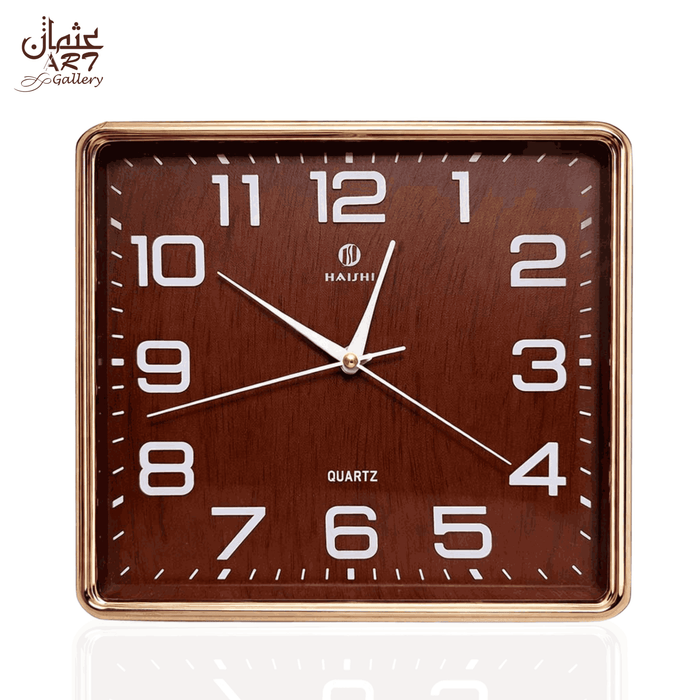
Wood introduces warmth and usually works naturally with Scandinavian, rustic, traditional or neutral interiors.
Glass can make the dial feel polished and refined, although reflections should be considered before placing a clock directly opposite bright windows or spotlights.
Mixed-material designs are useful when you want the clock to bridge different finishes already present in the room.
Choose according to visual effect first, then confirm the actual materials, weight, installation requirements and care instructions on the individual product page before ordering.
Coordinate Colours and Finishes
Colour coordination does not mean making everything identical.
A clock can either blend with the wall or contrast against it.
On cream, beige and warm-white walls, black frames provide definition, while gold details can complement warmer interiors. Silver finishes often appear crisp against grey, white and cooler palettes.
Dark feature walls give metallic clocks greater contrast. Gold tends to appear warmer under amber lighting, while silver can become sharper in natural or cooler light.
Reflective finishes also react strongly to directional spotlights. If glare crosses the clock face from your normal viewing position, the design may look impressive but become difficult to read.
A practical strategy is to repeat the clock finish once or twice elsewhere. A gold clock does not require an entirely gold room. A lamp base, console accessory or furniture detail may be enough to create visual continuity.
Think About Visibility and Readability
Some artistic wall clocks deliberately make the clock face secondary to the overall form. That can work on a decorative feature wall, but not every room needs that trade-off.
Ask:
- Can you distinguish the hands from the face?
- Are the numerals or markers visible from the normal viewing distance?
- Does the wall colour reduce contrast?
- Will reflections interfere with visibility?
- Is telling the time important in this particular room?
A kitchen or office usually benefits from clearer time reading. A living-room statement clock can afford to be more expressive.
Best Decorative Wall Clock Styles for Every Room
The right clock depends heavily on what the room already contains. Furniture scale, viewing distance, lighting and the amount of surrounding wall décor all influence the choice.
Decorative Wall Clocks for the Living Room
The living room usually provides the greatest opportunity for decorative clocks for living room styling because the walls are larger and the clock can be viewed from several positions.
Strong choices include:
- statement gear clocks
- oversized open-face clocks
- modern black-and-metallic designs
- Roman numeral clocks
- sculptural designer clocks
Above a sofa, the clock should relate visually to the sofa rather than floating as a small isolated object. Leave breathing room around a large design instead of surrounding it immediately with unrelated frames.
Above a console table, the clock can form a central anchor. Lamps, vases or books can then be arranged at lower levels to create a simple visual triangle.
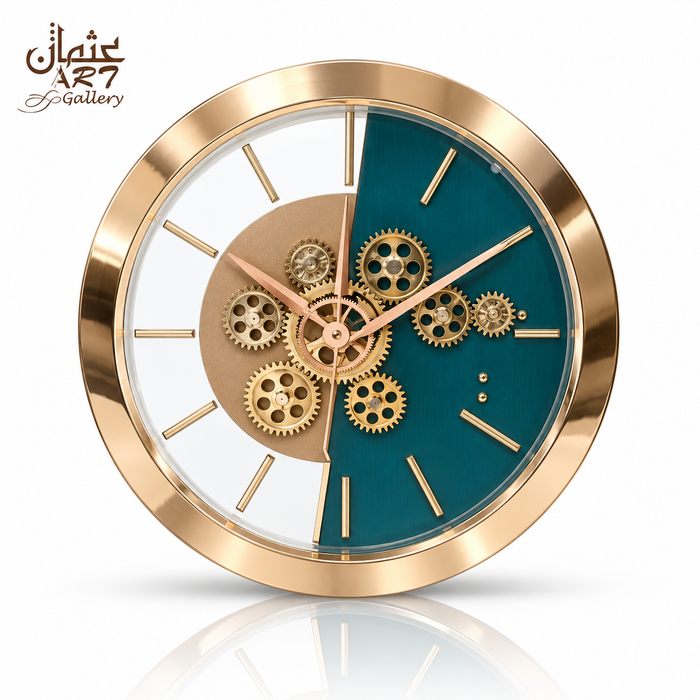
If a mechanical or industrial look suits your room, the Fancy Gear Clock provides a relevant example of a gear-style statement design.
For more room-specific inspiration, explore these stylish wall clock ideas for living rooms.
Decorative Wall Clocks for the Bedroom
Bedrooms generally benefit from less visual competition.
Instead of choosing the most dramatic clock available, consider:
- medium or smaller scale
- restrained faces
- soft neutral colours
- slim metallic details
- simple modern or contemporary forms
A clock can work above a chest of drawers, beside a reading area or on a clear secondary wall.
Avoid placing an oversized decorative clock on a wall already dominated by a tall upholstered headboard, patterned wallpaper or several pieces of artwork. One strong focal feature is usually more calming than several competing ones.
For a silver-toned contemporary room, a silver resin wall clock can be considered where its size and overall design suit the available wall.

Decorative Wall Clocks for the Dining Room
Dining areas can support more formal decorative finishes because the surrounding furniture already creates a strong horizontal composition.
Gold, silver, classic and structured wall clock designs work particularly well when coordinated with dining-table finishes, lighting or a sideboard.
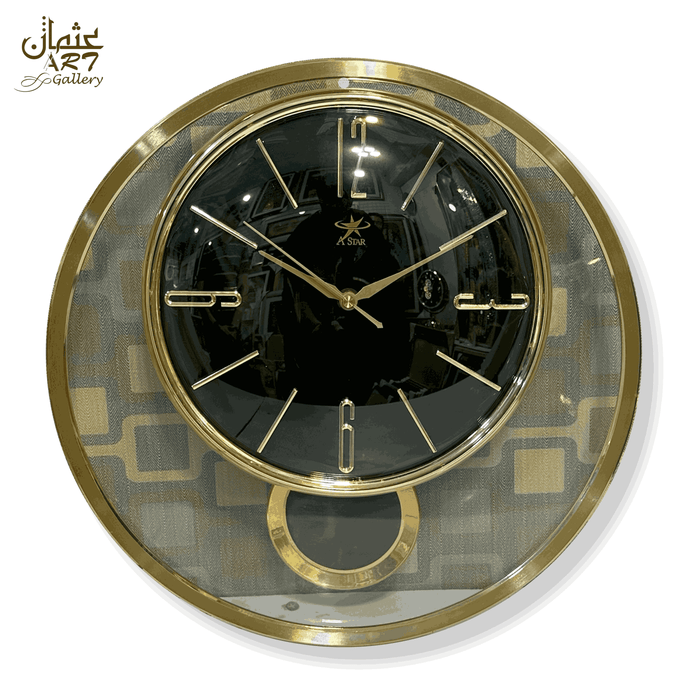
If the room includes warm metallic lighting or traditional furniture, a gold Roman numeral wall clock can support that more classic decorative direction.
Positioning a clock centrally above a dining-room sideboard is often cleaner than squeezing it between several unrelated wall objects.

Decorative Wall Clocks for the Kitchen
Kitchen wall clocks should balance appearance with usability.
Prioritise:
- clear hands and hour markers
- good contrast
- an appropriate viewing size
- straightforward placement
- enough distance from areas exposed to cooking residue, moisture or heat
A simple black, silver or neutral decorative clock can add character without competing with cabinetry, open shelving or backsplashes.
If the kitchen already contains strong patterns or multiple finishes, a quieter clock will often work better than an elaborate statement design.
Decorative Wall Clocks for the Home Office
Office wall clocks should contribute to a focused visual environment.
Modern, geometric, industrial and minimalist clocks work particularly well because their structured forms complement desks, shelving and technology.
Readability is more important here. A beautiful face with almost invisible hands may become frustrating if you frequently check the time during work.
For a home office visible during video calls, the clock can also become part of the background composition. Keep enough negative space around it so that the wall feels intentional rather than crowded.
Decorative Wall Clocks for Hallways and Entryways
Entryways give you more freedom to choose something unexpected.
A narrow wall may suit a vertically expressive or distinctive clock, while a larger entrance wall can support a stronger statement piece.
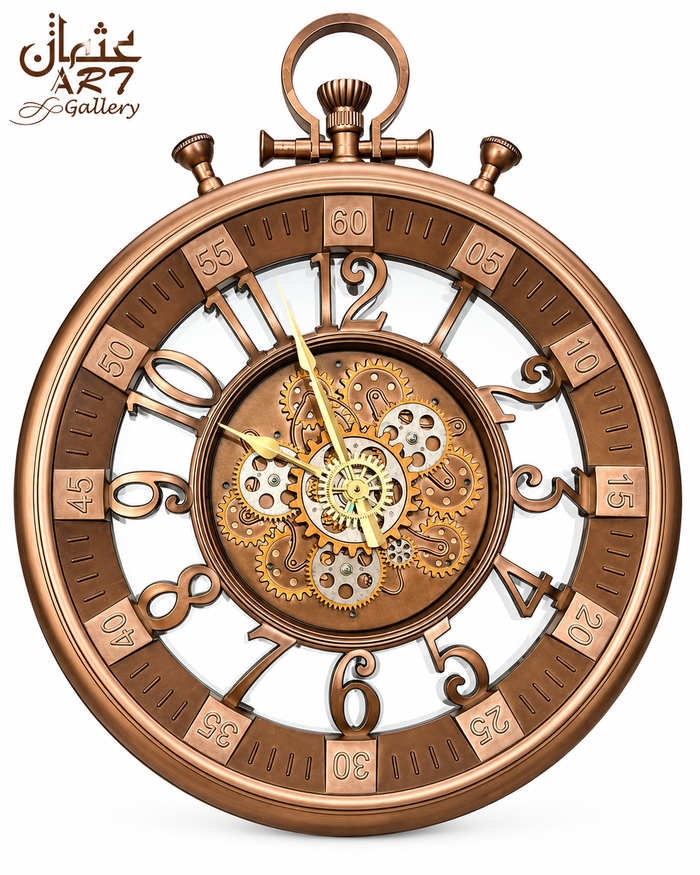
Station-inspired clocks are particularly interesting in transition areas because their form feels architectural rather than simply decorative. A double-face station clock is worth considering for an entryway or hallway where the installation position allows the design to be appreciated.
In compact Pakistani apartments, hallways are often too narrow for large furniture, so wall-mounted decoration provides a useful way to introduce personality without consuming floor space.
Popular Decorative Wall Clock Styles
Style labels are useful only if you understand what each type contributes to a room.
Modern Decorative Wall Clocks
Modern decorative wall clocks generally rely on cleaner shapes, controlled colour palettes and simpler detailing.
They suit:
- neutral walls
- contemporary furniture
- clean-lined sofas
- wood and black combinations
- modern apartments
- uncluttered office spaces
Choose modern designs when you want the clock to feel intentional without making the room overly formal.
Luxury Wall Clocks
Luxury wall clocks create presence through scale, finish, texture or detailing rather than simply through ornamentation.
They work best where the room already includes considered materials such as polished surfaces, warm wood, textured upholstery or metallic accents.
Gold can make a strong statement, but it should normally connect with something else in the room. Too many unrelated metallic finishes can make otherwise attractive décor feel inconsistent.
If this is the direction you prefer, the dedicated guide on how to choose luxury wall clocks covers the category in greater depth.
Gear Wall Clocks
Gear clocks introduce mechanical detail and visual complexity.
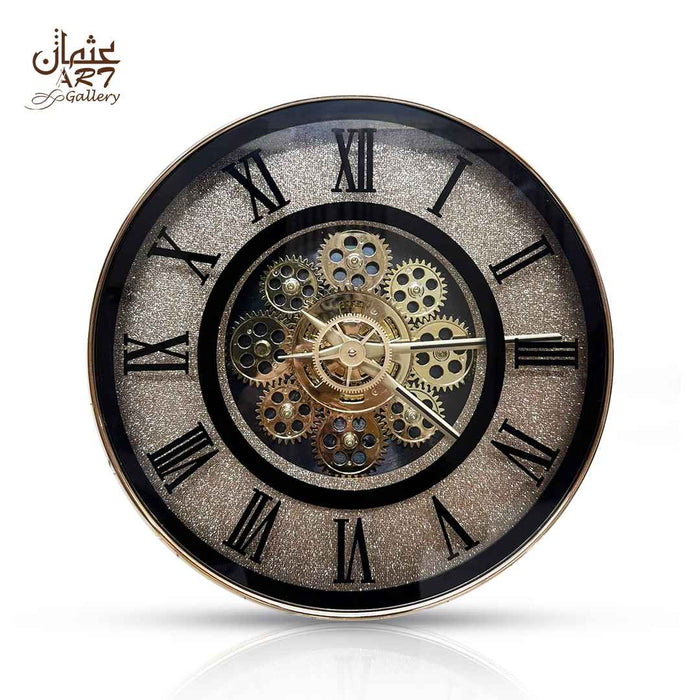
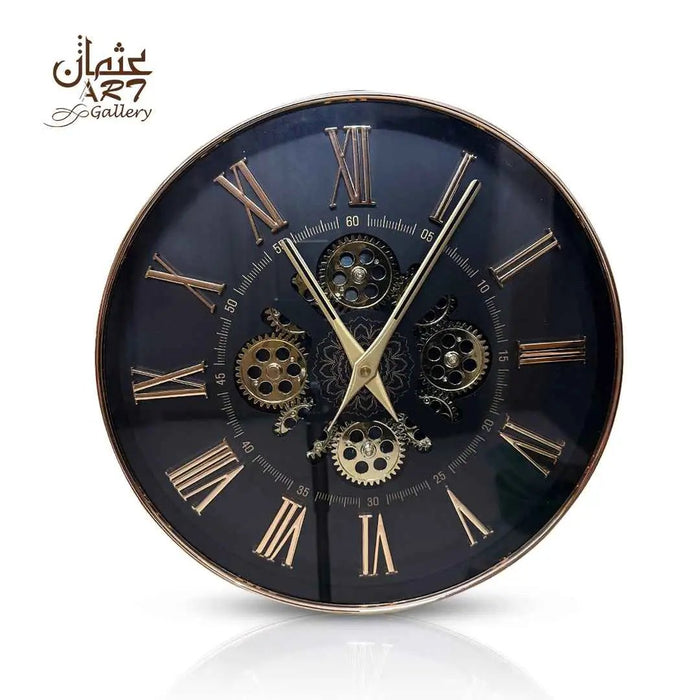
They naturally suit industrial, contemporary and statement-led interiors. Dark frames with warmer metallic details can look particularly effective against plain neutral walls because the uncluttered background allows the clock's structure to remain visible.
Use them carefully in rooms already filled with patterned textiles, detailed wall art and ornate furniture. A complicated clock generally needs a simpler area around it.
Roman Numeral Wall Clocks
Roman numerals give a wall clock immediate classical structure.
They are particularly effective with:
- traditional furniture
- wood finishes
- formal dining areas
- transitional interiors
- warm metallic décor
They are not limited to traditional rooms. A simplified Roman numeral clock can create interesting contrast in a modern space when the surrounding furniture remains clean.
Artistic and Designer Wall Clocks
Artistic wall clocks treat the timekeeping mechanism as part of a larger composition.
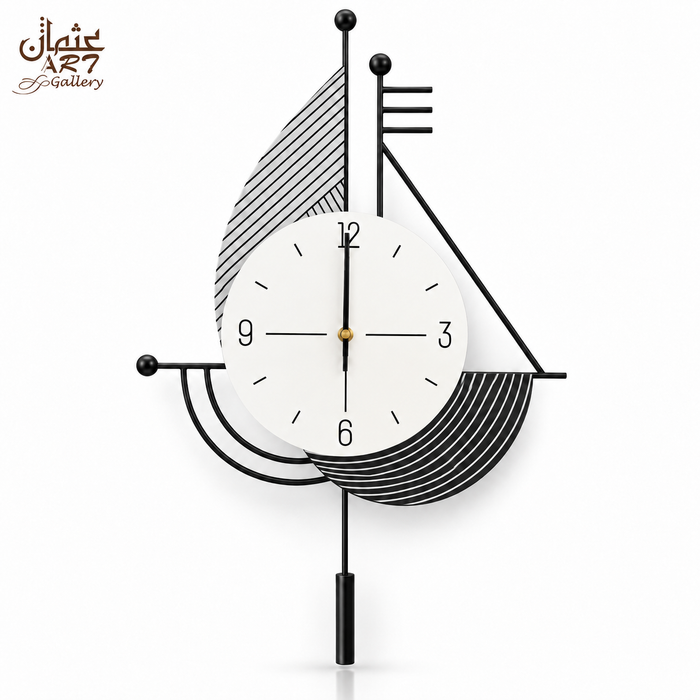
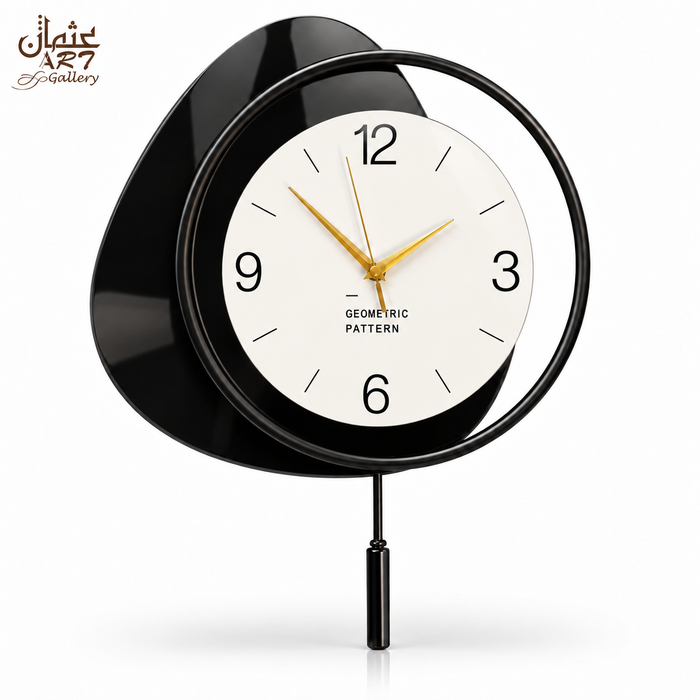
Shapes may become asymmetric, sculptural or layered. These clocks work best when the wall needs personality rather than simply another functional accessory.
Because designer wall clocks vary considerably in visual weight, select them in the same way you would select artwork. Consider colour, silhouette, surrounding negative space and sightlines.
For a deeper exploration of this category, see these artistic wall clock designs.
Vintage and Station-Style Wall Clocks
Vintage wall clocks work especially well where the interior contains traditional furniture, rustic textures, exposed materials or collected décor.
Station-style clocks are more architectural. Their distinctive mounting format can make them useful on entryway, hallway or kitchen walls where a normal flat clock might feel predictable.
The aim should be deliberate contrast, not artificial ageing. A vintage-inspired clock can still sit in a clean contemporary room if it is allowed to become the character piece.
How to Style Decorative Wall Clocks Like an Interior Designer
Good wall clock styling is mostly about relationships between objects.
Above a sofa
Centre the clock in relation to the sofa or the main seating composition, not automatically in relation to the entire wall.
If the clock is relatively small, pair it with complementary artwork rather than leaving it isolated in a large empty area.
Above a console
Use the clock as the highest visual element.
Then arrange lower accessories asymmetrically or symmetrically depending on the room style. Avoid placing several tall objects directly beneath the clock, where they can compete with its silhouette.
With wall art
Decide whether the clock is:
- the focal point, or
- one component of a larger display.
Trying to make every item equally dominant creates visual noise.
If you want to integrate clocks with prints, photographs or decorative pieces, the guide to creating a gallery wall with clocks provides more detailed layout ideas.
Use negative space
Decorative objects need empty space around them to remain legible.
A striking clock often looks more expensive and intentional when surrounded by a controlled amount of blank wall rather than several small accessories.
Coordinate finishes selectively
Repeat finishes rather than duplicating them everywhere.
For example, a black-and-gold clock could connect with one gold lamp and a black console frame. The repetition is enough to make the room coherent without becoming themed.
Decorative Wall Clock Size Guide
There is no universal wall clock size that works for every home. Proportion to the wall, furniture and viewing distance matters more than one rigid measurement.
| Wall or Room Type | Suggested Clock Scale | Styling Approach |
|---|---|---|
| Small kitchen wall | Small to medium | Prioritise readability and avoid crowding shelves |
| Bedroom secondary wall | Small to medium | Keep visual weight calm and proportional |
| Above chest or sideboard | Medium | Relate clock width to furniture below |
| Dining-room feature wall | Medium to large | Create a central anchor with controlled surrounding décor |
| Above long living-room sofa | Medium to large | Use enough scale to connect visually with seating |
| Large empty feature wall | Large or oversized | Allow substantial negative space around the clock |
| Narrow hallway | Small to medium or distinctive format | Avoid excessive projection into circulation space |
| Open-plan living area | Large | Account for longer viewing distances |
What size decorative wall clock should I choose?
Choose a size that is clearly visible from the room's normal viewing position and proportionate to nearby furniture. Larger walls and longer viewing distances usually require greater scale. Above furniture, the clock should feel visually connected to the piece beneath it rather than appearing like a small object floating in empty space.
If uncertain, reproduce the clock's approximate outline on the wall before purchasing.
Common Mistakes When Decorating With Wall Clocks
1. Choosing a clock that is too small
A small clock on a large feature wall can appear disconnected.
Better approach: increase the scale or incorporate the clock into a deliberate arrangement with artwork.
2. Hanging the clock too high
A clock positioned close to the ceiling may lose its visual relationship with the furniture below.
Better approach: assess the composition from normal standing and seated viewpoints, then position the clock so it belongs to the main visual zone.
3. Ignoring furniture proportions
Wall décor and furniture should form one composition.
Better approach: centre and size the clock in relation to the sofa, console, sideboard or desk whenever those elements visually belong together.
4. Mixing too many decorative styles
An ornate clock, abstract artwork, heavily patterned wallpaper and several metallic accessories can compete rather than complement one another.
Better approach: choose one dominant feature and make surrounding elements quieter.
5. Poor contrast against the wall
Black hands against a dark wall or pale numerals against a light wall may reduce readability.
Better approach: evaluate face, hands, markers and wall colour as a single combination.
6. Choosing decoration over readability
An artistic clock can be attractive but frustrating if reading it requires concentration.
Better approach: decide how functional the clock needs to be before prioritising an unconventional face.
7. Filling every remaining gap
Adding frames and ornaments simply because wall space remains can weaken a strong clock.
Better approach: preserve negative space around statement décor.
8. Ignoring lighting and reflections
A glossy face beneath a direct spotlight may produce glare, while metallic finishes can change substantially under different colour temperatures.
Better approach: assess the wall during both daylight and evening lighting.
9. Using an oversized clock in a cramped room
Large clocks work when there is enough surrounding breathing room.
Better approach: in compact rooms, use moderate scale or a visually lighter open design rather than forcing maximum size.
How to Choose a Decorative Wall Clock That Matches Your Home
Use this quick decision framework:
Choose modern or minimal if: your furniture has clean lines, your palette is restrained and you want the clock to support the room rather than dominate it.
Choose luxury or gold if: your interior already contains warm metallic details, sophisticated lighting or richer furniture finishes.
Choose Roman numerals if: you want a classic or transitional element with a structured clock face.
Choose a gear-style clock if: you want mechanical character and a stronger statement on a relatively simple wall.
Choose an artistic clock if: the wall needs a piece that behaves as decoration first and a timepiece second.
Choose station or double-face styling if: you have an entryway, hallway or transition space that suits a more architectural object.
For shoppers comparing build, appearance and suitability in the local market, the guide to choosing premium wall clocks in Pakistan can help narrow the decision further.
Decorative Wall Clocks vs Regular Wall Clocks
| Feature | Decorative Wall Clock | Regular Wall Clock |
| Primary role | Timekeeping plus interior décor | Primarily timekeeping |
| Visual presence | Often medium to strong | Usually understated |
| Design variety | Broad, including artistic and statement styles | Generally simpler |
| Materials and finishes | May use layered or decorative finishes | Often straightforward |
| Scale | Can range from compact to oversized | Commonly practical scale |
| Placement | Often planned around furniture and focal walls | Usually placed for visibility |
| Buying priority | Appearance, proportion and function | Function and readability |
Neither option is inherently better.
A regular clock may be exactly what a busy kitchen or utility area needs. Decorative wall clocks make more sense when the object is expected to participate actively in the room's visual design.
Where Should You Place a Decorative Wall Clock?
The best wall clock placement combines easy viewing with visual balance.
Above a sofa: centre it on the seating arrangement and make sure the scale feels connected to the furniture.
Above a console: use the clock as the main upper focal point and style smaller accessories underneath.
Dining room: position it where it can relate to a sideboard, dining table or clear feature wall.
Hallway: choose a position visible while approaching the space without interfering with movement.
Entryway: use the clock to establish a strong first visual impression.
Kitchen: place it somewhere readable from the main working areas but away from unnecessary exposure to cooking residue and moisture.
Office: prioritise a clear viewing angle from the desk.
Avoid choosing hanging height based only on a fixed number. Ceiling height, furniture, clock diameter and the viewer's normal position all affect where the clock should sit.
Final Thoughts: Choosing the Perfect Decorative Wall Clock
Successful decorative wall clocks are selected as part of the room, not in isolation.
Start with the wall and furniture proportions. Decide whether the clock should become the focal point or remain a supporting detail. Then choose a style, colour and finish that communicates the right character while remaining readable from the intended viewing distance.
Large statement clocks can anchor expansive living-room walls. Cleaner designs usually work better in bedrooms and offices. Metallic finishes can introduce warmth or contrast, while Roman numerals, gear elements and artistic forms allow the clock to express a more specific design identity.
Most importantly, give the clock enough visual space to perform its role.
If you are comparing styles for different rooms, you can explore WeDecorators' modern and artistic wall clocks and choose according to your wall size, furniture, colours and overall interior direction.
E. FAQ SECTION
1. What are decorative wall clocks?
Decorative wall clocks are timepieces designed to contribute visually to a room as well as display time. They may use distinctive frames, numerals, materials, colours, textures or sculptural shapes. Unlike a purely functional clock, a decorative clock is often selected in relation to furniture, wall proportions, lighting and the room's interior design style.
2. What type of wall clock is best for a living room?
The best living-room clock depends on the wall size and décor. Large walls can support statement clocks, open-frame designs, gear clocks or bold Roman numeral styles. Smaller living rooms usually benefit from medium-scale designs with enough contrast to remain visible without dominating the space. Coordinate the clock with furniture proportions rather than choosing size from the wall alone.
3. What size decorative wall clock should I choose?
Choose according to wall space, surrounding furniture and viewing distance. A small clock suits narrow walls and compact rooms, while medium or large clocks usually work better above sofas, consoles and broad feature walls. Instead of following one fixed dimension, test the proposed scale with a paper or tape outline before purchasing.
4. Where should a wall clock be placed in a living room?
A living-room wall clock commonly works above a sofa, console table, sideboard or another clear feature wall. Position it so that it feels visually connected to nearby furniture and can be read comfortably from the seating area. Avoid hanging it so high that it appears disconnected from the rest of the room.
5. Are large decorative wall clocks suitable for small rooms?
They can be, but only if the wall has enough negative space and the design does not make the room feel crowded. A visually light open-frame clock may work better than a heavy, elaborate oversized design. In very compact rooms, a medium-size clock will generally be easier to integrate with furniture and existing wall décor.
6. How do I match a wall clock with my home décor?
Start with the room's dominant colours, furniture style and existing finishes. Modern spaces usually suit cleaner shapes, traditional rooms can accommodate Roman numerals, and industrial interiors work naturally with gear or metal-inspired designs. Repeat one clock colour or finish elsewhere in the room to create cohesion without making every accessory identical.
7. Are Roman numeral wall clocks still stylish?
Yes. Roman numeral clocks can work in classic, transitional and even modern interiors. Their suitability depends more on the overall frame, finish and scale than on the numerals themselves. A highly ornate version creates a traditional effect, while a cleaner Roman numeral design can provide structured contrast in a contemporary room.
8. What colour wall clock works with neutral walls?
Neutral walls are flexible. Black creates strong graphic contrast, gold introduces warmth, silver produces a cooler contemporary appearance, and neutral-toned clocks create a quieter effect. Choose the finish according to the furniture, lighting and other hardware in the room rather than matching the wall colour alone.


