
Roman numeral wall clocks bring something unusual to an interior: a numbering system associated with classical design can still feel completely at home beside modern furniture. The numerals add structure and decorative character, while the clock's colour, frame, scale and dial treatment determine whether the final result feels traditional, transitional or contemporary.
For shoppers in Pakistan, this makes Roman clocks more versatile than they first appear. A black-and-gold design can create sharp contrast in a modern living room, bronze can reinforce a warmer classic scheme, and a white-and-gold layered clock can work in a lighter drawing room. Gear detailing can add industrial character, while a simpler dial keeps the Roman influence more restrained.
This guide explains how to compare Roman numeral clock designs, readability, size, visual weight, wall colour and room suitability. It also compares four current WeDecorators Roman designs and explains what to verify before ordering online.
Are Roman Numeral Wall Clocks Still Stylish?
Yes. Roman numeral wall clocks remain stylish because the numerals provide classical structure without forcing the entire clock to look traditional. The surrounding design matters more. A distressed bronze frame feels classic, a black-and-gold face can look modern-classic, and a controlled open or layered design can work comfortably in contemporary interiors.
The important distinction is between the numeral system and the rest of the object. Roman numerals tell you how the hours are represented. They do not tell you whether the clock is antique, quartz, mechanical, silent, minimal or gear-driven.
That separation is useful when decorating a modern home. Instead of asking whether Roman numerals themselves are old-fashioned, ask whether the whole clock suits the room's visual language.
Key Takeaways
- Roman numerals add classic character without requiring a traditionally furnished room.
- Black and gold usually creates stronger contrast than a pale metallic-on-metallic dial.
- Readability depends on numeral, hand and background contrast, not simply numeral size.
- Roman numerals do not indicate whether a clock uses quartz or mechanical timekeeping.
- Decorative gear detailing does not prove that the gears move.
- Antique-inspired describes appearance, not verified historical age.
- A large clock can still feel visually light if it has an open structure and generous negative space.
- A smaller but dark, dense or highly detailed clock can carry greater visual weight.
- Exact product dimensions should be checked rather than estimated from lifestyle photographs or labels such as Standard, Big or Large.
The Roman Clock Style Test
A useful way to judge a Roman clock is to look beyond the numerals and assess six design factors. This framework is editorial guidance rather than a scientific scoring system.
- Numeral design: Are the Roman numerals ornate, bold, slender, oversized or visually restrained?
- Dial contrast: Can the numerals and hands be distinguished clearly from the background?
- Frame style: Is the clock open, slim, distressed, thick, layered or highly decorative?
- Colour palette: Does it rely on bronze and brown, controlled gold, black and gold, white and gold or cooler metallic colours?
- Decorative complexity: Is the centre clean, layered, textured or filled with gear-style details?
- Room compatibility: Does the visual weight make sense beside the room's furniture, wall treatment and existing accessories?
These six factors usually place the clock somewhere along four broad design directions.
| Style Direction | Typical Characteristics | Useful Interior Direction |
|---|---|---|
| Traditional | Warm bronze, brown, distressed treatment, ornate Roman numerals | Classic wood furniture, formal rooms, vintage-inspired décor |
| Transitional | Traditional numerals with cleaner frames or mixed metallic finishes | Rooms combining classic details with modern furniture |
| Modern-classic | Strong Roman numerals, black and gold, white and gold or controlled layering | Contemporary homes wanting a classical accent |
| Contemporary statement | Simplified structure, high contrast, controlled ornament or open framing | Modern feature walls, offices and uncluttered living rooms |
This test prevents a common mistake: choosing a clock simply because Roman numerals look elegant, without considering whether the remaining design belongs in the room.
Why Roman Numeral Wall Clocks Remain Relevant
Roman Numerals Create Immediate Visual Structure
Roman numerals naturally divide a circular clock face into recognisable visual groups. XII establishes a strong top point, VI balances the lower half, while III and IX help the eye understand the quarters of the dial. Even when the clock is primarily decorative, this structured arrangement gives the design order.
That structure can be useful in rooms containing soft materials such as curtains, upholstered sofas and rugs because the clock introduces a more architectural element to the wall.
Classic Character Can Contrast With Modern Furniture
A Roman clock does not need matching classical furniture. Contrast can be more interesting. A clean contemporary sofa beneath a restrained Roman wall clock allows the clock to introduce history-inspired character without turning the room into a period interior.
The safest approach is selective repetition. If the clock contains gold, repeat gold once or twice through lighting or a frame. If it contains black, connect that colour with table legs, a lamp or another controlled accent. Avoid matching every accessory.
Large Numerals Strengthen Wall Presence
Roman numerals are visually distinctive, particularly when they are oversized or form part of an open frame. They can therefore give a clock substantial presence even where the centre remains relatively simple.
Large numerals are not automatically easier to read. Visibility still depends on contrast, spacing, the hands and the viewing distance.
Metallic Finishes Can Modernise the Look
Gold, black, silver and mixed metallic finishes can shift Roman numerals away from a purely traditional appearance. A clean gold outline on a pale wall can feel lighter than a distressed bronze frame, while black-and-gold contrast often gives Roman styling a sharper contemporary edge.
Roman Numerals Work Across Several Clock Categories
Roman numerals can appear on simple round clocks, open-frame designs, layered clocks, decorative gear clocks, station-style clocks and antique-inspired frames. The numeral system therefore describes only one part of the design.
For a broader overview of decorative categories, see the decorative wall-clock styles guide.
Where Roman Numeral Styling Can Go Wrong
Problems arise when too many visually heavy features compete. Dense gears, oversized numerals, a thick metallic frame, strong wall texture and several nearby decorations may all be attractive individually but overwhelming together.
Poor contrast is another issue. Gold numerals on a similarly coloured dial may look rich in a close-up image but become difficult to distinguish across a room. The clock still needs to function as a time display.
Main Roman Numeral Wall Clock Designs
Black and Gold Roman Numeral Wall Clocks
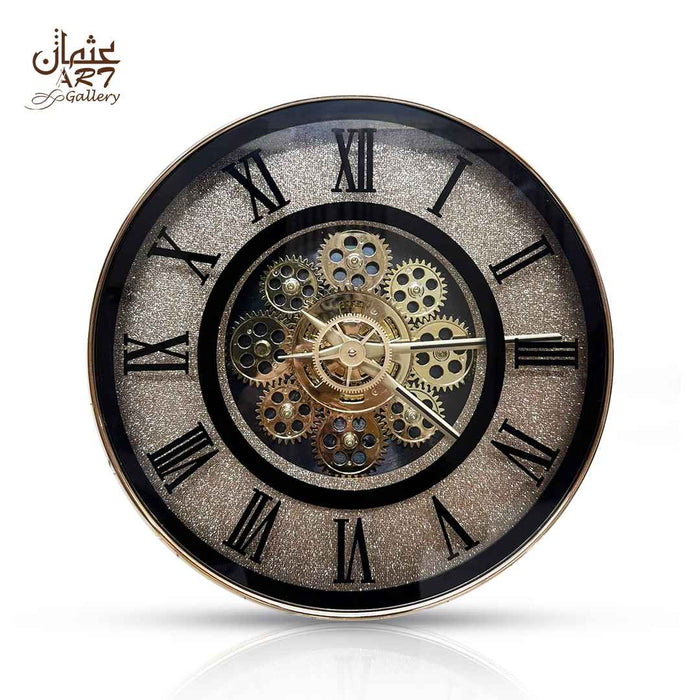
Black and gold is one of the most flexible Roman-clock combinations for Pakistani interiors. Black creates a strong silhouette and gold adds warmth. On white, cream, beige, greige or light-grey walls, this pairing can create a clear focal point without needing a complicated frame.
It works particularly well with walnut furniture, warm lighting and controlled gold accessories. The main check is hand visibility. Gold hands should remain distinct enough from the face and numerals to read comfortably.
Gold Roman Numeral Clocks
Gold works naturally with cream, ivory, warm beige, walnut, brass-effect lighting and formal furniture. A gold Roman clock can feel more contemporary when the frame is thin or open, and more traditional when combined with dense ornament or warm brown finishes.
Avoid assuming that more gold creates a more elegant room. If the console, mirror, lamps, cushions and clock all compete in the same strong metallic finish, the result can lose hierarchy.
Bronze Roman Numeral Clocks
Bronze introduces deeper warmth and often supports antique-inspired or industrial styling. It is effective with brown furniture, dark wood, beige, cream, stone textures and warmer neutral walls.
A bronze clock can also work in a modern room when the furniture remains controlled. Pairing it with too many distressed accessories may make the room feel themed rather than intentional.
White and Gold Roman Numeral Clocks
White reduces the visual heaviness of gold and can make a layered Roman design easier to introduce into a lighter interior. White, gold and black combinations work particularly well against greige, cream and soft neutral walls where the black elements provide definition.
This direction can suit formal drawing rooms and dining rooms that use marble, pale upholstery, glass and warm metallic details.
Roman Numeral Gear Clocks
A Roman numeral gear clock combines two design languages. The Roman numerals provide classical structure, while the gear-style centre introduces industrial or mechanical-inspired detail.
Gear styling does not automatically mean moving gears. A product can contain decorative gear detailing while using a completely separate timekeeping movement. If rotating gears matter to you, verify that feature explicitly on the product page.
For deeper category guidance, see the gear wall clock guide. If you specifically want to understand actual movement systems, use the mechanical wall clock guide.
Layered Roman Numeral Clocks
Layering creates depth by placing the frame, numeral ring or surrounding structure at different visual levels. The resulting shadows and separation can make the clock feel more substantial than a flat dial.
Because layering increases visual weight, give these clocks enough surrounding wall space. A double-layer design placed directly beside shelves, artwork and mirrors can make the wall feel unnecessarily dense.
Antique-Inspired Roman Clocks
Distressed frames, bronze tones, brown finishes and bold Roman numerals can create an antique-inspired appearance. The word antique-inspired is important. It describes visual styling and does not establish age, provenance or collectible value.
These designs work most naturally with timber, traditional furniture and warmer neutrals, but one antique-inspired clock can also create deliberate contrast in a cleaner contemporary space.
Minimal Roman Numeral Clocks
Minimal Roman clocks reduce everything around the numerals. The frame may be slim or open, the colour palette controlled and the centre comparatively clean. This is often the easiest direction for someone who likes Roman numerals but does not want a strongly traditional room.
Roman Design Comparison Matrix
| Roman Clock Style | Visual Character | Wall Colours | Visual Weight | Best Rooms | Main Buying Check |
|---|---|---|---|---|---|
| Black & Gold | Sharp, warm, modern-classic | White, cream, beige, greige, light grey | Medium to strong | Living room, office, hallway | Hand and numeral contrast |
| Gold | Warm and formal | Ivory, cream, warm neutral | Varies by frame | Drawing room, dining room | Avoid excessive metallic repetition |
| Bronze | Classic, vintage-inspired | Beige, warm grey, stone, cream | Usually stronger | Drawing room, office, hallway | Check that it suits surrounding furniture |
| White & Gold | Light modern-classic | Greige, beige, light grey | Medium | Drawing room, dining room | Check numeral visibility |
| Gear-Style | Industrial and detailed | Plain neutrals | Strong | Living room, office, reception | Verify whether gears actually move |
| Layered | Dimensional and formal | Plain or lightly textured neutrals | Medium to strong | Living room, drawing room | Check overall dimensions and projection |
| Antique-Inspired | Warm and historical-looking | Cream, beige, warm grey | Strong | Drawing room, hallway, study | Do not confuse styling with genuine age |
| Minimal | Clean and architectural | Most plain walls | Light to medium | Office, bedroom, modern living room | Ensure the numerals remain legible |
If you want to compare actual Roman designs rather than general categories, review the four verified WeDecorators options later in this guide.
Traditional to Contemporary Roman Clock Scale
| Design Element | Traditional | Transitional | Contemporary |
|---|---|---|---|
| Numerals | Ornate or strongly classic Roman | Cleaner Roman forms | Simplified or restrained Roman |
| Frame | Distressed or detailed | Metallic or layered | Slim, open or controlled |
| Colour | Brown and bronze | Black and gold | White, black or controlled metallic |
| Centre | Decorative | Layered or gear-inspired | Cleaner |
| Furniture pairing | Classic wood | Mixed classic-modern | Modern furniture |
This scale is useful because Roman numerals themselves do not determine the room style. If your sofa, tables, lighting and architecture are contemporary, choose a Roman clock closer to the transitional or contemporary end rather than assuming every Roman design will work equally well.
Why Do Clocks Use Roman Numerals?
Roman numerals have a long relationship with clock and watch dials and continue to be used because they provide a recognisable classical visual language. On today's decorative wall clocks, they are often as much a design choice as a numbering system.
The useful point for a buyer is simple. Roman numerals such as I, II, III, V, VI, VII, VIII, IX, X, XI and XII describe the hour markings. They do not identify the clock's movement, materials or age.
Why Do Some Clocks Use IIII Instead of IV?
Many traditional Roman clock and watch dials display IIII at four o'clock instead of IV. It is a long-established convention rather than necessarily a printing error. Several explanations have been proposed, including visual balance, historical numeral usage, legibility and manufacturing tradition, but there is no single universally proven origin story.
The visual-balance explanation is particularly intuitive. IIII has greater visual mass than IV and can balance the comparatively heavy VIII on the opposite side of the dial. Another design observation is that IIII allows the first four hour positions to rely primarily on I forms before the dial moves through V-based and then X-based groups.
There are also clocks that use IV. A buyer should therefore treat IIII and IV as valid dial-design conventions rather than assuming that one automatically proves better craftsmanship.
Decorative Complexity vs Readability
A decorative wall clock still needs to communicate the time clearly. Roman numerals can become harder to use when other features compete for attention.
| Feature | Decorative Benefit | Possible Readability Problem | What to Check |
|---|---|---|---|
| Large Roman numerals | Strong structure | Can crowd a compact face | Spacing |
| Gold numerals | Warm decorative finish | May disappear against a similar gold background | Background contrast |
| Gear-style centre | Adds depth and detail | Can compete with the hands | Hand visibility |
| Distressed frame | Vintage-inspired character | Can make the complete design feel busy | Dial separation |
| Layered frame | Adds dimension | Raises visual weight | Available wall space |
| Glass | Creates a polished protective surface | Can reflect nearby lighting | Viewing and lighting angle |
Test readability from the place where you will actually sit, work or walk into the room. A clock that looks clear from half a metre away on a product page may behave differently from across a drawing room.
Roman Numeral vs Arabic Numeral Wall Clocks
Roman and Arabic numeral clocks differ mainly in visual language, not in timekeeping capability. Roman numerals often create a more classical or formal impression. Arabic numerals such as 1, 2 and 3 usually feel more familiar for everyday reading to many people, although actual readability depends on the design.
| Feature | Roman Numeral Clock | Arabic Numeral Clock |
|---|---|---|
| Visual character | Classical, architectural or decorative | Direct, familiar and highly variable |
| Traditional feel | Usually stronger | Depends on font and frame |
| Modern potential | High with restrained framing and colour | High |
| Readability | Depends on design and user familiarity | Depends on design and user familiarity |
| Decorative use | Often a strong visual feature | Can range from functional to highly decorative |
| Typical room role | Focal point or classic accent | Utility, accent or statement depending on design |
Choose according to the room and the people using it rather than assuming one system is objectively superior.
Roman Numeral Clock vs Gear Clock
A Roman numeral clock and a gear clock are not opposite categories. One clock can be both.
Roman numerals describe the hour markings. Gear-style describes the visual or mechanical-inspired treatment elsewhere in the clock. A product can therefore combine a Roman numeral outer ring with a decorative gear centre.
Similarly, visible gears do not tell you whether the timekeeping movement itself is mechanical. Check the listing if functional moving gears, quartz movement or other technical characteristics matter to you.
What Size Roman Numeral Wall Clock Should You Buy?
Choose size according to the usable wall area, nearby furniture, normal viewing distance and the clock's visual weight. Do not choose from room size alone, and do not estimate dimensions from a staged lifestyle photograph.
Start with the product's actual outer width or diameter where supplied. Measure the space between nearby curtains, shelves, doors, artwork and furniture. Then consider what sits below the clock. A design over a wide sofa or substantial console normally needs enough visual presence to relate to that furniture without dominating it.
There is no universal percentage that works for every room. A 20-inch open-frame clock and a 20-inch dense gear clock can feel very different even though their physical dimensions match.
For additional sizing guidance, read the large wall clocks guide.
Wall Mock-Up Test
- Verify the listed outer dimensions.
- Mark those dimensions on the wall using removable tape or paper.
- Stand or sit at your normal viewing position.
- Compare the outline with the sofa, console or desk below it.
- Assess whether the implied numeral size should remain visible.
- Check the negative space around the outline.
- Take a photograph from the room entrance and main seating position.
- If uncertain, repeat the test with another potential size.
If the listing only says Standard, Big or Large, treat that as a descriptive label rather than an exact measurement and request clarification before purchase if physical dimensions are important.
Physical Size vs Visual Weight
| Design Feature | Typical Effect on Visual Weight |
|---|---|
| Black face | Stronger |
| Gold numerals against black | Strong focal contrast |
| Bronze distressed frame | Heavier traditional character |
| Open Roman frame | Can feel lighter |
| Dense gear centre | Greater visual complexity |
| Double layer | Adds depth and visual weight |
| White background | Can feel lighter |
| Thick outer frame | Stronger silhouette |
| Large numerals | Stronger wall presence |
These are design tendencies, not scientific measurements.
Best Wall Colours for Roman Numeral Clocks
Ivory and Cream
Ivory and cream are particularly flexible with warm metallic clocks. Black and gold creates clear contrast, bronze brings a traditional direction, while white-and-gold clocks can produce a softer layered effect. Avoid a pale clock that disappears into the wall without enough frame definition.
Beige and Greige
Beige and greige work well because they sit between warm and cool directions. Black, bronze, controlled gold and white-and-gold designs can all work, depending on the furniture. Use the clock to either introduce contrast or repeat an existing finish.
White
White provides the strongest flexibility. Black Roman clocks create graphic contrast, gold feels warmer, while open metallic frames can appear lighter because the wall remains visible through the structure.
Light Grey
Light grey naturally supports black, silver and mixed metallic clocks. Gold can also work if warmth is repeated elsewhere through timber, lighting or textiles. A highly cool grey room combined with strong yellow-gold accessories can feel disconnected unless another warm element bridges the two.
Charcoal
Dark walls need deliberate contrast. Gold, pale numerals or lighter metallic structures can become dramatic against charcoal. A dark black clock on charcoal may lose its silhouette unless metallic details define the edge.
Navy and Deep Green
Gold and bronze can create a formal, rich relationship with navy and deep green. These colours already carry strong visual weight, so keep surrounding wall accessories controlled.
Textured Walls and Wood Panelling
Texture adds another layer of information behind the clock. Prefer a Roman clock with a clear silhouette and adequate numeral contrast. Dense gear centres against heavily patterned stone or timber can become visually noisy.
| Wall Colour | Roman Finish to Consider | Intended Effect | Main Check | Avoid |
|---|---|---|---|---|
| Ivory / Cream | Black & gold, bronze | Warm contrast | Gold balance | Too many metallic accessories |
| Beige / Greige | Black, bronze, white & gold | Balanced modern-classic | Furniture undertone | Low-contrast beige-on-beige |
| White | Black, gold, silver | Clear focal point | Overall room palette | Unnecessary colour mixing |
| Light Grey | Black, silver, controlled gold | Modern contrast | Warm/cool balance | Disconnected metallic tones |
| Charcoal | Gold or lighter metallic | Dramatic contrast | Silhouette | Dark-on-dark loss of definition |
| Navy / Deep Green | Gold, bronze | Formal statement | Visual weight | Too many strong wall elements |
For deeper colour guidance around vintage-inspired finishes, see the vintage wall-clock colour guide.
Best Rooms for Roman Numeral Wall Clocks
Living Room
A living room can support a Roman clock as a genuine focal point because the clock is normally viewed from several positions. Above a console, check that the design feels connected to the furniture without sitting directly among several competing objects. Above a sofa, consider the full seating width and leave enough clear wall around the clock.
If the room already contains statement artwork, patterned curtains and decorative lighting, choose a simpler Roman clock rather than another heavily detailed object.
For broader room planning, see the living-room wall clock guide.
Drawing Room
Roman numerals are particularly suited to many Pakistani drawing rooms because these spaces often combine formal seating with walnut or dark wood, warm lighting, marble, mirrors, glass and metallic accessories.
Black and gold can sharpen a cream or beige drawing room. Bronze can strengthen a traditional scheme. White and gold can complement lighter upholstery and marble while preventing the clock from feeling excessively heavy.
The main risk is ornament competing with ornament. If the curtains, console, chandelier and wall moulding are already detailed, choose a Roman clock with clearer structure rather than maximum decoration.
See the dedicated guide to fancy clocks for drawing rooms for broader style options.
Dining Room
Dining rooms often suit Roman clocks because the numerals provide formality without requiring artwork. Consider a design that relates to the dining table, sideboard or lighting finish. Keep strong reflections in mind if the clock contains glass and faces a chandelier or bright window.
Hallway
A hallway benefits from a clear silhouette and controlled projection from the wall. Open or straightforward Roman clocks can provide character without making a narrow passage feel cluttered. Verify overall depth and mounting information when relevant.
Office and Reception
Readability should receive greater priority in an office or reception. Black-and-gold, black-and-white or other clearly contrasted Roman dials can work well. Gear styling may suit creative or executive environments, while simpler Roman designs can feel more formal.
Bedroom
Bedrooms generally benefit from a calmer design. If clock noise matters, check the exact movement information rather than assuming Roman numeral, quartz or modern styling means silent. A product should only be described as silent when that feature is explicitly verified.
| Room | Main Design Goal | Roman Style to Consider | Main Scale Concern | Biggest Mistake |
|---|---|---|---|---|
| Living room | Balanced focal point | Black & gold, layered, gear-style | Relationship with sofa or console | Competing with too much wall décor |
| Drawing room | Formal elegance | Bronze, white & gold, black & gold | Visual weight beside formal furniture | Overusing gold or ornament |
| Dining room | Structured atmosphere | Gold, layered, clean Roman | Balance with sideboard and lighting | Ignoring glare |
| Hallway | Character without clutter | Open or simpler Roman | Wall projection | Oversized depth in a narrow route |
| Office / Reception | Readable professional feature | High-contrast Roman or controlled gear-style | Viewing distance | Prioritising decoration over legibility |
| Bedroom | Calm accent | Simple Roman design | Proportion to available wall | Assuming movement is silent |
How to Style Roman Numeral Wall Clocks
Black + Gold + Ivory + Walnut
This combination works because ivory gives the clock a calm background, black adds definition, gold adds warmth and walnut connects with the warmer metallic tone. Use one or two gold accessories, such as a lamp or frame, rather than repeating gold everywhere.
Bronze + Beige + Dark Wood
Bronze and dark wood naturally support classic or vintage-inspired Roman styling. Keep upholstery and wall decoration simpler so the combination feels intentional rather than heavily themed.
White + Gold + Greige
This is a useful modern-classic combination for a drawing or dining room. Greige provides subtle contrast, white lightens the clock and gold creates the decorative focal point. Black accents can add definition where the design includes them.
Silver + Grey + Glass
Where a Roman design uses silver, grey walls and glass furniture can create a cooler contemporary direction. Ensure the clock does not disappear into reflective surroundings. A darker numeral or frame element helps maintain definition.
Roman Gear + Minimal Furniture
If the clock has a detailed gear-style centre, reduce competition elsewhere. A plain wall, simple console and limited accessories allow the clock's structure to become the intended feature rather than one more complicated item in the room.
When Can a Roman Numeral Clock Look Outdated?
Roman numerals themselves are not automatically outdated. Problems usually come from the combination of the clock and its surroundings.
- Distressed finishes beside ultra-sleek furniture: use a cleaner Roman frame or create a deliberate bridge through warm wood or metal elsewhere.
- Too many traditional accessories: remove competing ornaments and allow the clock to carry the classical reference.
- Bronze, brown and gold everywhere: introduce lighter neutral space to restore contrast.
- A small decorative clock on a huge feature wall: verify scale rather than relying on the product photograph.
- Ornate furniture plus an ornate clock: simplify either the wall or the furniture accessories.
- Low numeral contrast: choose a clearer dial or stronger hand-to-face contrast.
The most current-looking Roman interiors usually balance one classical cue with cleaner modern elements rather than reproducing every traditional detail simultaneously.
WeDecorators Roman Numeral Wall Clock Comparison
The following comparison uses live WeDecorators product information checked on 27 August 2026. Prices and availability can change, so always review the current listing before ordering.
| Product | Size | Colours | Style | Movement | Main Visual Feature | Suitable Buyer |
|---|---|---|---|---|---|---|
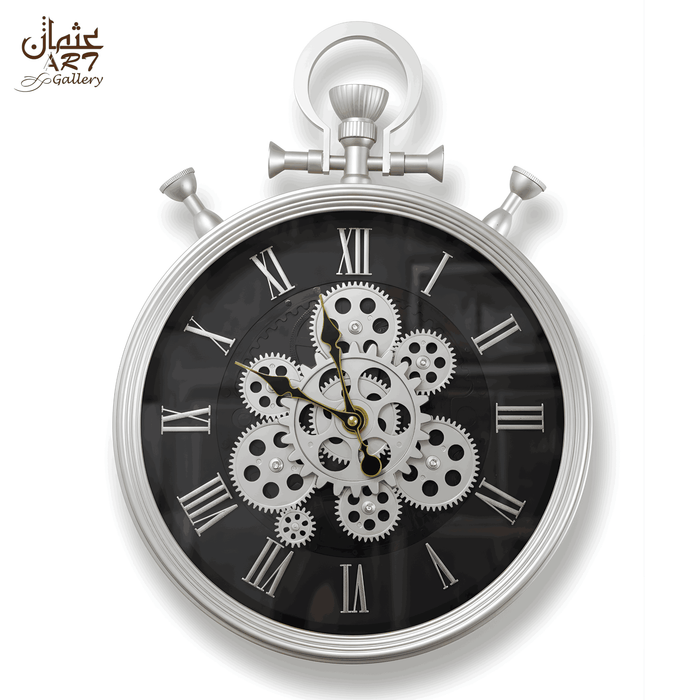
| Roman Gear | Large. Exact measurement not stated | Silver and Wood mix | Vintage-industrial / gear-inspired | Not specified | Roman numerals with metallic gear detailing | Someone wanting stronger industrial character |
| Roman Frame | Big. Exact measurement not stated | Black & Bronze; Brown & Bronze | Antique-inspired | Not specified | Bold Roman numerals and distressed frame | Someone wanting a warmer classic look |
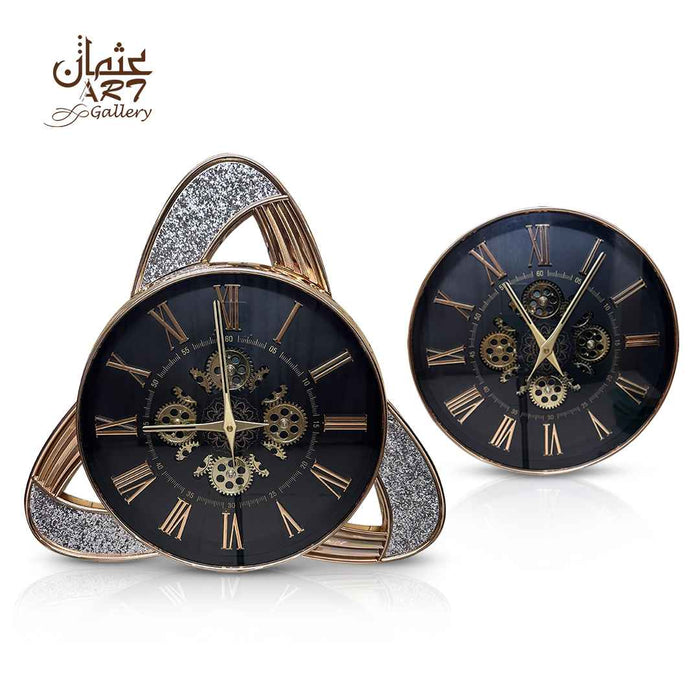
| Double Roman | Large. Exact measurement not stated | White, Gold, Black | Layered modern-classic | Imported quartz movement | Double-layer treatment, taper glass and golden Roman numerals | Someone decorating a lighter formal room |
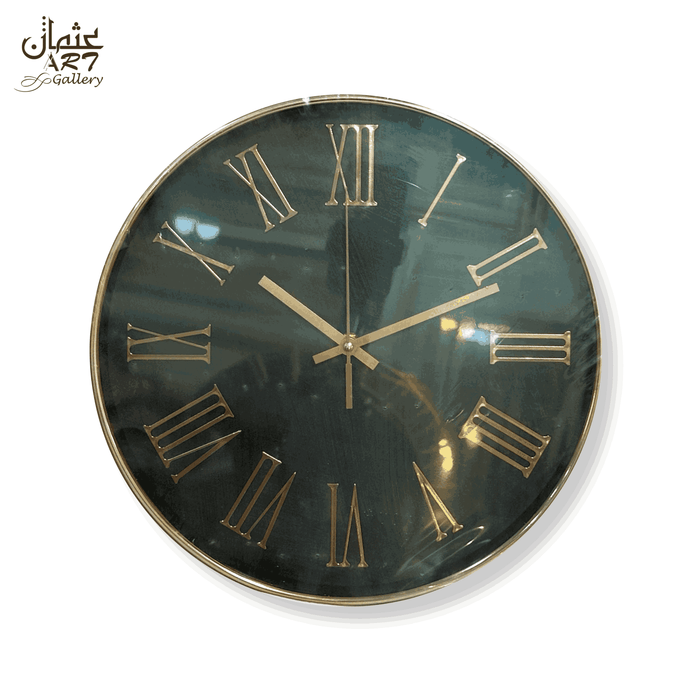
| Black Wall Clock with Gold Roman Numerals | Standard. Exact measurement not stated | Black, Gold | Simple modern-classic | Not specified | Black face with gold numerals and hands | Someone wanting straightforward high-contrast Roman styling |
None should be treated as an objective first, second, third or fourth choice. They solve different styling problems.
Which WeDecorators Roman Clock Should You Choose?
Choose Roman Gear If...
Choose Roman Gear if you want Roman numerals combined with stronger industrial-inspired character. The current listing describes a silver-and-wood colour mix and metallic gear detailing. It does not currently verify moving gears, so treat the gears as decorative unless updated specifications confirm otherwise.
Choose Roman Frame If...
Choose the antique-inspired Roman Frame if bronze, brown, distressed texture and bold Roman numerals suit your room. The black-and-bronze option can create stronger contrast, while brown and bronze naturally complements warmer wood. Its current size is listed only as Big, so do not convert that description into an assumed diameter.
Choose Double Roman If...
Choose the Double Roman clock if your room uses lighter neutrals, gold details and a more formal modern-classic direction. The current listing specifies white, gold and black, taper glass, a double-layered design and imported quartz movement. Quartz identifies its movement technology. It does not automatically mean the clock is silent.
Choose Black and Gold If...
Choose the black-and-gold Roman numeral clock if you want the Roman element without a highly complicated centre. Its black face, gold Roman numerals and gold hands create clear decorative contrast. The current product data lists its size as Standard rather than providing an exact diameter, and the movement and battery type are not specified.
Roman Numeral Wall Clock Price in Pakistan
Roman numeral wall clock price in Pakistan depends on much more than the numeral style. Size, frame construction, glass, layering, decorative gear work, materials, movement, metallic finishes, sourcing, packaging and seller all affect the final price.
As checked on 27 August 2026, the four Roman-focused WeDecorators listings in this article display selling prices from Rs.3,499 to Rs.7,999. Roman Gear is Rs.7,999, Roman Frame Rs.6,999, Double Roman Rs.7,499, and Black Wall Clock with Gold Roman Numerals Rs.3,499. All four currently show Notify Me When Available.
These figures are snapshots rather than permanent price promises. Promotions, stock and product data can change.
For broader pricing across simple quartz, resin, gear and statement designs, use the dedicated wall clock price guide for Pakistan.
Where to Buy Roman Numeral Wall Clocks in Pakistan
Buy from a listing that gives enough information to understand what you will actually receive. An attractive Roman numeral clock photograph is not a substitute for dimensions, movement information, materials, delivery terms and clear product imagery.
When comparing a Roman numeral wall clock online in Pakistan, inspect close-ups of the face and hands, check whether dimensions are exact, and verify whether decorative gear features actually move if that matters to you.
WeDecorators currently offers several Roman, gear, resin, quartz and decorative designs through its wall-clock collection. Product pages should still be checked individually because specifications differ from one model to another.
For a broader ecommerce checklist, see the guide to buying wall clocks online in Pakistan.
Online Buying Checklist
- Confirm exact dimensions where available.
- Check whether the listing states only Standard, Big or Large.
- Inspect Roman numeral visibility.
- Check hand-to-dial contrast.
- Check the stated frame or construction material.
- Verify whether glass is specified.
- Verify movement type.
- Check battery requirements.
- Verify whether decorative gears actually move if relevant.
- Compare the clock colour with your wall.
- Assess visual weight, not just physical dimensions.
- Check mounting information.
- Confirm the current PKR price.
- Check live availability.
- Review delivery information.
- Review return or replacement terms.
- Inspect close-up product images or video where available.
Common Buying Mistakes
- Choosing Roman numerals only because they look classic. Check whether the whole frame, colour and centre suit your room.
- Ignoring numeral readability. Assess the clock from your normal viewing distance.
- Choosing low-contrast gold on gold. Look for enough separation between numerals, hands and background.
- Assuming Roman numeral means mechanical. Roman numerals describe the dial markings, not the movement.
- Assuming visible gears move. Verify rotating or moving gears explicitly.
- Confusing antique-style with genuine antique. Treat antique-inspired as an aesthetic description only.
- Ignoring actual dimensions. Measure your wall before ordering.
- Treating Large or Big as an exact measurement. Ask for physical dimensions where the listing does not provide them.
- Matching every gold accessory. Repeat metallic details selectively rather than throughout the entire room.
- Using a highly detailed clock on an already busy wall. Create negative space around a strong statement design.
- Ignoring visual weight. Consider darkness, frame thickness, gears, numeral size and layering.
- Assuming quartz means silent. A quartz movement should only be called silent when that sound characteristic is verified.
- Comparing prices without comparing construction. Two Roman clocks at different prices may differ substantially in size, materials and complexity.
- Choosing only from lifestyle photography. Use front-facing and close-up images alongside the listed specifications.
How to Care for a Roman Numeral Wall Clock
Use a clean, soft microfibre cloth for routine dusting. Where a clock has glass, clean it carefully with a suitable cloth and avoid allowing liquid to enter around the movement or frame.
Do not spray cleaner directly into the clock mechanism. Avoid abrasive products that may mark metallic, painted, distressed or decorative finishes. Where the manufacturer provides product-specific cleaning instructions, follow those instructions rather than using a generic chemical cleaner.
Check that the clock remains securely mounted, particularly after moving furniture or cleaning around it. Avoid unnecessary exposure to excess moisture, steam or damp walls unless the product has been designed for those conditions.
Distressed and decorative finishes should be cleaned gently. Aggressive polishing may remove or alter the very surface treatment that creates their appearance.
Frequently Asked Questions
Are Roman numeral wall clocks still in style?
Yes. Roman numeral wall clocks can work in traditional, transitional and modern interiors. The numerals provide classical structure, while the frame, colour, scale and centre determine how old or contemporary the complete design feels. Black-and-gold and restrained open-frame Roman clocks can look particularly modern when paired with clean furniture.
Are Roman numeral clocks old-fashioned?
Not automatically. A distressed bronze clock with heavy ornament may look deliberately traditional, while a simpler black, gold or open-frame Roman clock can feel modern-classic. Judge the complete clock rather than treating the numerals alone as an indicator of age or style.
Can Roman numeral clocks work in modern homes?
Yes. Choose controlled colour, good contrast and a cleaner frame if the room is contemporary. Roman numerals can provide an intentional classical counterpoint to simple sofas, modern consoles, glass, stone and uncluttered walls.
Why do clocks use Roman numerals?
Roman numerals have a long association with clock and watch dials and remain a recognised visual language for classical time displays. On modern wall clocks, they are frequently used for decorative character as well as hour identification.
Why do some clocks use IIII instead of IV?
IIII is a traditional convention seen on many Roman clock and watch faces. Several explanations have been proposed, including visual balance, historical notation, legibility and manufacturing tradition. There is no single universally proven explanation, and some clocks use IV instead.
What colour Roman numeral clock suits a beige wall?
Black and gold can create strong contrast, bronze adds a warmer classic character, and white-and-gold can create a lighter modern-classic look. Choose according to furniture and lighting as well as the wall colour.
Is black and gold good for a Roman numeral wall clock?
Yes, particularly where you want a distinct focal point. Black provides strong definition while gold introduces warmth. The combination works well against white, cream, beige, greige and many light-grey walls.
What size Roman numeral wall clock should I buy?
Use the clock's actual outer dimensions, the available wall space, nearby furniture and the normal viewing distance. Mock up the listed dimensions on the wall with removable tape before ordering. Do not rely only on descriptive labels such as Standard, Big or Large.
Are Roman numeral clocks mechanical?
Not necessarily. Roman numerals describe the hour markings. A Roman numeral clock can use quartz, mechanical or another movement depending on the individual product. Verify the movement specification separately.
Are Roman numeral wall clocks silent?
Some may be, but Roman numerals do not determine sound characteristics. Even a product described as quartz should not automatically be called silent. Look specifically for verified silent, non-ticking or sweep-movement information where noise matters.
Do Roman numeral gear clocks have moving gears?
Not always. A Roman numeral gear clock may use purely decorative gear detailing. If functioning or rotating gears matter to you, the listing should explicitly confirm that feature before you purchase.
What is the difference between Roman and Arabic numeral clocks?
Roman clocks use hour forms such as I, V and X, while Arabic-numeral clocks use familiar figures such as 1, 2 and 3. Roman numerals often create a more classical visual character, but actual readability and style depend on the full dial design.
What is the Roman numeral wall clock price in Pakistan?
Prices vary according to size, material, frame construction, movement, glass, decorative complexity and seller. The four WeDecorators Roman designs checked for this guide currently display prices between Rs.3,499 and Rs.7,999, but promotions and availability can change.
Where can I buy Roman numeral wall clocks online in Pakistan?
Compare specialist décor retailers, wall-clock stores and marketplaces based on specifications rather than price alone. WeDecorators offers Roman numeral and other decorative clock designs through its wall clocks collection. Check the current listing for dimensions, availability, movement and ordering information.
Final Thoughts
Roman numeral wall clocks work best when the numerals are treated as one design element rather than the whole buying decision. The classical hour markings can sit comfortably in traditional, transitional and contemporary interiors, but colour, scale, contrast, framing and decorative complexity decide whether the final result feels balanced.
Use a simple selection process. First decide whether your room is traditional, transitional or contemporary. Choose a colour direction, then measure the usable wall rather than estimating from a photograph. Consider physical size and visual weight separately. Check whether the Roman numerals and hands remain clear from the normal viewing position.
Next, decide whether you want a simple dial, layered structure or gear-inspired detail. Verify the movement independently because Roman numerals do not indicate quartz or mechanical technology. Check exact dimensions where supplied, confirm the current PKR price and review live availability, delivery and return information.
Once those practical questions are answered, compare the Roman Gear, Roman Frame, Double Roman and black-and-gold Roman designs according to the room you are actually decorating. You can also explore WeDecorators wall clocks to compare Roman styling with other decorative directions.

