
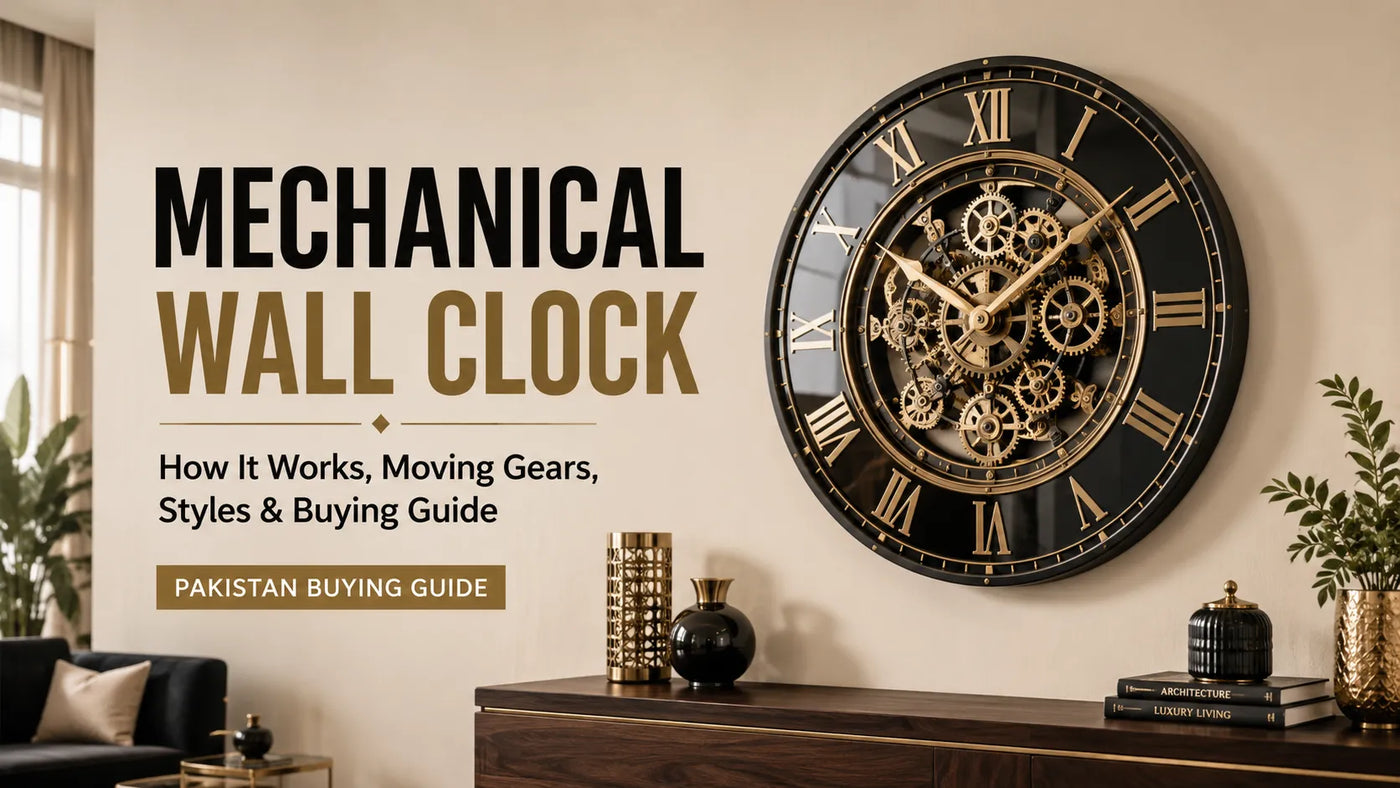
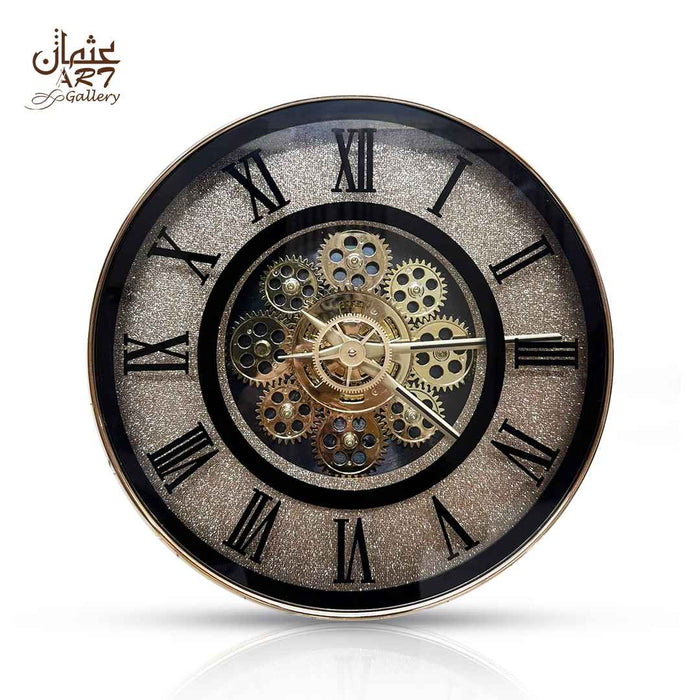
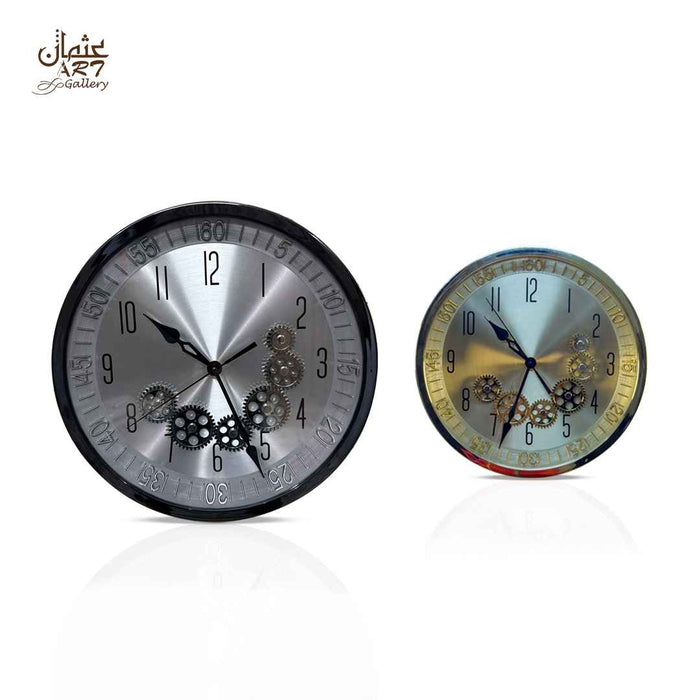
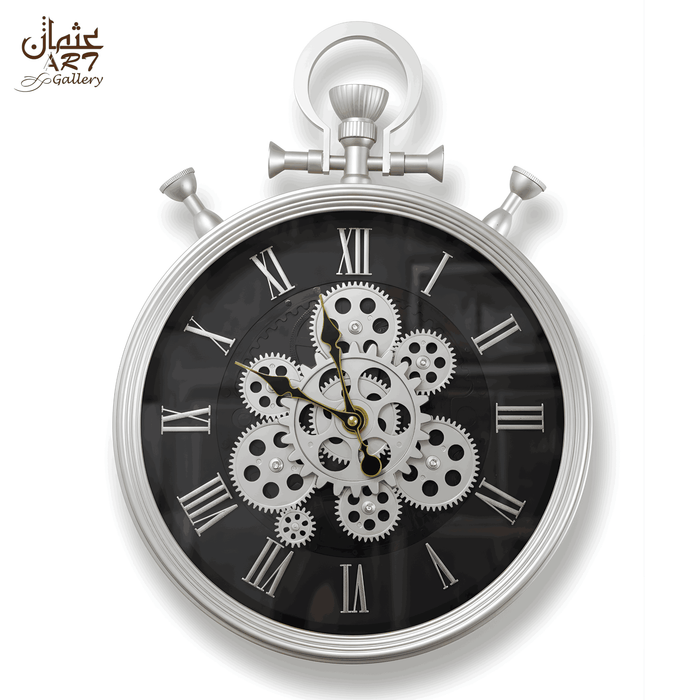
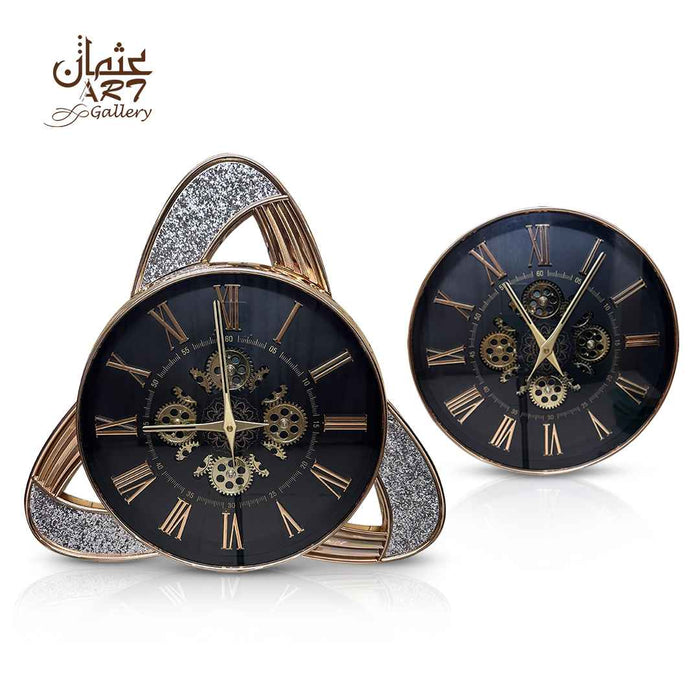
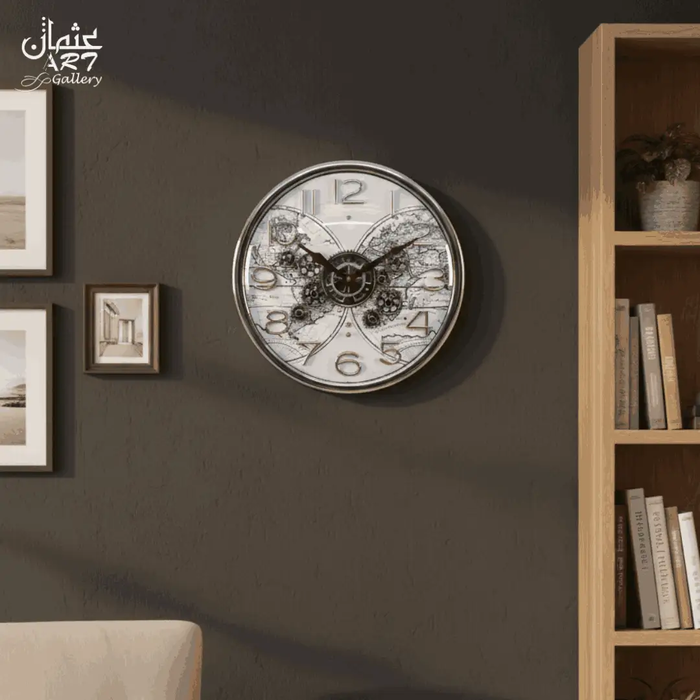
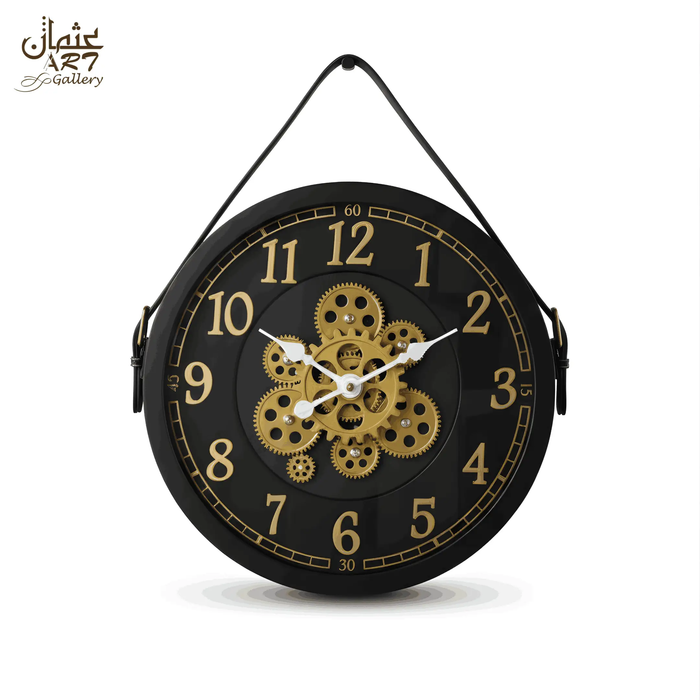
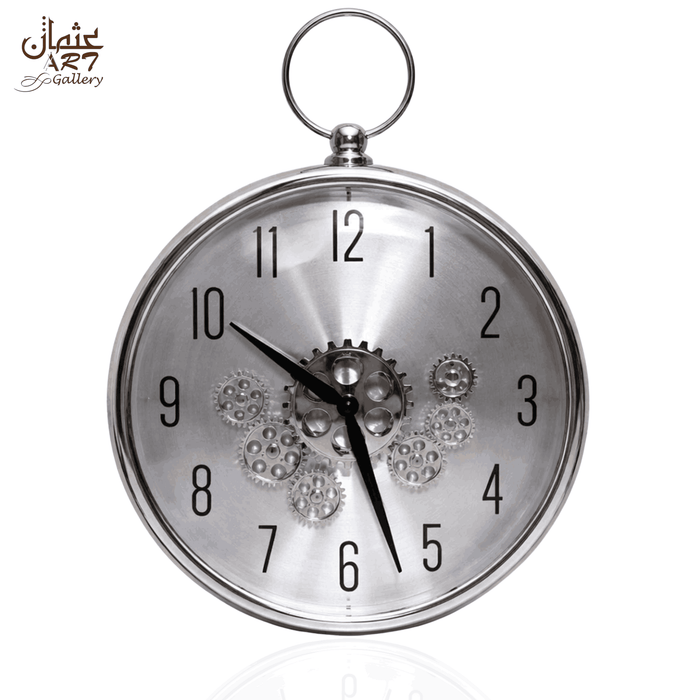
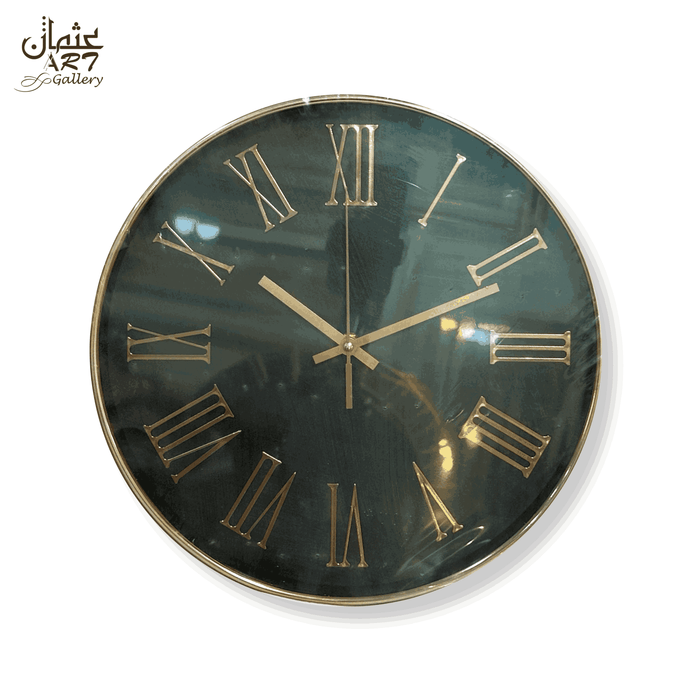
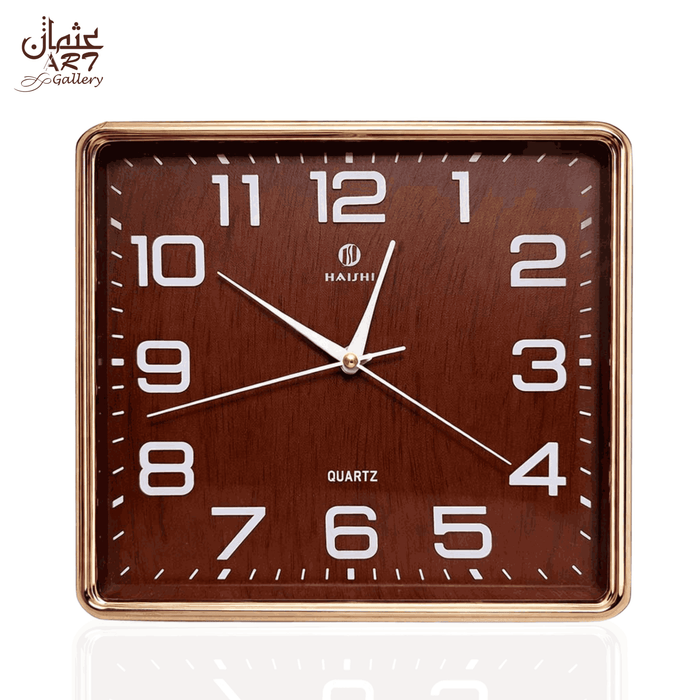
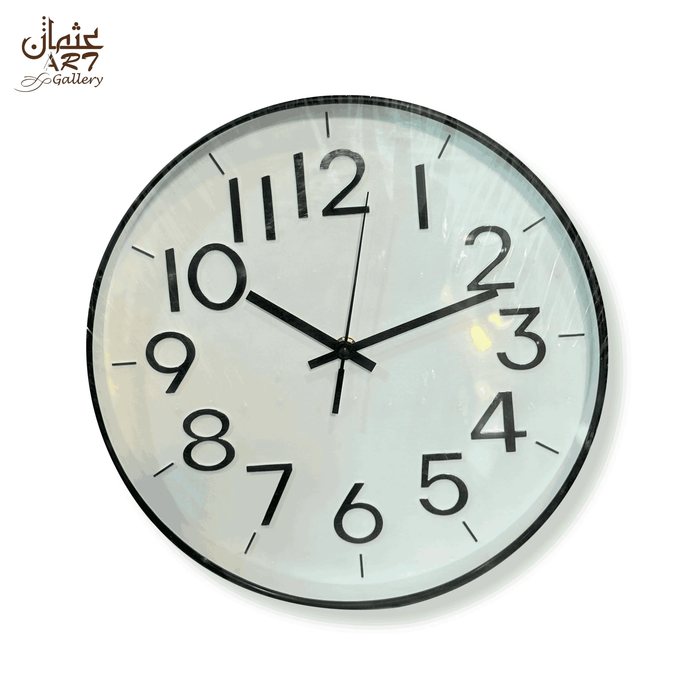
A mechanical wall clock can mean very different things depending on the product you are looking at.
Traditionally, a mechanical clock keeps time through stored mechanical energy, gears and a regulating system. Yet many wall clocks sold today use a quartz movement for timekeeping while displaying exposed, rotating or decorative gears on the front.
That difference matters.
A clock can have real moving gears without those gears controlling the time. Another clock can have exposed gears that never move. A third may simply use a mechanical-inspired design with Roman numerals, metallic cogs and an industrial finish.
For shoppers in Pakistan, understanding these differences makes it much easier to compare designs, prices and specifications accurately.
This guide explains what a mechanical wall clock really is, how genuine mechanical movements work, how moving gear clocks differ from quartz clocks, what exposed gears mean, which styles suit different interiors, how to choose the right size and what to check before buying a mechanical wall clock online in Pakistan.
Mechanical Wall Clock: Quick Answer
A true mechanical wall clock keeps time using mechanical energy stored in a wound spring or suspended weight. That energy passes through a gear train and is released gradually through an escapement and regulating system.
However, many modern products marketed as mechanical wall clocks actually use quartz timekeeping combined with decorative gears.
Those gears may:
-
rotate independently
-
remain stationary
-
form part of an exposed decorative dial
-
be powered by a separate battery or motor
-
exist purely to create a mechanical or industrial appearance
Therefore, visible gears alone do not prove that a clock has a true mechanical movement.
The easiest way to understand a product is to ask two separate questions:
-
What mechanism keeps the time?
-
What do the visible gears actually do?
Once you separate those two features, mechanical clock terminology becomes much easier to understand.
Key Things to Know Before Buying
Before comparing mechanical wall clocks, remember these points:
-
A true mechanical movement is identified by how the clock keeps time, not by how it looks.
-
A quartz wall clock can contain genuine moving decorative gears.
-
Moving gears do not necessarily power the hands.
-
An exposed gear wall clock can have either moving or stationary gears.
-
“Mechanical design” may describe appearance rather than mechanism.
-
“Dual movement” is often a retail description for separate timekeeping and decorative gear systems, but the exact meaning should be verified for each product.
-
Mechanical-style clocks can provide the visual character of gears without traditional mechanical maintenance.
-
A larger diameter is not the only factor affecting how big a clock looks. Dense gears, thick frames and bold Roman numerals increase visual weight.
-
Sound can come from the second hand, decorative gear motor, escapement or chime mechanism.
-
Pakistani buyers should check movement, dimensions, gear behaviour, batteries, current price, delivery and return information before ordering online.
What Is a Mechanical Wall Clock?
A genuine mechanical wall clock is a clock whose timekeeping mechanism operates through mechanical energy rather than electronic quartz regulation.
Traditional mechanical clocks usually receive their energy from either:
-
a wound mainspring
-
a suspended weight
The stored energy moves through a series of interconnected gears called the gear train.
An escapement then prevents that energy from being released all at once. Working with a pendulum, balance or another regulating oscillator, the escapement allows the gear train to advance at controlled intervals.
Those controlled movements eventually drive the hour and minute hands.
This basic principle separates genuine mechanical timekeeping from quartz timekeeping.
A mechanical clock does not need exposed gears to qualify as mechanical. Its mechanism may be hidden inside the case.
Likewise, a clock with many visible gears is not automatically mechanical.
That distinction is especially important when shopping online because the phrase mechanical wall clock is frequently used as both:
-
a technical description
-
a design description
A product title may therefore tell you what a clock looks like without fully explaining how it keeps time.
Mechanical Wall Clock Meaning in Modern Ecommerce
Search for a mechanical wall clock online and you may encounter several different product types.
They can look very similar in photographs while operating differently.
The four main categories are worth separating.
1. True Mechanical Wall Clock
This is the traditional definition.
The timekeeping movement itself is mechanically powered.
A spring or weight supplies the energy, while a gear train, escapement and regulator control the hands.
Visible gears are optional.
2. Quartz Wall Clock With Moving Decorative Gears
This type has become particularly popular in modern home décor.
A quartz movement controls the hands.
Meanwhile, visible gears rotate for decorative effect.
The gear system can use a separate small motor and may have separate battery requirements.
This clock genuinely has moving gears, but the timekeeping is still quartz.
3. Quartz Wall Clock With Exposed Stationary Gears
The central gears or cog shapes are visible but do not rotate.
They provide the visual character of a mechanical gear wall clock while the actual clock movement remains quartz.
4. Mechanical-Style Wall Clock
This is primarily a design category.
Common features include:
-
Roman numerals
-
exposed cog shapes
-
antique bronze finishes
-
gold detailing
-
industrial frames
-
skeleton-style dials
-
steampunk influences
-
transparent sections
-
black and metallic colour combinations
The actual timekeeping mechanism must still be checked separately.
Mechanical Wall Clock vs Gear Wall Clock vs Moving Gear Wall Clock
These terms are related, but they should not automatically be treated as synonyms.
| Term | What It Usually Describes | What You Still Need to Check |
|---|---|---|
| Mechanical wall clock | Mechanical mechanism or mechanical-inspired styling | Actual movement |
| Mechanical gear wall clock | Clock combining gear styling with mechanical terminology | Whether timekeeping is mechanical or quartz |
| Gear wall clock | Clock featuring visible or gear-inspired elements | Whether gears move |
| Moving gear wall clock | Clock with rotating visible gears | Whether gears control timekeeping |
| Rotating gear wall clock | Another term for moving decorative gears | Power source and timekeeping movement |
| Exposed gear wall clock | Clock with visible gears | Whether gears move or are functional |
| Skeleton wall clock | Open design exposing internal or decorative structures | Movement and gear function |
| Quartz gear clock | Quartz timekeeping combined with gear styling | Whether gears rotate separately |
Understanding these differences helps prevent one of the most common mistakes in this category.
The presence of gears tells you about the design. The movement specification tells you how the clock keeps time.
The Mechanical Wall Clock Identity Test
Before buying any clock marketed as mechanical, ask four questions.
1. What Keeps the Time?
This is the most important question.
Look for specifications such as:
-
mechanical movement
-
quartz movement
-
battery-powered quartz
-
spring-driven movement
-
weight-driven movement
If the listing clearly states quartz movement, then quartz electronics regulate the time even when gears are rotating on the front.
2. Do the Visible Gears Actually Move?
Do not assume they do.
Look for clear phrases such as:
-
moving gears
-
rotating gears
-
working decorative gears
-
real moving gears
If the product only says:
-
exposed gears
-
mechanical design
-
gear-inspired
-
skeleton style
-
cogwheel design
movement has not necessarily been confirmed.
3. Do the Visible Gears Control the Hands?
This is where many shoppers become confused.
Decorative gears can rotate continuously while a small quartz movement behind the dial independently controls the hands.
The motion is real.
The timekeeping mechanism is still quartz.
4. What Powers the Gear System?
If decorative gears rotate, check whether they require:
-
the same battery as the clock
-
additional batteries
-
a separate motor
-
another power source
This matters for maintenance, battery replacement and possible noise.
How Does a True Mechanical Wall Clock Work?
A traditional mechanical clock is an elegant example of controlled energy transfer.
Although clockmaking can become highly technical, the basic process can be understood in five stages.
1. Energy Is Stored
Every clock needs energy to continue operating.
In a traditional mechanical wall clock, this energy commonly comes from a wound spring or raised weight.
Spring-Driven Mechanical Clock
Turning a key or winding mechanism tightens a mainspring.
The spring stores energy and gradually releases it.
Weight-Driven Mechanical Clock
A suspended weight is lifted.
Gravity then pulls the weight down slowly, supplying energy to the movement.
Grandfather clocks are a familiar example of weight-driven clockmaking, although the same principle can appear in wall clocks.
2. The Gear Train Transfers Energy
The stored energy cannot drive the hands directly at the correct speeds.
Instead, it passes through several gears.
Different gear ratios reduce and organise the movement.
The gear train helps create the different rotation rates needed for:
-
seconds
-
minutes
-
hours
This is why gears are so closely associated with traditional clockmaking.
However, they do not need to be visible from outside the clock.
3. The Escapement Controls the Movement
Without regulation, a wound spring could unwind very quickly and a suspended weight could drop too rapidly.
The escapement prevents that.
It repeatedly allows a small portion of the gear train to move before stopping it again.
This controlled release produces the familiar rhythmic behaviour associated with mechanical clocks.
4. A Regulator Establishes the Rhythm
The escapement works with a regulating oscillator.
Depending on the design, this could be:
-
a pendulum
-
a balance wheel
-
another oscillating mechanism
The regulator provides a consistent rhythm.
Each oscillation allows the movement to advance by a controlled amount.
5. The Movement Drives the Hands
Finally, additional gearing converts the movement into the correct relationship between the hands.
The minute hand completes one rotation every hour.
The hour hand completes one rotation every twelve hours on a standard analogue clock.
This complete process is mechanical timekeeping.
It is fundamentally different from a decorative gear motor rotating gears on a quartz wall clock.
How Does a Quartz Wall Clock Work?
A quartz wall clock uses a different timekeeping principle.
Instead of relying on a mechanical escapement and regulating oscillator, it uses the predictable vibration of a quartz crystal within an electronic circuit.
The battery supplies electrical energy.
The quartz oscillator provides a stable frequency reference.
Electronic components divide that frequency into useful timing signals.
A small motor then turns the clock hands.
Quartz movements became widely used because they can be:
-
compact
-
practical
-
consistent
-
battery-powered
-
relatively low maintenance
This is why many modern decorative mechanical-style wall clocks actually use quartz movements.
A quartz mechanism can be hidden behind an elaborate dial containing visible gears, Roman numerals and metallic structures.
The appearance can be highly mechanical even though the method of keeping time is electronic.
Mechanical Wall Clock vs Quartz Wall Clock
The best option depends on what you value.
| Feature | True Mechanical Wall Clock | Quartz Wall Clock |
|---|---|---|
| Main timekeeping principle | Controlled mechanical energy | Quartz electronic oscillator |
| Typical energy source | Wound spring or suspended weight | Battery |
| Regulation | Escapement and oscillator | Quartz crystal and electronics |
| Regular winding | May be required | Usually not |
| Visible gears required | No | No |
| Decorative gears possible | Yes | Yes |
| Moving decorative gears possible | Yes | Yes |
| Typical maintenance | More involved | Usually simpler |
| Traditional horological appeal | Strong | Lower |
| Decorative flexibility | Depends on design | Very high |
| Convenient everyday operation | Depends on design | Usually high |
| Best choice for | Mechanical engineering and traditional clock enthusiasts | Practical home décor and easy timekeeping |
Neither mechanism is automatically “better”.
They serve different priorities.
Choose a true mechanical clock if traditional clockmaking and mechanical operation are important to you.
Choose a quartz mechanical-style clock if you mainly want:
-
decorative gears
-
easier everyday operation
-
battery-powered convenience
-
modern design flexibility
Are Moving Gear Wall Clocks Really Mechanical?
Not necessarily.
A moving gear wall clock means that visible gears physically rotate.
It does not automatically mean that those gears form the timekeeping mechanism.
This distinction is particularly important because current product listings frequently combine terms such as:
-
mechanical gear
-
rotating gears
-
moving gears
-
silent quartz
-
dual movement
A common configuration is:
Quartz movement → clock hands
and separately:
Battery-powered motor → decorative moving gears
Both systems can operate inside the same clock.
The result looks highly mechanical because the viewer can watch gears turning.
Yet the quartz movement remains responsible for keeping time.
This arrangement can be a good choice for buyers who want visual movement without the maintenance associated with traditional mechanical clocks.
The important point is simply to describe it accurately.
What Does “Dual Movement Mechanical Wall Clock” Mean?
“Dual movement” is increasingly appearing in decorative clock listings.
It is not always used as a strict horological standard.
In many modern gear-clock listings, the phrase describes two separate powered functions:
-
one system controls the clock hands
-
another system rotates the decorative gears
For example:
Battery → quartz movement → timekeeping
Additional battery/motor → decorative gears → visible motion
That can also explain why some moving gear wall clocks require multiple batteries.
However, sellers may use the phrase differently.
Therefore, never assume exactly what “dual movement” means without checking the individual specification.
A good product page should state:
-
movement type
-
number of batteries
-
which battery powers the clock
-
which batteries power the gears
-
whether gears rotate continuously
What Is a Mechanical Gear Wall Clock?
A mechanical gear wall clock generally refers to a wall clock where gears form a major part of the visual design.
Common features include:
-
exposed cogs
-
layered gear arrangements
-
metallic surfaces
-
Roman numerals
-
open centres
-
skeleton-style faces
-
rotating decorative gears
-
antique or industrial finishes
Some mechanical gear clocks use genuine mechanical movements.
Others use quartz timekeeping.
That means “mechanical gear wall clock” is best understood as a broad commercial search category rather than proof of one exact mechanism.
For shoppers, the better question is not:
Does this look mechanical?
It is:
Which parts are mechanical, which parts are decorative and which system keeps the time?
What Is an Exposed Gear Wall Clock?
An exposed gear wall clock is a clock that allows gears or gear-shaped design elements to remain visible.
The gears may sit:
-
behind transparent glass
-
within an open centre
-
between Roman numerals
-
inside a skeleton-style frame
-
on top of the main dial
The word exposed describes visibility.
It does not tell you whether the gears:
-
rotate
-
connect to the hands
-
regulate time
-
operate mechanically
-
are purely decorative
This makes “exposed gear wall clock” a useful style description but not a complete movement specification.
What Is a Skeleton Wall Clock?
A skeleton wall clock uses an open design that exposes internal or gear-like structures rather than hiding everything behind a solid dial.
Traditional skeleton clocks were designed to reveal genuine mechanical movements.
Modern decorative skeleton wall clocks can be different.
Some expose:
-
functional clockwork
-
decorative gears
-
separate moving gears
-
stationary cog structures
-
transparent design elements
This is another case where historic terminology and modern ecommerce terminology overlap.
If buying primarily for mechanical engineering interest, verify the movement.
If buying primarily for décor, focus on:
-
openness
-
colour
-
gear density
-
readability
-
wall contrast
-
overall dimensions
Real Moving Gears vs Decorative Stationary Gears
Both styles can look attractive, but the visual effect is different.
Moving Gears
Rotating gears create continuous motion.
They work particularly well when the clock is intended to become a focal point.
Advantages include:
-
eye-catching movement
-
stronger mechanical character
-
additional depth
-
conversation-piece appeal
-
stronger feature-wall presence
Potential considerations include:
-
extra batteries
-
additional motor
-
possible sound
-
greater battery consumption
-
more moving components
Stationary Gears
Stationary gears provide the same visual language without continuous motion.
Advantages can include:
-
simpler construction
-
fewer moving components
-
no separate gear motor
-
easier battery management
-
strong decorative appearance
The right option depends on whether the actual motion matters to you.
How to Confirm That the Gears Really Move
Never rely on a photograph.
A still image cannot prove whether gears rotate.
Use this verification checklist.
Check the Product Description
Look for explicit phrases including:
-
real moving gears
-
rotating gears
-
working gears
-
gear rotation
Watch the Product Video
Video is one of the strongest forms of evidence because you can see whether the gear system moves continuously.
Check the Battery Specification
Multiple batteries can indicate separate systems.
For example, one battery may operate the quartz clock movement while other batteries power a decorative gear motor.
Read the FAQ
A detailed product FAQ may state whether the gears rotate.
Ask the Seller
If gear movement is one of your main reasons for buying, get clarification before ordering.
Are Mechanical Wall Clocks More Accurate Than Quartz Clocks?
Mechanical does not automatically mean more accurate.
A true mechanical clock is affected by factors such as:
-
quality of the movement
-
regulation
-
temperature
-
position
-
friction
-
wear
-
maintenance
-
design of the oscillator
Quartz clocks use an electronically controlled quartz oscillator and are widely chosen for consistent everyday timekeeping.
That does not make traditional mechanical clocks inferior.
Their appeal often comes from:
-
craftsmanship
-
engineering
-
movement
-
history
-
mechanical interaction
-
winding ritual
A buyer interested primarily in accurate, convenient household timekeeping may prefer quartz.
Someone interested in horology may value mechanical operation more highly.
Are Mechanical Wall Clocks Noisy?
Some are. Others are relatively quiet.
The phrase mechanical wall clock noise can refer to several different sources.
Mechanical Escapement
A traditional mechanical movement may produce a regular beat as its escapement operates.
Quartz Second Hand
Some quartz clocks produce a noticeable tick every second.
Others use a smoother motion.
Decorative Gear Motor
A moving gear wall clock may have a small motor dedicated to the front gear display.
That motor can create its own sound.
Chime Mechanism
Traditional clocks may include:
-
hourly strikes
-
quarter-hour chimes
-
melodies
These create additional sound even if the movement itself is quiet.
Room Acoustics
The same clock can seem louder in a:
-
small bedroom
-
quiet study
-
tiled room
than in a:
-
large drawing room
-
busy reception area
-
furnished living room
Soft furnishings absorb sound.
Hard surfaces can reflect it.
Therefore, if you need a clock for a quiet bedroom, office or study, verify the exact model's sound behaviour rather than relying on broad labels such as mechanical, quartz or moving gear.
Do Mechanical Wall Clocks Need Batteries?
A true spring-driven or weight-driven mechanical wall clock does not need a battery to power its mechanical timekeeping movement.
However, many products sold as mechanical wall clocks online are actually quartz-based mechanical-style clocks.
These do require batteries.
A moving gear model may need more than one battery because:
-
one powers the timekeeping movement
-
another powers decorative gear rotation
This is another reason to read specifications carefully.
Do not assume the battery requirement based only on the product name.
Popular Mechanical Wall Clock Styles
The mechanism matters, but design remains a major buying factor.
Here are the main styles appearing across mechanical and gear-inspired wall clocks.
1. Moving Gear Wall Clock
The gears rotate visibly.
Best for:
-
living-room feature walls
-
offices
-
reception areas
-
lounges
-
statement interiors
Main buying check:
Do the gears actually rotate and what powers them?
2. Exposed Gear Wall Clock
Gears remain clearly visible through an open face or centre.
Best for:
-
industrial interiors
-
transitional décor
-
modern living rooms
-
studies
Main buying check:
Are the exposed gears moving or stationary?
3. Transparent Gear Wall Clock
Transparent areas allow the wall behind the clock to remain visible.
This can make a large clock feel less visually heavy.
Best for:
-
modern interiors
-
smaller rooms needing a larger clock
-
neutral feature walls
-
contemporary offices
Main buying check:
Will the hands and numerals remain readable against your wall colour?
4. Roman Numeral Mechanical Wall Clock
Roman numerals give the clock a more traditional or architectural character.
They work particularly well with:
-
exposed gears
-
black-and-gold finishes
-
bronze
-
antique styling
-
industrial designs
Best for:
-
drawing rooms
-
offices
-
hallways
-
traditional interiors
Main buying check:
Are the numerals readable from normal viewing distance?
5. Vintage Mechanical Wall Clock
Vintage designs commonly use:
-
bronze tones
-
aged gold
-
black metal
-
distressed textures
-
Roman numerals
-
exposed gears
They pair naturally with:
-
dark wood
-
warm beige
-
brown leather
-
deep green
-
rustic furniture
Main buying check:
Does “vintage mechanical” describe the movement or only the appearance?
6. Industrial Gear Wall Clock
Industrial designs usually emphasise visible construction.
Common features include:
-
black frames
-
metallic gears
-
exposed structures
-
bronze accents
-
bold numerals
They suit:
-
loft-style interiors
-
home offices
-
commercial spaces
-
contemporary living rooms
Main buying check:
Check the clock depth as well as diameter because layered industrial designs can project farther from the wall.
7. Black and Gold Mechanical Wall Clock
Black and gold remains one of the strongest combinations for gear-style clocks.
Black provides visual structure.
Gold highlights:
-
gears
-
hands
-
numerals
-
frame details
The combination works particularly well against:
-
white
-
ivory
-
beige
-
grey
-
charcoal
-
deep green
8. Silver and Chrome Mechanical Wall Clock
Chrome and silver create a cooler, more modern effect.
They pair well with:
-
white
-
charcoal
-
cool grey
-
black
-
blue-grey
This style works particularly well in:
-
modern offices
-
minimalist living rooms
-
contemporary apartments
Mechanical Wall Clock Style Comparison
| Style | Visual Character | Good Interior Match | Best Wall Colours | Main Buying Check |
|---|---|---|---|---|
| Moving gear | Dynamic and detailed | Statement décor | Neutral walls | Confirm rotation |
| Exposed gear | Engineered and layered | Industrial | Ivory, grey, charcoal | Check gear function |
| Transparent | Open and lighter | Contemporary | Plain contrasting colours | Check readability |
| Roman numeral | Classic and structured | Traditional/transitional | Beige, cream, grey | Numeral visibility |
| Vintage | Warm and aged | Rustic/classic | Taupe, green, wood | Verify movement |
| Industrial | Structural and bold | Loft/office | White, concrete grey | Check dimensions/depth |
| Black and gold | High contrast | Modern/formal | Ivory, beige, deep green | Visual weight |
| Silver/chrome | Cool and modern | Contemporary | Grey, black, white | Reflection/readability |
How to Choose the Right Mechanical Wall Clock Size
Clock size should be considered before colour or finish.
The most important measurement is the total edge-to-edge size, not only the inner dial.
Check:
-
total diameter
-
overall width
-
overall height
-
depth
-
frame projection
-
decorative extensions
A clock described as 20 inches may refer to its complete diameter, but unusual shapes can have different total measurements.
Always read the exact specification.
Mechanical Wall Clock Size Guide
These are styling guidelines rather than strict rules.
Small to Medium Clocks
Approximately 12 to 16 inches can work well for:
-
bedrooms
-
studies
-
smaller offices
-
corridors
-
kitchens
-
compact living rooms
-
narrow walls
Medium to Large Clocks
Approximately 17 to 24 inches can work well for:
-
living rooms
-
drawing rooms
-
larger offices
-
dining rooms
-
reception spaces
-
feature walls
Oversized Designs
Larger clocks require more surrounding space.
They are generally best where the clock is intended to become the main wall feature.
Before buying, create a paper or masking-tape outline on your wall using the stated dimensions.
Stand at your normal viewing distance.
This simple test is much more reliable than estimating size from ecommerce photographs.
Physical Size vs Visual Weight
Two mechanical wall clocks with exactly the same diameter can look completely different in a room.
This happens because of visual weight.
A clock appears visually heavier when it has:
-
thick black frames
-
dense gears
-
dark backgrounds
-
large Roman numerals
-
multiple metallic layers
-
strong colour contrast
-
enclosed surfaces
A clock appears visually lighter when it has:
-
transparent areas
-
thin frames
-
open spaces
-
lighter metallic finishes
-
minimal numerals
For example, a dense black-and-gold 16-inch mechanical gear wall clock can command more attention than a transparent 20-inch clock.
Therefore, do not choose by diameter alone.
Consider both:
physical dimensions + visual complexity
Best Mechanical Wall Clock Size for a Living Room
There is no single perfect size.
Consider four factors.
Wall Width
A small clock can look isolated on an extremely wide blank wall.
Furniture Width
When positioning the clock above:
-
a sofa
-
sideboard
-
console
-
fireplace
the clock should visually connect with the furniture below.
Viewing Distance
A clock viewed from several metres away needs:
-
sufficient diameter
-
readable hands
-
clear numerals
Design Complexity
Highly detailed gears can make a medium clock feel more substantial.
A minimalist transparent design may need a larger diameter to create the same presence.
Best Wall Colours for a Mechanical Wall Clock
Contrast affects both style and readability.
| Wall Colour | Recommended Clock Finish | Visual Effect |
|---|---|---|
| White | Black, bronze, gold | Strong clean contrast |
| Ivory | Black and gold | Warm statement |
| Beige | Bronze, antique gold, black | Balanced warmth |
| Grey | Black, chrome, silver | Contemporary |
| Charcoal | Gold, silver, chrome | Dramatic contrast |
| Black | Gold, chrome, transparent | Metallic emphasis |
| Wood panel | Black, bronze, aged gold | Industrial/vintage |
| Deep green | Gold, brass-effect, black | Rich, formal look |
| Navy | Gold, silver | Strong decorative contrast |
Wall colour also affects transparent clocks.
Because the wall remains visible through the face, it becomes part of the design.
Avoid extremely busy patterned backgrounds behind open gear clocks because the hands and numerals can become difficult to distinguish.
Where Should You Place a Mechanical Wall Clock?
Placement affects how the clock functions as décor.
Mechanical Wall Clock for Living Room
The living room is one of the best locations for an exposed or moving gear clock.
Good positions include:
-
main feature wall
-
above a console
-
beside a seating area
-
above a low cabinet
Avoid placing several large decorative pieces immediately beside the clock.
Detailed mechanical designs already provide substantial visual information.
Mechanical Wall Clock for Drawing Room
A drawing room often suits:
-
Roman numeral clocks
-
black-and-gold designs
-
bronze gear clocks
-
transparent antique designs
The clock should complement rather than compete with:
-
artwork
-
mirrors
-
lighting
-
wall moulding
Mechanical Wall Clock Above a Sofa
Centre the clock relative to the furniture arrangement rather than blindly centring it on the entire wall.
Leave enough space between the sofa and clock so the arrangement does not feel compressed.
Use a temporary paper template before installation.
Mechanical Wall Clock Above a Console
This is one of the strongest placements for a gear clock.
The console provides a clear visual anchor.
Keep surrounding décor relatively restrained.
A detailed mechanical wall clock often looks better with:
-
one lamp
-
a small plant
-
minimal accessories
than with several competing decorative objects.
Mechanical Wall Clock for Office
Mechanical-inspired clocks work well in offices because they combine:
-
functionality
-
structure
-
design
Silver, black, bronze and chrome finishes are particularly suitable.
For quiet work environments, investigate noise before buying a moving-gear design.
Mechanical Wall Clock for Reception Area
A reception space often benefits from a larger statement clock because it is seen from farther away.
Prioritise:
-
readability
-
appropriate diameter
-
strong contrast
-
secure mounting
-
clear sightlines
Mechanical Wall Clock for Dining Area
Place the clock where it can be seen without dominating the dining table.
Open or transparent designs can work well if the room already contains visually heavy furniture.
Mechanical Wall Clock Designs at WeDecorators
WeDecorators carries several clocks that demonstrate why mechanism and appearance should be considered separately.
Specifications can change, so check the live product page before ordering.
Mech Clock
The Mech Clock is a particularly useful example.
It is a 16-inch design featuring a mix of:
-
black
-
bronze
-
chrome
The product information describes visible moving gears with quartz precision.
This means it demonstrates the central distinction discussed throughout this guide.
The gears visibly move, while the timekeeping is quartz-based.
Choose this type of clock if your priority is:
-
visible mechanical motion
-
industrial styling
-
convenient quartz timekeeping
rather than traditional wound mechanical operation.
Lantern Gear Wall Clock
The Lantern Gear Wall Clock provides an even clearer example of separate gear and clock systems.
It has a 14-inch format and real rotating decorative gears.
Its power specification separates the functions:
-
one AAA battery operates the clock movement
-
two AAA batteries operate the rotating gear mechanism
This is exactly why shoppers should not use the phrase “moving gears” as proof of traditional mechanical timekeeping.
For decorative buyers, however, this arrangement can be useful because it delivers visible rotating motion without requiring a wound traditional movement.
Premium Gear Clock
The Premium Gear Clock is a 13-inch design with:
-
Roman numerals
-
black-and-gold options
-
gold-tone detailing
The current product information does not clearly specify whether its visible gear elements rotate or identify its timekeeping movement.
Therefore, it is safer to describe this product as:
mechanical-style
or:
gear-inspired
unless the movement and gear behaviour are confirmed separately.
That is a useful example of responsible product interpretation.
Do not convert visual styling into a technical claim.
Transparent Gear Clock
The Transparent Gear Clock uses a large 20-inch transparent-and-black design.
The product information identifies a quartz-related movement description.
Its transparent construction reduces visual mass and allows the wall behind the clock to become part of the overall appearance.
This type of clock works particularly well where you want:
-
a larger diameter
-
an open design
-
visible gear styling
-
less solid visual weight
If rotating central gears are important to your decision, verify their exact behaviour before ordering because visible gears and moving gears are not automatically the same thing.
Antique Transparent Gear Wall Clock
The Antique Transparent Gear Wall Clock uses:
-
a 20-inch format
-
gold and black detailing
-
Roman numerals
-
transparent gear-style elements
-
glass and metal materials
It is well suited to:
-
living rooms
-
offices
-
lounges
-
hallways
-
feature walls
The current specification describes visible gear-style detailing but does not establish that every visible gear rotates.
Again, the correct approach is to report the visible design without inventing a movement claim.
WeDecorators Mechanical-Style Clock Comparison
| Clock | Size | Main Style | Timekeeping Information | Visible Gear Behaviour | Best For |
|---|---|---|---|---|---|
| Mech Clock | 16 inch | Black, bronze, chrome | Quartz | Moving gears stated | Industrial feature wall |
| Lantern Gear Wall Clock | 14 inch | Metallic gear design | Battery-powered clock movement | Rotating gears stated | Moving-gear décor |
| Premium Gear Clock | 13 inch | Black and gold, Roman numerals | Not clearly specified | Not clearly specified | Smaller statement wall |
| Transparent Gear Clock | 20 inch | Transparent and black | Quartz-related movement | Verify before ordering | Open contemporary wall |
| Antique Transparent Gear Clock | 20 inch | Gold, black, Roman numerals | Not clearly specified | Visible detailing, rotation not established | Vintage/transitional feature wall |
For more options, browse the WeDecorators wall clock collection.
Which Mechanical Wall Clock Should You Choose?
Instead of searching for one universal “best mechanical wall clock”, choose according to the feature you actually want.
Choose a Moving Gear Wall Clock If...
You want the gears themselves to become part of the visual experience.
Best for:
-
feature walls
-
living rooms
-
offices
-
reception areas
Check:
-
battery requirements
-
gear motor
-
noise
-
rotation
Choose an Exposed Gear Wall Clock If...
You like the mechanical appearance but do not necessarily need motion.
Best for:
-
industrial interiors
-
modern homes
-
studies
-
offices
Check whether the exposed gears are:
-
functional
-
moving decorative
-
stationary decorative
Choose a Transparent Gear Clock If...
You want a larger design without creating too much visual heaviness.
Best for:
-
smaller living rooms with large blank walls
-
contemporary interiors
-
modern offices
Check the contrast between the clock and wall.
Choose Roman Numerals If...
You want to combine gear styling with a classic design language.
Roman numerals work particularly well with:
-
gold
-
bronze
-
black
-
antique finishes
Choose Quartz Mechanical-Style If...
You want:
-
easy everyday use
-
battery-powered operation
-
mechanical appearance
-
moving decorative gears
-
less traditional maintenance
Choose True Mechanical If...
Your priority is:
-
traditional horology
-
mechanically powered timekeeping
-
winding
-
mechanical regulation
-
craftsmanship
-
historical clockmaking principles
Do not rely on product photographs.
Confirm the actual movement specification.
Mechanical Wall Clock Price in Pakistan
The search for mechanical wall clock price in Pakistan is more complicated than it first appears.
There is no meaningful universal price because products marketed under this category can be fundamentally different.
One listing may be:
-
a small quartz mechanical-style clock
Another may include:
-
moving decorative gears
-
two separate motors
-
multiple batteries
Another may be:
-
a large metal clock
-
imported
-
20 inches or more in diameter
A genuine traditional mechanical movement can belong to yet another price category.
What Affects Mechanical Wall Clock Price?
1. Clock Size
Larger clocks require more material and often have more complicated framing.
2. Material
Prices can differ between:
-
plastic
-
composite
-
metal
-
glass
-
mixed construction
3. Movement
Quartz, decorative dual systems and genuine mechanical movements should not be compared as though they are identical.
4. Moving Gears
A separate rotating gear mechanism can increase complexity.
5. Number of Motors
A design with independent timekeeping and decorative motion may contain more components.
6. Finish
Chrome, bronze, gold-tone and specialised finishes can affect pricing.
7. Imported vs Local Sourcing
Import costs can influence Pakistani retail pricing.
8. Design Complexity
Layered open-gear designs typically contain more decorative components than minimalist clocks.
9. Brand and Seller
Service, packaging, support and return policies can vary between retailers.
10. Delivery and Warranty
Always compare the complete purchase offer, not only the listed clock price.
For broader current pricing information, see the WeDecorators wall clock price in Pakistan guide.
How to Compare Mechanical Wall Clock Prices Correctly
Avoid comparing prices until you have compared specifications.
Use this order:
-
movement type
-
gear behaviour
-
diameter
-
materials
-
battery requirements
-
design construction
-
current price
-
delivery
-
return policy
-
warranty information if provided
Two clocks can look nearly identical while containing different internal systems.
That means price should be compared after product classification, not before.
Where to Buy a Mechanical Wall Clock in Pakistan
Mechanical wall clocks in Pakistan can be found through:
-
specialist clock stores
-
home décor retailers
-
furniture and interior stores
-
online marketplaces
-
dedicated ecommerce shops
Each shopping channel has advantages.
Marketplaces can provide broad inventory.
Specialist clock stores may provide more movement-related knowledge.
Home décor retailers tend to provide stronger interior-focused collections.
The most important consideration is specification quality.
A useful product page should clearly explain:
-
dimensions
-
movement
-
moving or stationary gears
-
materials
-
batteries
-
colours
-
current price
-
delivery information
-
return policy
WeDecorators offers multiple gear-inspired designs through its wall clock collection.
For more general ecommerce guidance, read the wall clocks online Pakistan guide.
14 Things to Check Before Buying a Mechanical Wall Clock Online
Use this checklist before placing an order.
1. Exact Dimensions
Check the complete edge-to-edge measurement.
2. Movement Type
Is it:
-
mechanical
-
quartz
-
unspecified?
3. Gear Behaviour
Are the visible gears:
-
moving
-
stationary
-
unspecified?
4. Gear Function
Do they power the hands or create decorative motion?
5. Battery Requirement
How many batteries are required?
6. Separate Gear Power
Does the gear motor require additional batteries?
7. Sound
Is there:
-
ticking
-
sweep movement
-
motor sound
-
chime?
8. Material
Verify actual stated materials.
Do not judge materials only from photographs.
9. Numeral Readability
Can you read the clock easily from across the room?
10. Wall Contrast
Will the hands remain visible against your wall?
11. Mounting
Confirm the hanging point and suitable wall fixing.
12. Current Price
Check the live PKR price rather than relying on an old screenshot or article.
13. Delivery and Returns
Review the seller's current policies before payment.
14. Product Video
If moving gears are important, watch the actual mechanism operating.
Common Mechanical Wall Clock Buying Mistakes
Mistake 1: Assuming Visible Gears Mean Mechanical Timekeeping
Better approach: Check the movement specification.
Mistake 2: Assuming Moving Gears Control the Hands
Better approach: Determine whether the decorative gear system is independent from the timekeeping movement.
Mistake 3: Assuming “Mechanical Design” Means Mechanical Movement
Better approach: Treat design terminology as visual unless the movement is explicitly stated.
Mistake 4: Assuming Every Gear Moves
Better approach: Look for written confirmation or video.
Mistake 5: Ignoring Battery Requirements
Better approach: Find out whether the clock and decorative gears use separate batteries.
Mistake 6: Buying Based on Product Photos Alone
Better approach: Compare dimensions and specifications.
Mistake 7: Ignoring Visual Weight
Better approach: Consider colour, gear density, frame width and openness alongside diameter.
Mistake 8: Assuming the Clock Is Silent
Better approach: Investigate the second hand, gear motor and any chime mechanism separately.
Mistake 9: Choosing the Wrong Wall Colour
Better approach: Make sure the hands and numerals remain visible.
Mistake 10: Comparing Price Without Comparing Mechanism
Better approach: Compare like-for-like clocks.
Mistake 11: Ignoring Clock Depth
Better approach: Check how far layered gears and frames project from the wall.
Mistake 12: Forgetting Current Return Information
Better approach: Check the latest terms immediately before ordering.
How to Clean a Mechanical or Gear Wall Clock
Cleaning should be gentle.
For external surfaces:
-
use a soft microfibre cloth
-
remove dust regularly
-
use a slightly damp cloth only where appropriate
-
dry surfaces immediately
For glass:
-
apply suitable cleaner to the cloth
-
do not spray liquid directly towards exposed mechanisms
For decorative gears:
-
remove accessible surface dust gently
-
avoid pushing or rotating gears manually
For batteries:
-
replace exhausted batteries promptly
-
follow the product's polarity markings
-
use the battery type specified by the manufacturer
For true mechanical movements:
-
do not dismantle the movement
-
do not apply household oil
-
do not attempt internal regulation without suitable knowledge
Traditional mechanical clocks may require professional servicing.
Decorative moving-gear systems can also be damaged by unnecessary disassembly.
How Often Should a Gear Wall Clock Be Cleaned?
There is no universal schedule.
The appropriate frequency depends on:
-
dust levels
-
room ventilation
-
whether the clock is enclosed
-
whether gears are exposed
-
local environmental conditions
Light surface dusting is preferable to allowing thick dust to collect around open decorative components.
Avoid excessive cleaning.
The goal is to remove surface dust without disturbing the mechanism.
Is a Mechanical Wall Clock Good for a Modern Home?
Yes, particularly when the design combines mechanical details with simple colours.
Modern interiors can pair well with:
-
black-and-gold gear clocks
-
silver chrome clocks
-
transparent designs
-
open skeleton clocks
-
minimalist industrial styles
The key is balance.
A visually complex mechanical wall clock often works best when the surrounding wall has less decoration.
Instead of adding:
-
several paintings
-
mirrors
-
shelves
-
decorative signs
around the same area, allow the clock to act as the primary feature.
Is a Mechanical Wall Clock Good for a Traditional Home?
Traditional interiors often suit mechanical-style clocks particularly well.
Look for:
-
Roman numerals
-
bronze
-
antique gold
-
dark metal
-
wood tones
-
classical frames
-
vintage gear arrangements
Pair them with:
-
beige walls
-
cream
-
warm white
-
dark green
-
wooden furniture
A mechanical-style wall clock can connect traditional furniture with a more contemporary decorative feature.
Mechanical Wall Clock or Artistic Wall Clock?
Choose a mechanical wall clock if you want the visual language of:
-
gears
-
movement
-
engineering
-
metal
-
clockwork
Choose an artistic wall clock if your main priority is:
-
sculptural shape
-
colour
-
abstract design
-
wall-art character
There can be overlap.
Some gear clocks function as decorative wall art as much as timepieces.
If artistic expression matters more than mechanism, explore artistic wall clocks.
Mechanical Wall Clock or Gear Wall Clock?
These search terms often overlap, but your buying priority should decide which topic matters more.
If you are primarily interested in:
-
what mechanical means
-
mechanical vs quartz
-
movement
-
batteries
-
moving gear verification
this mechanical wall clock guide should be your main reference.
If you are mainly comparing:
-
decorative gear styles
-
gold gear designs
-
gear-clock aesthetics
-
interior styling
read the dedicated gear wall clocks guide.
This separation also makes it easier to compare products without confusing mechanism intent with décor intent.
Mechanical Wall Clock FAQs
What is a mechanical wall clock?
A true mechanical wall clock keeps time using stored mechanical energy rather than electronic quartz regulation. A wound spring or suspended weight powers a gear train, while an escapement and regulating oscillator control the rate. Modern retailers may also use “mechanical wall clock” for quartz products with decorative gears, so always check the actual movement specification.
How does a mechanical wall clock work?
Energy stored in a spring or weight passes through a gear train. An escapement releases the energy gradually, while a pendulum, balance or another oscillator regulates the rate. Additional gearing converts that controlled motion into the correct movement of the hour and minute hands.
Are all mechanical wall clocks wind-up clocks?
No. Traditional mechanical wall clocks are commonly spring-driven or weight-driven, but modern ecommerce listings frequently use “mechanical” to describe gear-inspired quartz designs. A product called a mechanical wall clock should therefore be checked for its actual movement before purchase.
Are all gear wall clocks mechanical?
No. Many gear wall clocks use quartz timekeeping. Their visible gears may rotate independently or remain stationary. Gear styling describes appearance, while the stated movement tells you how the clock keeps time.
Can a quartz wall clock have moving gears?
Yes. A quartz movement can control the hands while a separate motor rotates decorative gears. This creates genuine visible gear movement without making the timekeeping mechanism traditionally mechanical.
What is a moving gear wall clock?
A moving gear wall clock contains visible gear elements that physically rotate. The gears may be part of the timekeeping mechanism or may operate as a separate decorative system. Check the movement and battery specifications to understand which configuration the product uses.
What is a rotating gear wall clock?
A rotating gear wall clock is another common commercial term for a clock with visible moving gears. Rotation does not automatically establish that the gears control timekeeping. Many decorative models pair rotating gears with a separate quartz movement.
What is an exposed gear wall clock?
An exposed gear wall clock has gears or gear-shaped components that remain visible through an open, transparent or skeleton-style face. “Exposed” describes visibility rather than function. The gears can be functional, decorative moving parts or stationary decoration.
What is a mechanical gear wall clock?
A mechanical gear wall clock is a broad term for a clock combining mechanical or gear-inspired styling with analogue timekeeping. Some use true mechanical movements, while many contemporary decorative versions use quartz movements. Read the product specification rather than relying on the title alone.
What does dual movement mean in a mechanical wall clock?
In many modern moving-gear clock listings, dual movement refers to separate systems for the hands and decorative gears. One movement may provide quartz timekeeping while another motor rotates the visible gears. Because the term is not always used consistently, confirm the individual product specification.
Do mechanical wall clocks need batteries?
Traditional spring-driven or weight-driven mechanical clocks do not require batteries for their mechanical timekeeping system. Modern mechanical-style quartz clocks do. Moving decorative gears may also require additional batteries.
How many batteries does a moving gear wall clock need?
It depends on the product. Some clocks use one battery for the hands and additional batteries for the decorative gear motor. Never assume the number from appearance alone. Check the individual product specification before ordering.
Are mechanical wall clocks noisy?
Some mechanical clocks produce an audible escapement beat. Quartz clocks can tick, while decorative gear motors can make additional sound. A chime mechanism can add further noise. The exact sound level depends on the individual clock and the room where it is installed.
Are moving gear wall clocks noisy?
Not necessarily, but a moving gear motor can create sound independently from the timekeeping movement. If you want a clock for a bedroom, office or study, verify both the clock movement and the decorative gear mechanism.
Are mechanical wall clocks accurate?
Accuracy depends on the quality, regulation and condition of the movement. The word mechanical does not automatically mean greater accuracy. Quartz movements are widely used for consistent everyday household timekeeping.
What size mechanical wall clock should I buy?
Choose according to wall dimensions, furniture width, viewing distance and visual weight. A dense 16-inch black-and-gold gear clock can appear more dominant than a larger transparent clock. Test the specified dimensions on your wall before ordering.
What size mechanical wall clock is best for a living room?
Medium and larger designs are commonly used in living rooms, but there is no universal ideal size. Measure the usable wall, consider furniture below the clock and check readability from normal seating positions.
Which wall colour works best with a black-and-gold mechanical wall clock?
Black-and-gold clocks generally contrast well with white, ivory, beige, light grey, charcoal and deep green walls. The best choice depends on surrounding furniture and lighting.
Are transparent gear clocks good for small rooms?
They can be. Transparent areas reduce solid visual mass, which can make a larger diameter feel lighter. Make sure the wall behind the clock provides enough contrast for the hands and numerals.
What is the mechanical wall clock price in Pakistan?
There is no single standard price because products differ in movement, size, materials, moving gear systems, sourcing, finish and construction. Compare mechanism and specifications before comparing current PKR prices.
Where can I buy a mechanical wall clock in Pakistan?
Mechanical and gear-style clocks are available through specialist clock shops, home décor retailers, marketplaces and ecommerce stores. WeDecorators also carries several gear-inspired and moving-gear designs for customers looking to compare wall clocks online in Pakistan.
How can I tell whether a mechanical wall clock has real moving gears?
Look for an explicit statement such as “moving gears” or “rotating gears”, check product video, review battery information and ask the seller if necessary. Do not assume that visible gears move simply because they appear mechanical in photographs.
Final Thoughts: Choosing the Right Mechanical Wall Clock
A mechanical wall clock should be chosen by understanding what is happening behind the design, not simply by counting how many gears are visible.
Start with the timekeeping mechanism.
Is it genuinely mechanical or quartz?
Then investigate the visible gears.
Do they rotate?
Are they decorative?
Do they require separate batteries?
After those questions are answered, compare:
-
size
-
visual weight
-
sound
-
materials
-
colours
-
numeral readability
-
wall placement
-
current price
-
delivery
-
return information
For traditional clock enthusiasts, genuine mechanical operation may be the most important feature.
For modern home décor buyers, a quartz mechanical gear wall clock with exposed or moving gears can provide much of the visual character with convenient everyday operation.
Neither category should be confused with the other.
The best purchase is the clock whose mechanism, design and practical features match what you actually want.
If you are comparing options in Pakistan, browse the WeDecorators wall clock collection, then check the individual product page for the latest movement information, dimensions, gear behaviour, price and purchase details before ordering.
