

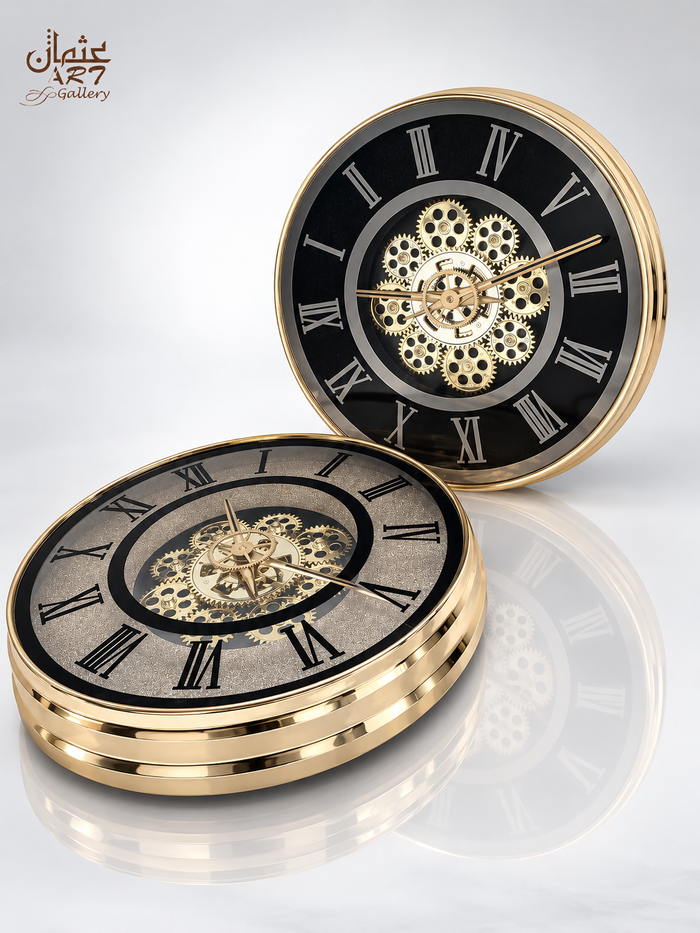
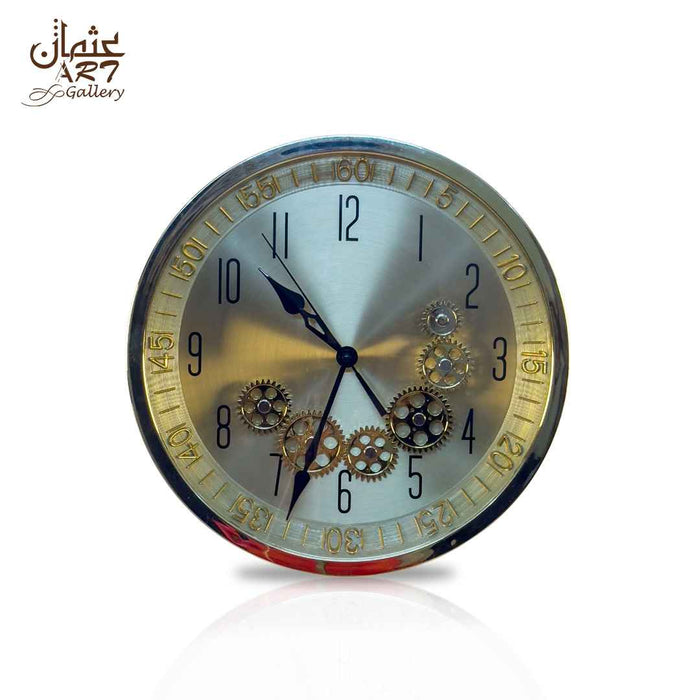
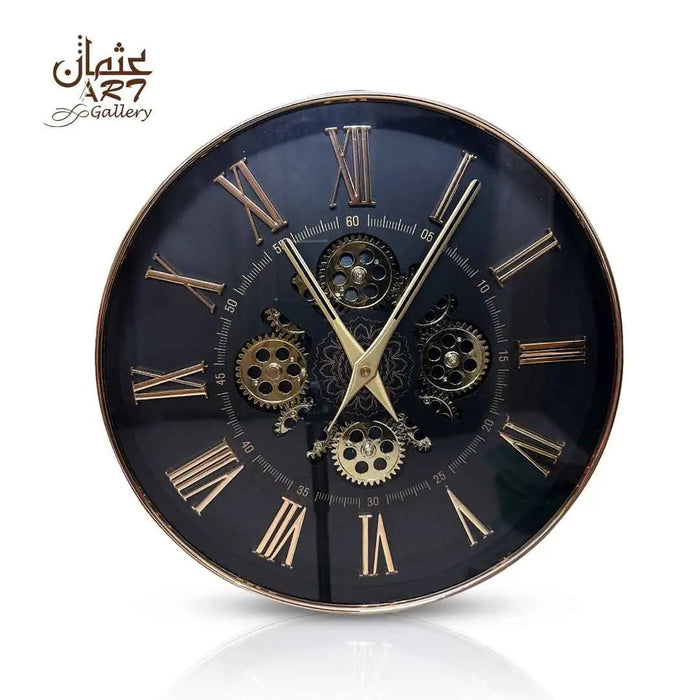
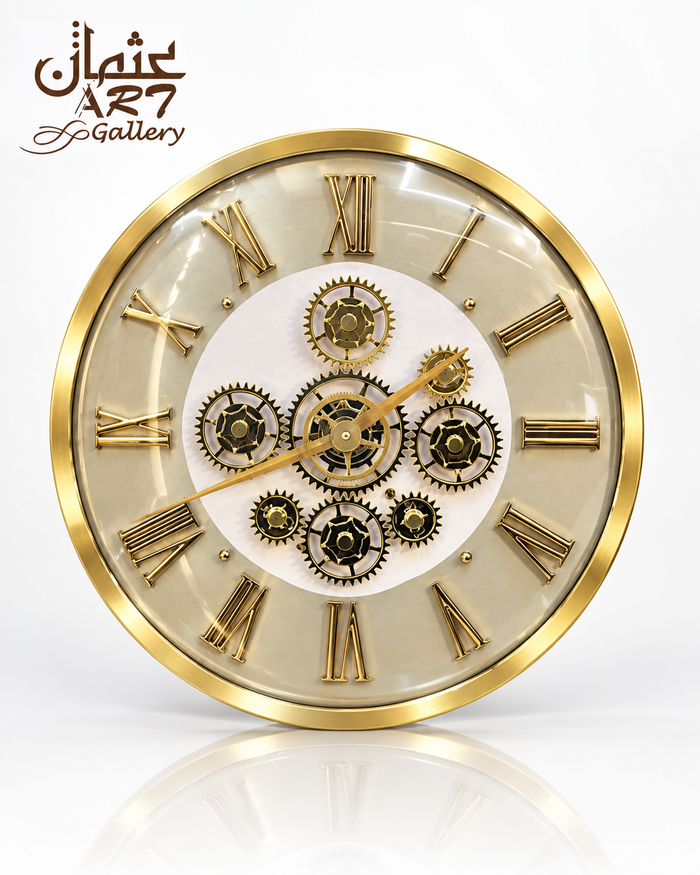
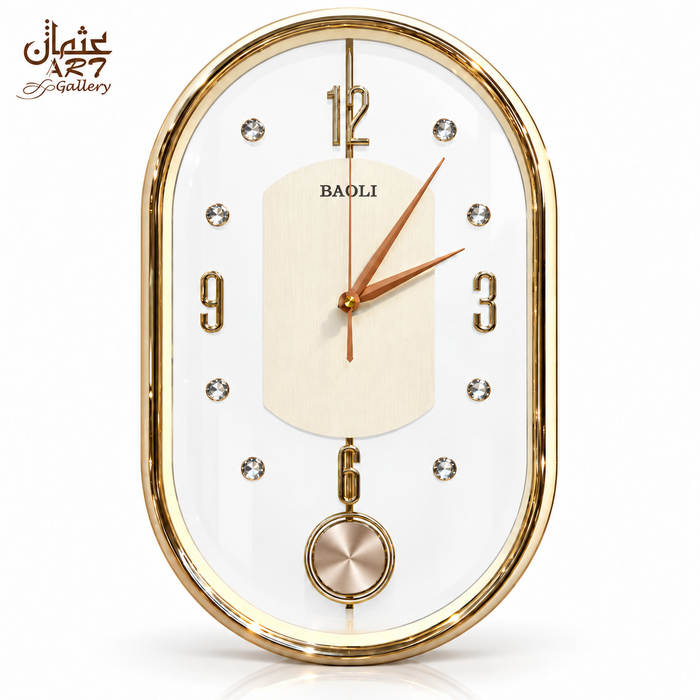
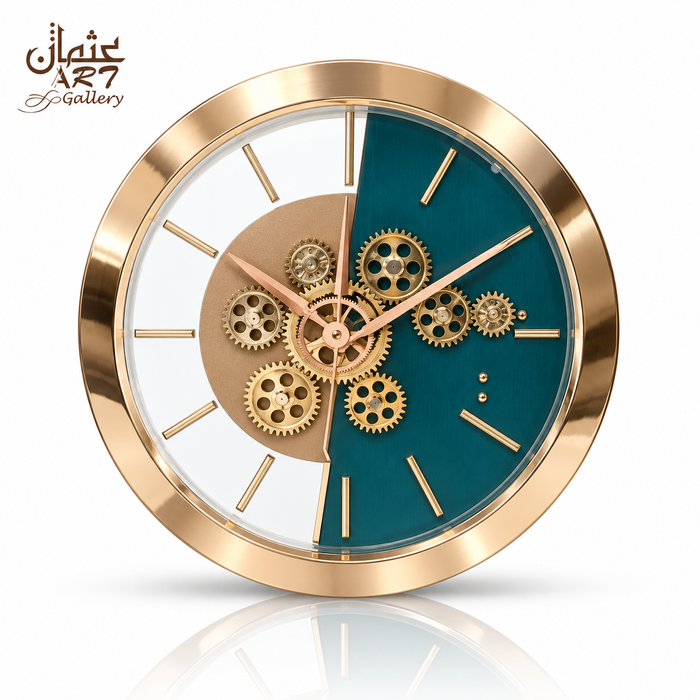
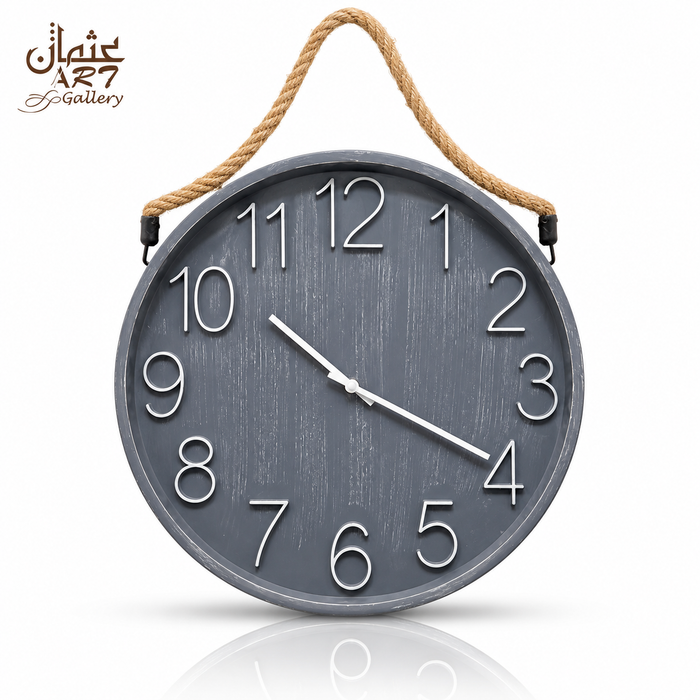
The safest way to clean a wall clock is to start with a soft, dry microfibre cloth and use as little moisture as possible. Decorative wall clocks can combine resin, glass, painted surfaces, metallic finishes, raised numerals, decorative gears and delicate clock hands. Using the wrong cleaner or too much water can therefore affect the finish or allow moisture to reach the movement.
For everyday dust, gentle dry cleaning is usually enough. For fingerprints and light marks, use a slightly damp cloth only when the product's care instructions allow it. Never spray cleaning products directly onto the clock.
This guide explains how to clean a wall clock safely, including resin wall clocks, gear wall clocks, silver finishes, Roman numeral designs and clocks used in living rooms, bedrooms, kitchens and offices.
Quick Answer: How Do You Clean a Wall Clock?
Start with a clean, soft microfibre cloth and gently remove dust from the accessible surfaces. If the product instructions permit moisture, use a slightly damp cloth for light marks and dry the surface immediately. Keep water, cleaning sprays and harsh chemicals away from the clock movement.
- Check the product's care instructions first.
- Remove loose dust with a soft, dry microfibre cloth.
- Never spray cleaner directly onto the clock.
- Use a slightly damp cloth only where the finish permits it.
- Dry the surface immediately after damp cleaning.
- Avoid abrasive pads, rough sponges and harsh chemicals.
- Never force decorative gears or clock hands while cleaning.
Why Wall Clock Cleaning Needs Care
A wall clock may look like one simple object, but decorative designs often contain several different surfaces.
A single clock can include:
- resin;
- glass;
- painted surfaces;
- metallic-looking finishes;
- raised numerals;
- decorative gears;
- polished rims;
- clock hands and movement components.
These materials and finishes do not necessarily respond to cleaning products in the same way.
That is why a household cleaner that works on one surface should not automatically be used on a decorative wall clock.
The safest approach is simple: use the gentlest cleaning method that is suitable for the specific clock.
How Often Should You Clean a Wall Clock?
There is no single cleaning schedule that suits every wall clock.
A clock in a relatively clean bedroom may only need occasional dusting, while a clock in a busy living room, hallway or kitchen may collect dust more quickly.
| Room | Typical Care Need | What to Watch For |
|---|---|---|
| Bedroom | Light routine dusting | Dust and fingerprints |
| Living room | Regular dust removal | Dust and surface marks |
| Drawing room | Regular gentle cleaning | Dust around decorative details |
| Kitchen | More frequent checks | Grease, steam and cooking residue |
| Hallway | Routine dusting | Dust from doors and foot traffic |
| Office | Regular dusting | Dust and fingerprints |
The aim is not to wet-clean your clock frequently. Regular gentle dusting can reduce the need for deeper cleaning.
What Do You Need to Clean a Wall Clock?
For normal wall clock maintenance, you can keep the cleaning equipment very simple.
- A clean, soft microfibre cloth.
- A second dry cloth if required.
- Clean water for a slightly damp cloth where permitted.
- A surface-appropriate cleaner only when the product instructions specifically allow it.
There is usually no need to use a collection of strong household chemicals.
In fact, unnecessary cleaning products can create additional risks for decorative finishes.
How to Clean a Wall Clock Step by Step
Step 1: Check the Product Instructions
Before cleaning your wall clock, check the care information supplied with the product or published on its product page.
This is particularly important for resin, glitter, metallic, painted and gear-style clocks because the appropriate cleaning method can vary between finishes.
Step 2: Remove Loose Dust
Use a clean, dry microfibre cloth.
Move gently across the accessible surfaces without pressing heavily on numerals, hands or decorative details.
For detailed gear clocks, work around the decorative components rather than forcing the cloth between them.
Step 3: Clean Light Marks
If the product instructions permit moisture, lightly dampen part of the cloth.
Do not soak the cloth.
Gently wipe the affected area and then use a dry section of the cloth to remove remaining moisture.
Step 4: Dry the Surface
Do not allow moisture to sit on the clock.
This is especially important around openings, joins, decorative layers and the movement area.
Step 5: Check the Mounting
If the clock remained on the wall, check that it is still securely mounted after cleaning.
If you removed it from the wall, make sure the clock is completely dry and the mounting point is suitable before reinstalling it.
How to Clean a Resin Wall Clock
Resin wall clocks can have glossy, textured, layered or decorative surfaces. These finishes are best treated gently.
For routine dust, use a soft or microfibre cloth.
For light marks, some resin surfaces can be cleaned with a lightly damp cloth and a mild cleaning method, but the individual product instructions should always take priority.
Avoid:
- abrasive pads;
- rough sponges;
- harsh chemicals;
- aggressive scrubbing;
- excessive water.
Our existing resin wall clock guide also covers resin care, cleaning and protection from harsh conditions.
For example, the current WeDecorators Silver Resin Wall Clock is a 16-inch decorative resin design with a crystal-glitter face, raised silver numerals, a silver-tone rim and quartz movement. Its current product guidance recommends a soft, dry microfibre cloth for dust and a slightly damp cloth for light marks, followed by immediate drying. It also advises against abrasive cloths, harsh chemicals and direct sprays.
How to Clean a Gear Wall Clock
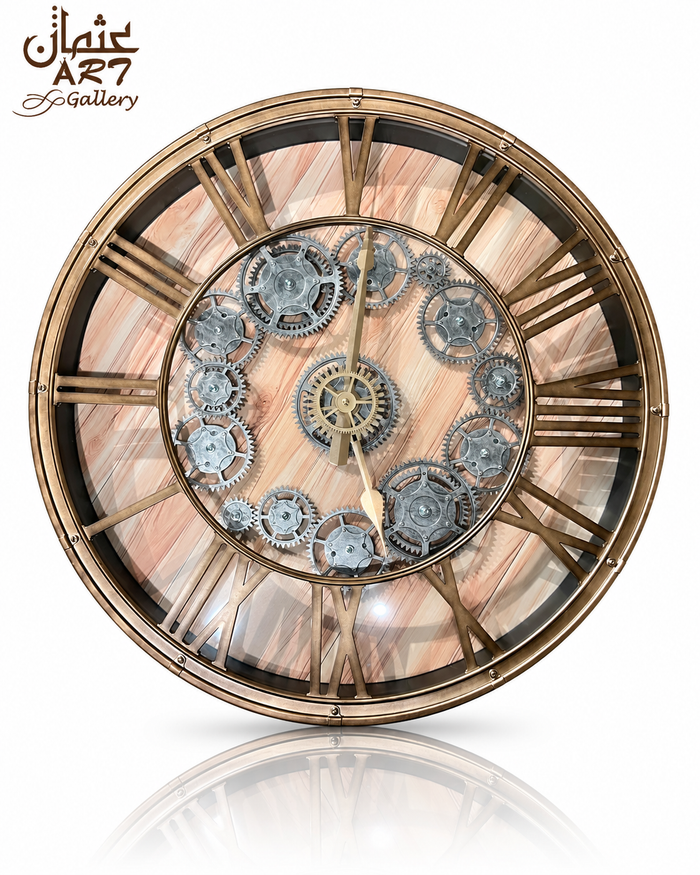
Gear wall clocks require a little more attention because their decorative centres can contain several raised or recessed details.
Use a soft, dry microfibre cloth and clean gently around the gears, numerals, hands and frame.
Do not force decorative gears to rotate while cleaning.
Also avoid spraying liquid into the centre of the clock.
Our existing gear wall clock guide explains the difference between decorative gear styling, moving decorative gears and the actual timekeeping movement.
This distinction is useful when cleaning because visible gears do not automatically mean that the clock has a mechanical timekeeping mechanism.
How to Clean a Silver Wall Clock
Silver wall clocks can have polished, reflective, glittered or metallic-looking surfaces.
Do not automatically treat a silver-coloured clock like stainless steel.
Start with a soft, dry microfibre cloth.
If the product instructions allow it, use a slightly damp cloth for light marks and dry the surface immediately afterwards.
Avoid abrasive cloths, strong chemicals, metal polish and direct sprays unless the product instructions specifically confirm that they are suitable.
The current Silver Resin Wall Clock is a useful example because its live product page provides specific care guidance for its resin face and silver-tone finish.
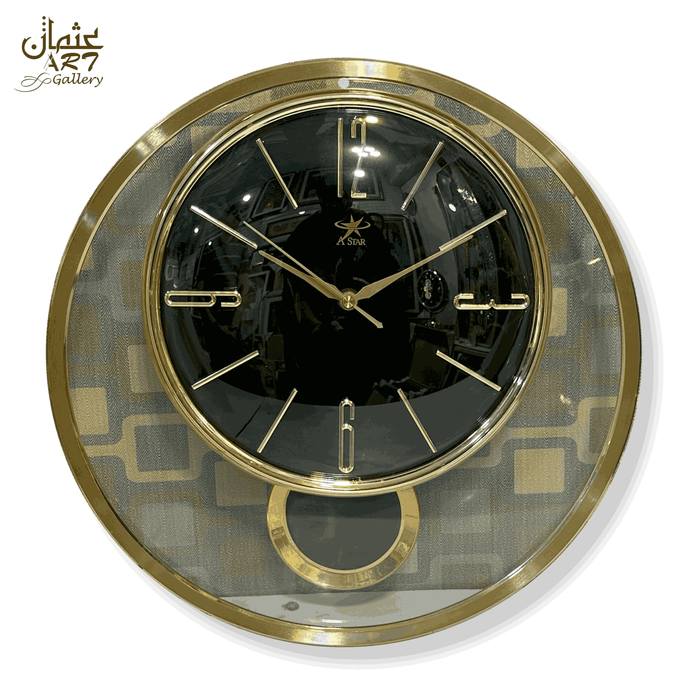
How to Clean a Black and Gold Wall Clock
Black-and-gold clocks are often chosen as decorative feature pieces, so preserving the contrast between the dark and metallic-looking elements is important.
Use a soft cloth for regular dusting.
Avoid aggressive polishing because a decorative gold-coloured finish should not automatically be treated as solid metal or as a surface suitable for metal polish.
For light marks, follow the product-specific cleaning instructions rather than assuming that a general household cleaner is safe.
Never spray cleaning products directly onto the clock.
How to Clean a Wall Clock Face
The clock face is usually the most visible part of the design, so keeping it clean can improve both appearance and readability.
Begin with a dry microfibre cloth.
Clean around the numerals and hands gently. Do not press heavily on raised details.
If the face contains glass, use only a method that is suitable for that particular surface.
Most importantly, keep liquid away from the edges, openings and movement.
How to Clean Wall Clock Hands
Clock hands are delicate and should not be treated like a normal flat surface.
Use very light pressure when cleaning around them.
Do not bend, push or manually force the hands into another position.
If the time needs adjusting, use the adjustment mechanism intended for that clock.
How to Clean Decorative Gears and Raised Details
Decorative details naturally create more areas where dust can settle.
Use the edge or folded part of a soft microfibre cloth to reach accessible areas.
Avoid:
- stiff toothbrushes;
- metal brushes;
- rough sponges;
- abrasive pads;
- pressurised sprays;
- forcing moving parts.
If dust is trapped in an inaccessible or delicate mechanism, it is better to avoid dismantling the clock unless the manufacturer specifically provides instructions for doing so.
Can You Use Glass Cleaner on a Wall Clock?
Do not assume that glass cleaner is suitable for the entire clock.
A wall clock may contain a glass section alongside resin, paint, metallic finishes and a clock movement.
Even if a glass cleaner is suitable for a particular glass surface, it should not automatically be used on the surrounding components.
Never spray glass cleaner directly onto the clock.
Can You Use Water to Clean a Wall Clock?
A small amount of moisture may be suitable for some finishes, but a wall clock should never be treated like a washable household object.
Some current WeDecorators product instructions permit a slightly damp cloth for light marks, followed by immediate drying.
Other clocks may have different requirements.
The safest general rule is:
Use as little moisture as necessary and keep it away from the movement.
How to Clean a Wall Clock in the Kitchen
Kitchen wall clocks can collect more than ordinary dust.
Steam, grease and cooking residue can settle on nearby surfaces, particularly when the clock is installed close to cooking areas.
For this reason, placement matters as much as cleaning.
Avoid positioning a decorative wall clock directly above a cooker or somewhere exposed to continuous steam, heat or splashes.
For cleaning, use only a method suitable for the clock's particular finish.
Do not use aggressive kitchen degreasers unless the product instructions specifically confirm that they are suitable.
Our kitchen wall clock guide explains more about choosing and positioning clocks in kitchen environments.
How to Clean a Wall Clock Without Removing It
For light dusting, you may not need to remove your wall clock from the wall.
However, only clean it while mounted if you can safely reach it without stretching or standing on unstable furniture.
This is particularly important for clocks positioned above staircases, high ceilings or large feature walls.
Do not stand on chairs or tables simply to reach a clock.
If the clock is difficult to access safely, use appropriate access equipment or ask someone qualified to assist.
Should You Remove a Wall Clock Before Deep Cleaning?
It depends on the clock and the cleaning required.
For simple dusting, removal may not be necessary.
For a more thorough clean, removing the clock can make handling easier, provided it can be safely detached and supported.
If the clock is large, heavy, fragile or mounted in a difficult position, additional care may be necessary.
When reinstalling a larger decorative clock, make sure the wall fixing is appropriate for the wall type and the weight of the clock.
What Not to Use on a Wall Clock
| Cleaning Method | Why to Avoid It |
|---|---|
| Abrasive pads | Can scratch decorative surfaces |
| Rough sponges | Can dull polished or resin finishes |
| Direct spray | Liquid can reach the movement or unwanted areas |
| Harsh chemicals | May affect paint, resin or decorative coatings |
| Strong metal polish | May be unsuitable for coated or decorative finishes |
| Excess water | Creates unnecessary moisture around the movement |
| Stiff brushes | Can damage delicate details |
| Forcing gears | Can damage decorative moving components |
How to Keep a Wall Clock Looking Clean for Longer
Dust Regularly
A quick gentle wipe can prevent dust from building up around detailed surfaces.
Choose the Right Location
Keep decorative clocks away from unnecessary moisture, strong heat and cooking residue where the product finish requires protection.
Make the Clock Easy to Reach
A clock that is easy to access is easier to maintain. This is particularly useful for detailed gear and resin designs.
Do Not Over-Clean
Frequent aggressive cleaning can be more harmful than normal household dust.
Keep the Product Information
When purchasing a clock online, save the product page or care information. It can be useful later when cleaning the clock, replacing the battery or checking the mounting instructions.
Wall Clock Care by Type
| Clock Type | Routine Approach | Main Caution |
|---|---|---|
| Resin wall clock | Soft cloth; lightly damp cloth where permitted | Avoid abrasives and harsh chemicals |
| Gear wall clock | Soft, dry microfibre cloth | Do not force gears or spray into detailed areas |
| Silver decorative clock | Soft dry cloth; damp cleaning where permitted | Avoid abrasive cloths and harsh chemicals |
| Black-and-gold clock | Gentle microfibre dusting | Avoid aggressive polishing |
| Roman numeral clock | Soft cloth and careful cleaning | Protect numerals and movement from moisture |
| Quartz wall clock | Dry exterior cleaning and battery checks | Keep liquids away from the movement |
Signs That Your Wall Clock Needs More Than Cleaning
Cleaning is not always the answer when a clock stops or becomes inaccurate.
Consider checking the movement or contacting the seller if:
- the clock repeatedly stops after a fresh battery;
- the hands become stuck;
- the hands touch one another;
- decorative gears stop when they are specifically designed to move;
- the clock becomes noticeably inaccurate;
- the movement appears damaged;
- the clock has been exposed to significant moisture.
Do not spray household oil or lubricant into the movement simply because the clock has stopped. The appropriate solution depends on the actual movement and product design.
A Simple Wall Clock Care Routine
- Inspect: Check the clock face, frame and mounting point.
- Dust: Use a clean, soft microfibre cloth.
- Check: Look for fingerprints or visible marks.
- Clean gently: Use a lightly damp method only where permitted.
- Dry: Remove moisture immediately.
- Check the battery: Replace it according to the clock's requirements.
- Check the fixing: Make sure the clock remains securely mounted.
This simple routine can help keep decorative wall clocks looking presentable without exposing them to unnecessary cleaning products.
Frequently Asked Questions
How do you clean a wall clock without damaging it?
Start with a clean, soft microfibre cloth and gentle pressure. For light marks, use a slightly damp cloth only if the product instructions permit it, then dry the surface immediately. Avoid abrasive cleaners, harsh chemicals and direct sprays.
Can I spray cleaner directly on a wall clock?
No. Direct spraying can allow liquid to reach the movement, dial openings or decorative components. If a suitable cleaner is specifically permitted, apply it to the cloth rather than spraying the clock itself.
How do you clean a resin wall clock?
Use a soft or microfibre cloth for routine dusting. Some resin clocks permit a lightly damp cloth for light marks, but always follow the individual product instructions. Avoid abrasives, harsh chemicals and aggressive scrubbing.
How do you clean a gear wall clock?
Use a soft, dry microfibre cloth and clean gently around the decorative gears, numerals and hands. Do not force gears to rotate and avoid spraying liquid into the detailed centre.
Can I use glass cleaner on a wall clock?
Only when the product instructions specifically permit it for the relevant glass surface. Do not assume that glass cleaner is safe for resin, painted, metallic-looking or movement components.
How often should I dust my wall clock?
It depends on the room. Living rooms, hallways and kitchens may require more frequent dusting than relatively clean bedrooms. Light regular dusting is generally preferable to infrequent aggressive cleaning.
Can water damage a wall clock?
Excess moisture can reach parts of a clock that should remain dry. Some finishes permit a slightly damp cloth for light marks, but water should never be applied directly or allowed to enter the movement.
How do I clean a wall clock with Roman numerals?
Use a soft microfibre cloth and work gently around the numerals. Avoid abrasive products that could mark decorative finishes and keep moisture away from the movement.
How do I clean a silver wall clock?
Use a soft, dry microfibre cloth for routine dusting. If the product permits it, use a slightly damp cloth for light marks and dry the surface immediately. Avoid abrasive cloths, harsh chemicals and direct sprays.
How do I clean a wall clock in a kitchen?
Keep the clock away from direct heat, steam and cooking splashes. Use a cleaning method suitable for its particular finish and avoid strong degreasers unless the product instructions specifically permit them.
Clean Gently and Protect the Finish
A wall clock does not need aggressive cleaning to remain presentable.
In most cases, a soft microfibre cloth, careful handling and sensible placement are more useful than strong chemicals.
The most important rule is simple: clean according to the clock's actual finish and product instructions, not simply its colour or appearance.
If you are looking for a new decorative wall clock, explore the current WeDecorators collection and compare each design by its size, finish, movement, room suitability and care information.
Explore WeDecorators wall clocks and find a design that suits your space.


