
How High to Hang a Wall Clock? The Perfect Height & Placement Guide
A wall clock can look too high, too low or visually disconnected when it is placed without considering the rest of the room. If you are wondering how high to hang a clock, the best starting point is usually eye level, but that is only part of the answer. Clock size, ceiling height, furniture, viewing position and the purpose of the room can all change the final position.
For an open wall, many homes work well with the centre of the clock around 57 to 60 inches (145–152 cm) from the floor. The important detail is that this measurement refers to the centre of the clock, not its top edge. Once a clock sits above a sofa, console, sideboard or other furniture, the relationship between the clock and that furniture becomes equally important.
This guide explains the practical rules behind wall clock height, including how to position clocks in living rooms, bedrooms, offices, dining rooms and Pakistani drawing rooms. You will also learn how clock size and ceiling height affect placement, how to measure before drilling and how to avoid the most common hanging mistakes.
How High Should You Hang a Wall Clock?
The general starting point is to position the centre of a wall clock around 57 to 60 inches from the floor, which places the clock close to comfortable adult eye level in many homes. However, this is not a universal rule. The ideal height changes according to clock size, furniture underneath it, ceiling height, viewing distance and the room's purpose.
When a clock is above furniture, do not blindly force its centre to 57–60 inches. Instead, balance the clock with the furniture while keeping it comfortable to view. For example, a sofa, console or sideboard can become the visual anchor of the composition.
Key Takeaways
- Eye-level placement usually creates the most comfortable viewing position.
- Measure from the floor to the centre of the clock.
- A large clock needs different visual balancing from a small functional clock.
- Furniture affects the final placement of a clock above it.
- Living rooms need a clear relationship between clocks, sofas, consoles and other focal points.
- Bedroom clocks may be positioned according to how they are viewed from the bed.
- Higher ceilings can support larger clocks, but they do not automatically require a clock to be mounted near the ceiling.
- Clock diameter affects both visual weight and the amount of wall space available around it.
- Empty wall space is part of the composition and should be considered before drilling.
- The best placement balances function, readability and decoration rather than following one measurement mechanically.
The 3-Level Clock Placement Method
Instead of relying on one number, use the 3-Level Clock Placement Method. It combines human comfort, furniture relationships and wall proportion.
Level 1: Human Eye Level
Start with the people who will actually use the clock. A wall clock should be comfortable to read without repeatedly looking sharply upwards or downwards.
On an open wall, place the clock centre around 57–60 inches from the floor as a starting point. If the clock is mainly viewed while seated, such as in a living room, check the position from the sofa as well as from standing height.
Level 2: Furniture Relationship
When the clock sits above a sofa, console, dining sideboard, desk or headboard, the furniture becomes part of the placement equation.
The clock should feel visually connected to the item underneath it rather than floating high above it. At the same time, leave enough negative space for the two objects to remain distinct.
Level 3: Wall Proportion
Finally, look at the whole wall. A small clock can disappear on a very wide wall, while an oversized clock can dominate a narrow wall.
Consider wall width, wall height, ceiling height, furniture width and the amount of surrounding decoration. A clock is not just a point on the wall; it is part of the room's visual structure.
Standard Wall Clock Height From the Floor
There is no single height that works for every household, but the centre-point approach is a useful baseline.
| Situation | Suggested placement |
|---|---|
| Average open wall | Around comfortable eye level, commonly 57–60 inches to the centre |
| Large statement clock | Adjust according to visual weight, wall scale and furniture |
| Clock above furniture | Balance the clock with the furniture and maintain practical clearance |
| High ceiling | Increase scale before automatically increasing height |
Why Measure to the Centre?
The centre of the clock is the most useful reference because it determines the visual position of the dial. If you measure only to the top edge, the final position changes significantly depending on whether the clock is 10 inches, 16 inches or 30 inches in diameter.
For example, if your target centre is 58 inches and the clock is 12 inches tall, the top edge will be approximately 64 inches from the floor and the bottom approximately 52 inches. A 24-inch clock centred at the same height would extend from approximately 46 to 70 inches.
This is why two clocks can share the same centre height but create very different compositions.
How High Should a Clock Be on an 8 Foot Ceiling?
An 8-foot ceiling is approximately 96 inches high. In a room with this common ceiling height, start with the clock centre around comfortable eye level rather than trying to visually centre the clock between floor and ceiling.
For an open wall, a centre height around 57–60 inches is usually a useful starting point. The final position should then be checked against the clock's diameter and anything placed underneath it.
A smaller clock may sit comfortably at this height with generous negative space above and below. A large statement clock can consume much more of the vertical wall, so its size needs to be considered before installation.
8-Foot Ceiling Example
Imagine an 8-foot wall with a 16-inch clock. If the centre is positioned at 58 inches, the clock extends roughly 8 inches above and below its centre, putting its top around 66 inches from the floor.
Now imagine a 30-inch statement clock. Its top would reach approximately 73 inches at the same centre height. The clock is therefore visually much closer to the ceiling even though the centre has not moved.
This demonstrates an important principle: ceiling height affects how large a clock can feel, not simply how high it should be mounted.
What Does Eye-Level Mean for a Wall Clock?
For a wall clock, eye level means the position at which the clock can be comfortably viewed without excessive neck movement. In many interiors, the clock centre is placed around 57–60 inches from the floor as a practical starting point.
However, eye level depends on where the viewer is located.
Living Room
Living rooms are unusual because people may view the clock both standing and sitting. Position the clock so it remains easy to read from the principal seating area while still looking natural from standing height.
Office
In an office, consider the desk and normal seated viewing position. A clock that looks perfect from the doorway may be inconvenient if employees have to look behind them or tilt their heads to see it.
Bedroom
In a bedroom, the bed changes the viewing angle. If the clock is intended to be read from bed, test the position while lying or sitting where you normally rest rather than relying entirely on standing eye level.
Does Clock Size Affect Hanging Height?
Yes. Clock size affects the way height is perceived because the clock occupies a larger area of the wall.
Small Clock: 8 to 12 Inches
Small clocks work well on compact walls, in bedrooms, offices, corridors and spaces where the clock needs to provide information without becoming the main decorative feature.
A 12-inch clock may look appropriately balanced at eye level on a relatively narrow wall but can appear undersized when surrounded by a very large expanse of empty wall.
Medium Clock: 12 to 16 Inches
Medium clocks offer more visual presence while remaining relatively easy to integrate into bedrooms, offices, dining rooms and medium-sized living areas.
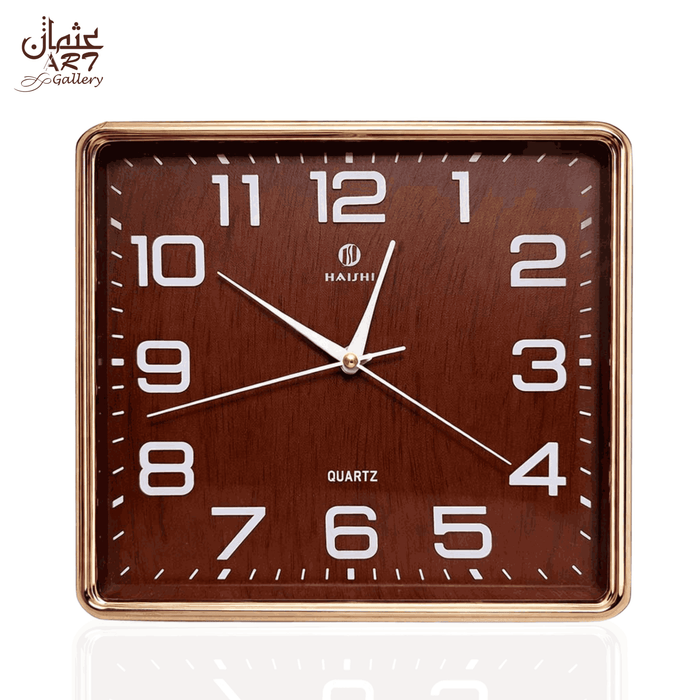
For example, the 12-inch Haish Square Quartz Wall Clock can suit spaces where a clean, compact profile is more appropriate than a large statement design.
Large Clock: 16 to 20+ Inches
Large clocks act more like wall art. Their frame thickness, decorative details and overall visual mass can change how high the clock appears.
Do not assume that every large clock should automatically be mounted higher. Often the better solution is to maintain a comfortable centre height while giving the larger design enough surrounding space.
How High to Hang a Wall Clock in the Living Room
The living room is one of the most common places for a decorative wall clock, but it also contains the greatest number of competing focal points: sofas, televisions, artwork, consoles, windows, lighting and feature walls.
On an empty living-room wall, start by identifying the primary viewing direction. The clock centre can generally begin around 57–60 inches from the floor, then be adjusted according to its size and the overall wall composition.
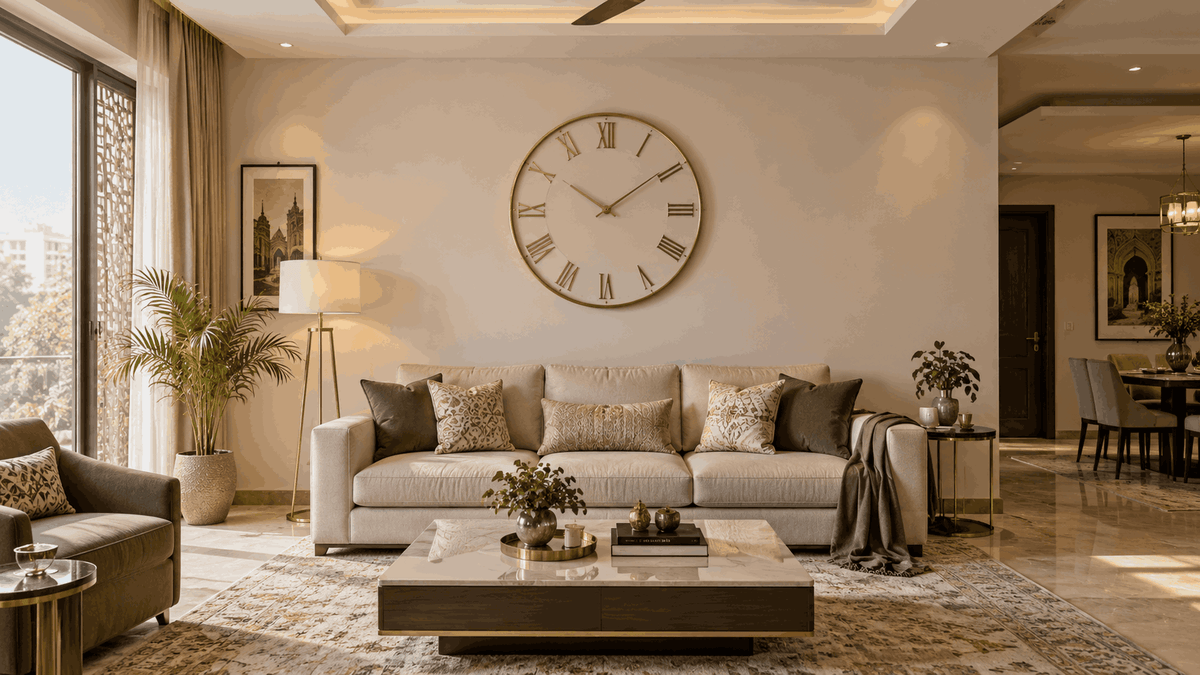
When placing a clock above a sofa, centre it horizontally over the main sofa rather than over an individual seat. Leave enough space between the sofa and clock that the arrangement feels connected without appearing cramped.
A clock can also work above a console table. In that case, use the console as a visual anchor and check the gap between the console and clock before fixing the mounting point.
For a TV wall, be more selective. A television is already a strong visual focal point. A clock should not compete with the screen unless the overall composition intentionally treats both elements as part of one arrangement.
For Pakistani living rooms and apartments, a decorative resin, Roman numeral or modern statement clock can also work well as an alternative to conventional artwork.
For more inspiration, explore wall clocks for living rooms, modern wall clock ideas and large wall clocks.
How High to Hang a Wall Clock in the Bedroom
Bedroom placement should prioritise comfort and readability rather than making the clock dominate the room.
An opposite-bed wall is useful when you want the clock to be visible from the bed. If the clock is mounted above a headboard, measure the available space carefully because the headboard can make an otherwise comfortable eye-level position feel too low.
Leave clear space between the clock and headboard. The exact gap depends on clock size and the height of the headboard, but the clock should not appear to sit directly on top of the furniture.
If the bedroom is compact, a smaller 8–16-inch design can provide the function without visually crowding the room. For a bedroom where quiet operation matters, consider a clock specifically designed with silent or continuous-sweep movement.
The silent wall clocks guide can help when noise is an important consideration.
WeDecorators' Haish Square Quartz Wall Clock is a practical example for compact bedroom walls because its listed dimensions are 12 × 12 inches and its product information describes a continuous sweep movement.
How High to Hang a Wall Clock in an Office
Office clocks should be positioned according to the main working and viewing positions.
Instead of choosing a wall simply because it is empty, sit at the primary desk and look around the room. The ideal clock wall is usually one that can be seen without turning excessively.
For a standard open office wall, use the 57–60-inch centre-height range as the starting point. Then test visibility from desks, meeting chairs or the reception position.
Avoid placing the clock directly behind strong reflections, windows or presentation screens. A clock may technically be at the correct height but remain difficult to read if lighting creates glare.
For professional environments, simple quartz clocks can work particularly well because readability matters more than decorative complexity.
For more guidance, see the office wall clocks guide.
How High to Hang a Clock in the Dining Room
Dining rooms provide several possible reference points: a dining table, sideboard, artwork, pendant light or feature wall.
If the clock is above a sideboard, centre the clock with the sideboard and maintain a comfortable visual gap. If it is on an empty wall, return to the eye-level starting point and then assess the clock's size against the wall.
Avoid placing a large clock so close to a pendant light that the two objects visually collide. The clock should have enough negative space around it to remain legible.
Metallic, Roman numeral and resin designs can work particularly well in formal dining rooms, but decorative detail should not come at the expense of readability.
For additional styling ideas, see the dining room wall clock guide.
How High to Hang a Clock in a Pakistani Drawing Room
In many Pakistani homes, the drawing room is a more formal space than the everyday family lounge. Decorative seating, feature walls, mirrors, statement lighting and traditional finishes can create a stronger visual hierarchy.
This is an ideal setting for a decorative clock, particularly when the design is intended to function as wall art.
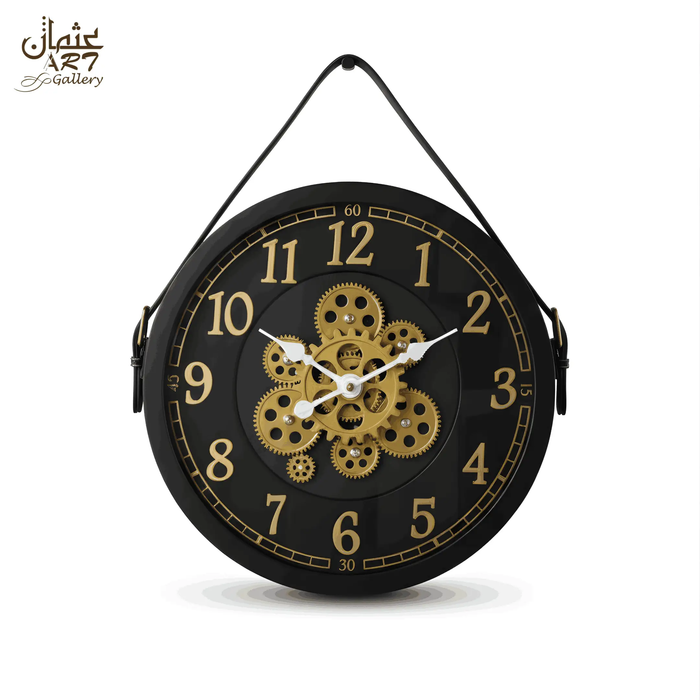
For a formal drawing room, Roman numerals, gold accents, bronze finishes and gear-inspired designs can complement existing furniture without requiring the clock to match every element exactly.
The key is proportion. A large decorative clock needs sufficient wall area around it so its details remain visible. A heavily decorated wall may require a simpler clock, while an empty feature wall can support a more elaborate statement design.
For ideas specifically aimed at formal interiors, explore fancy wall clocks for drawing rooms.
How High Should a Wall Clock Be Above a Sofa?
When a clock hangs above a sofa, there are two measurements to balance: the clock's relationship to the sofa and its relationship to the room as a whole.
Start by centring the clock horizontally over the sofa. Then leave a deliberate gap between the top of the sofa and the bottom of the clock.
A practical starting range is around 6–10 inches of clear space, but this should be adjusted for the height of the sofa, the clock's diameter and the composition of other wall décor. WeDecorators' own wall-clock sizing guidance uses a similar 6–10-inch starting point above sofa back cushions. :contentReference[oaicite:4]{index=4}
Do not place the clock so close that it looks attached to the sofa. Equally, avoid creating a huge empty band between the furniture and clock.
A very large clock can reduce the visible gap because its bottom edge naturally extends further down the wall. A smaller clock may need a slightly more deliberate position so it does not appear isolated.
For a more detailed furniture-sizing approach, read the wall clock size above sofa guide.
How to Hang a Large Wall Clock Correctly
Large clocks should be treated more like architectural artwork than small timekeeping accessories.
They work particularly well on feature walls, wide living-room walls, entrance areas, reception spaces and rooms with generous vertical or horizontal scale.
The most common mistake is assuming that a large wall requires the clock to be pushed upward. Usually the better approach is to keep the clock at a comfortable viewing height and let its diameter create visual impact.
In rooms with unusually high or double-height ceilings, the overall composition becomes more important. A very small clock can look lost even when its centre is at technically correct eye level. In such cases, increasing clock size can solve the proportion problem more effectively than simply moving the clock higher.
Before selecting an oversized clock, compare its diameter with the wall and furniture below it. For large feature walls, see how to choose a wall clock for a large wall.
How to Measure Where to Hang a Wall Clock
Before drilling, take four measurements:
- Wall height
- Wall width
- Clock diameter or overall height
- Viewing distance
Then measure the furniture underneath if applicable.
If you have a 12-inch round clock and want its centre at 58 inches, its top edge will be around 64 inches and its bottom edge around 52 inches from the floor.
For a square clock, measure the full height and width rather than assuming the diagonal dimension shown in a product photograph represents the usable wall footprint.
Before installation, mark the proposed centre with painter's tape. You can also create a temporary paper or cardboard outline of the clock and attach it to the wall. Step back and view it from the main seating positions.
For a detailed measurement process, read how to measure wall clock size.
Use a Wall Clock Size Guide Before Choosing Height
Height and size should be planned together.
A 12-inch clock and a 30-inch clock cannot be treated as interchangeable objects simply because their centres are at the same height.
Consider the width of the wall or furniture beneath the clock. A larger wall usually needs a clock with enough visual presence to avoid appearing lost, while a narrow wall can quickly become overwhelmed by an oversized design.
Our wall clock size guide can be used alongside this article when deciding how much wall area the clock should occupy.
Choosing a Clock for the Placement You Have
Once the correct position is established, choose a clock that fits the visual role of that space. The aim is not to select a clock first and then force the wall to accommodate it.
Haish Square Quartz Wall Clock
Best suited for: offices, bedrooms, corridors and minimalist spaces.
Why placement works: Its listed 12 × 12-inch square format provides a compact footprint that can work where a large statement clock would overwhelm the wall. The product description also specifies bold numerals and continuous sweep movement.
Recommended room: Bedroom, office, compact living area or corridor.
Important measurement consideration: Measure the complete 12-inch footprint and leave sufficient negative space around the square frame.
View the Haish Square Quartz Wall Clock.
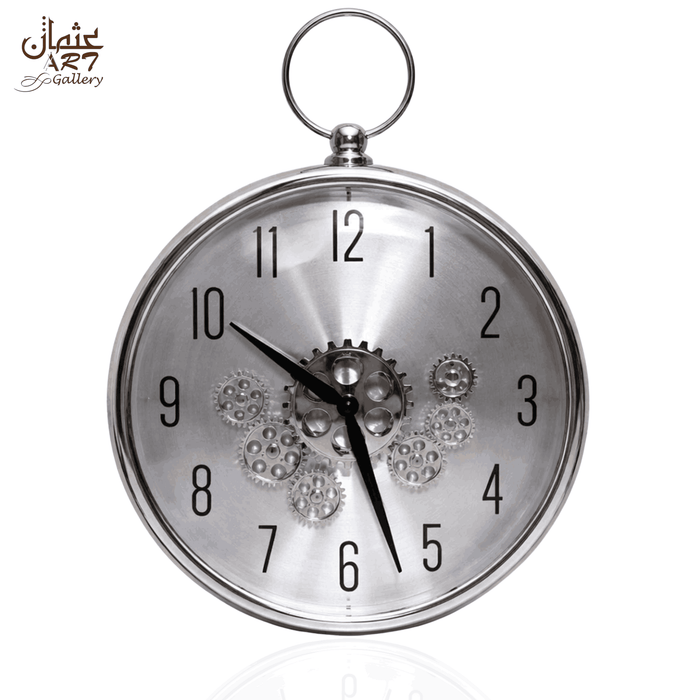
Resin Wall Clock
Best suited for: Feature walls and decorative living rooms.
Why placement works: The listed product dimensions are 13 inches diameter, giving it more decorative presence than a compact utility clock while remaining relatively easy to integrate into a defined wall arrangement.
Recommended room: Living room, office or dining area.
Important measurement consideration: Account for the complete 13-inch diameter when judging the gap between the clock and nearby furniture or artwork.
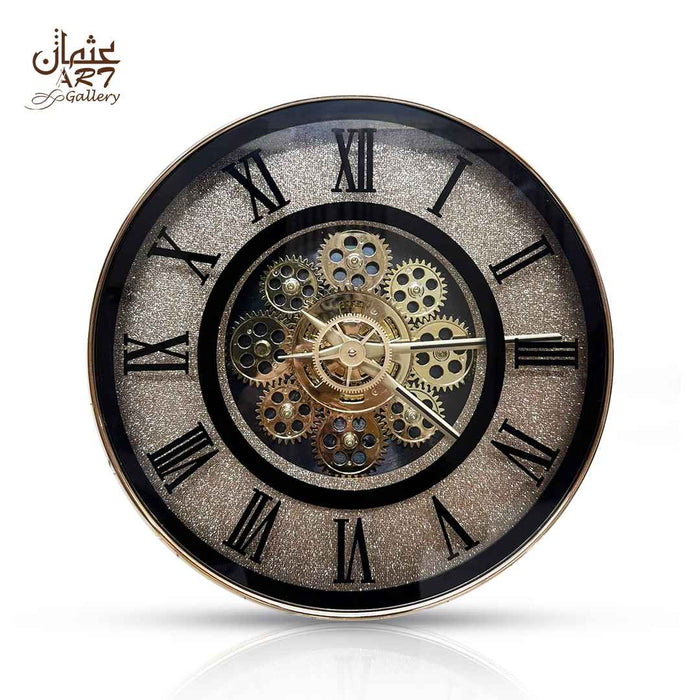
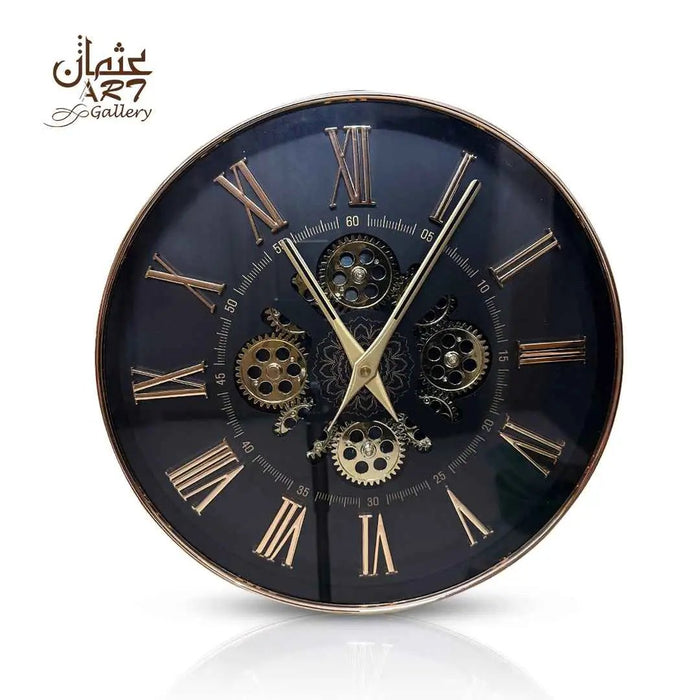
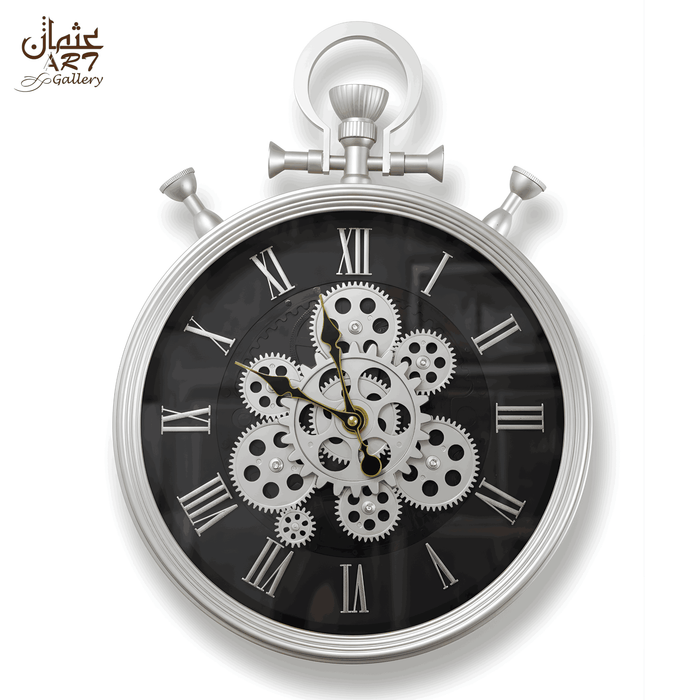
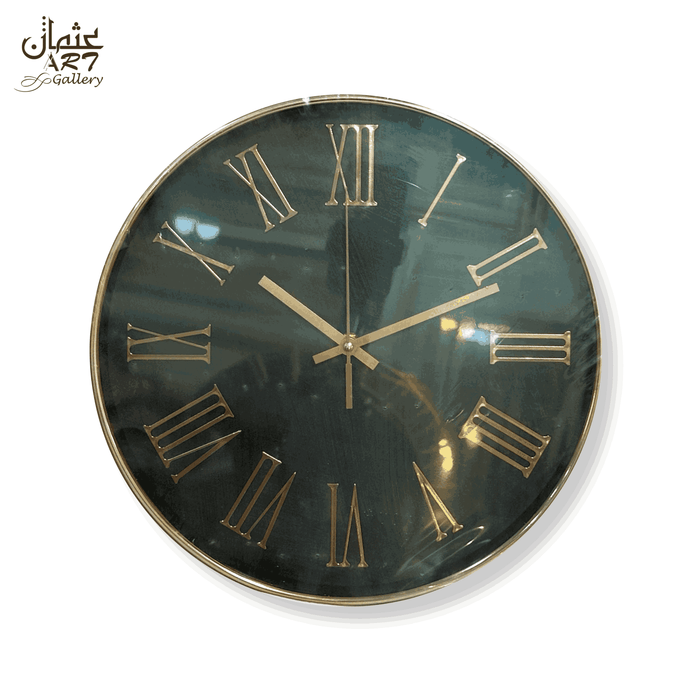
Gear Wall Clock Roman
Best suited for: Statement walls and formal drawing rooms.
Why placement works: A Roman numeral and gear-inspired design can function as decorative wall art as well as a timepiece.
Recommended room: Drawing room, living room, office or feature wall.
Important measurement consideration: Decorative outer elements may increase the visual footprint beyond the central dial, so measure the entire product rather than the dial alone.
View the Gear Wall Clock Roman.
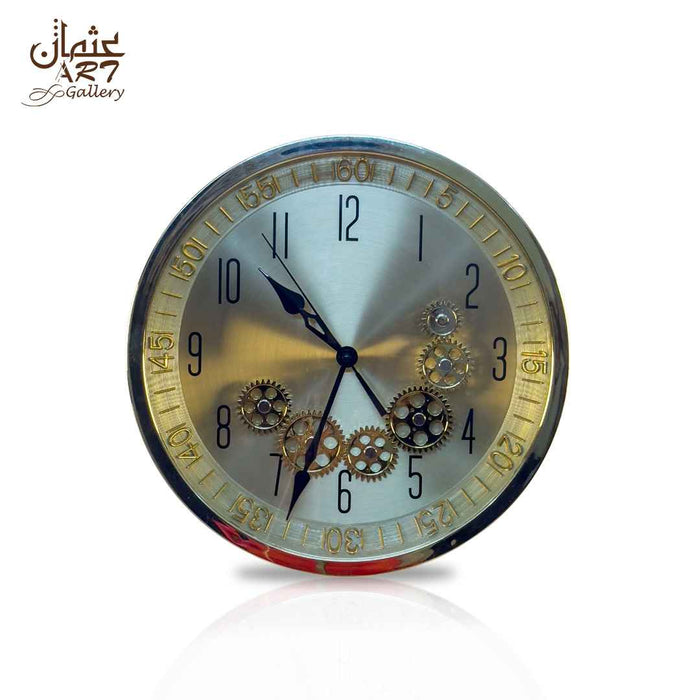
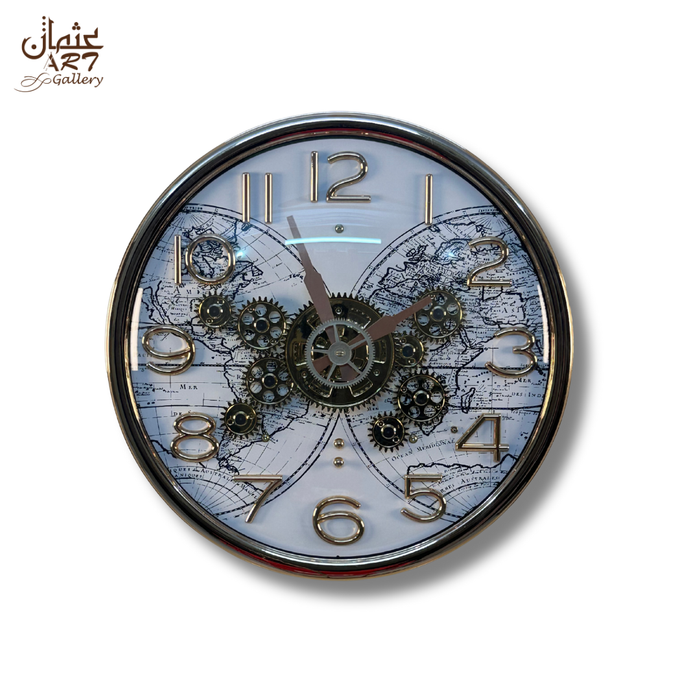
Silver Resin Wall Clock
Best suited for: Neutral, contemporary interiors.
Why placement works: The listed diameter is 16 inches, while the silver-tone finish and decorative face can give the clock stronger presence without requiring an extremely large footprint.
Recommended room: Living room, bedroom, dining room or office.
Important measurement consideration: Reflective finishes can respond strongly to surrounding light, so check the clock from the normal viewing position before finalising its location.
View the Silver Resin Wall Clock.
10 Common Wall Clock Hanging Mistakes
1. Hanging Too Close to the Ceiling
Problem: The clock looks disconnected from the people and furniture below it.
Solution: Start from eye level and adjust according to clock size rather than using the ceiling as the primary reference.
2. Ignoring Eye Level
Problem: The clock is technically centred on the wall but uncomfortable to read.
Solution: Check the clock from normal viewing positions before drilling.
3. Choosing Clock Size Before Measuring the Wall
Problem: The selected clock overwhelms the wall or looks too small.
Solution: Measure wall and furniture dimensions first.
4. Placing the Clock Too Close Above Furniture
Problem: The clock appears attached to the sofa, console or sideboard.
Solution: Leave intentional negative space between the two elements.
5. Choosing an Oversized Clock for a Small Wall
Problem: The clock consumes the entire composition.
Solution: Compare the full clock footprint with the available wall width before buying.
6. Choosing a Tiny Clock for a Large Wall
Problem: The clock appears visually insignificant.
Solution: Consider a larger design or create a wider wall arrangement.
7. Ignoring Furniture Alignment
Problem: The clock is slightly off-centre relative to the sofa or console.
Solution: Find the furniture centreline before marking the mounting point.
8. Forgetting Viewing Distance
Problem: The clock is visible but its numerals are difficult to read.
Solution: Choose a clock with sufficient dial and numeral size for the distance.
9. Matching Décor but Ignoring Readability
Problem: The clock looks attractive but the hands and numerals disappear against the face.
Solution: Prioritise contrast and readability, especially in offices and large rooms.
10. Installing Without Checking Wall Proportion
Problem: The measurement is correct but the clock still looks visually wrong.
Solution: Step back and assess the entire wall, not just the clock's mounting point.
Wall Clock Placement Checklist
Before drilling, work through this checklist:
- ✓ Measure wall height
- ✓ Measure wall width
- ✓ Measure furniture underneath
- ✓ Select an appropriate clock size
- ✓ Find the primary viewing position
- ✓ Consider ceiling height
- ✓ Check lighting and reflections
- ✓ Check readability from normal viewing distance
- ✓ Mark the clock centre point
- ✓ Confirm the mounting point and wall type
Where Should a Wall Clock Be Placed?
The best wall clock location is one where the clock can be comfortably read, visually connects with the room's main furniture and has enough surrounding space to look intentional.
For an empty wall, begin with the centre at approximately 57–60 inches from the floor. Above furniture, balance the clock with the furniture and maintain an appropriate gap. In large rooms, increase clock scale before assuming the clock must be mounted much higher.
For more styling inspiration, explore wall clock décor ideas, or browse wall clocks available in Pakistan.
Final Rule: Measure the Centre, Then Check the Composition
If you remember only one rule from this guide, remember this: start with the centre of the clock around eye level, then adjust for furniture, clock size and the room.
There is no universal wall-clock height that makes every interior look correct. A 12-inch clock above a desk, a 16-inch clock in a bedroom and a large statement clock above a living-room sofa each need to be considered in context.
The best placement combines three things: comfortable viewing, good furniture relationships and balanced wall proportion.
Once the placement is right, the design becomes much easier to choose. A simple quartz clock can keep a compact office organised, while a resin, Roman numeral or gear-inspired clock can become a decorative focal point in a living room or drawing room.
For a broader selection, explore the WeDecorators wall clock collection.
Frequently Asked Questions About Wall Clock Height
1. How high should a wall clock be hung?
A wall clock should generally start at about 57–60 inches from the floor to the centre of the clock. This is a practical eye-level guideline for many homes. However, furniture, clock size, ceiling height and viewing position can change the ideal placement. Above a sofa or console, use the furniture relationship as an additional reference.
2. What is the ideal wall clock height from the floor?
For an open wall, approximately 57–60 inches from the floor to the clock centre is a useful starting range. The measurement should be taken to the centre rather than the top edge. A different height may be appropriate when the clock is above furniture, in a bedroom viewed from bed or in a room with unusual proportions.
3. Should a clock be at eye level?
Usually, yes. Positioning the clock near eye level makes it easier to read without repeatedly looking sharply upwards or downwards. For many homes, this means placing the centre around 57–60 inches from the floor. However, room purpose and furniture can justify adjusting the position.
4. How high should a clock be above a sofa?
Start by centring the clock horizontally over the sofa and leave approximately 6–10 inches between the top of the sofa back and the bottom of the clock. Adjust the gap according to sofa height and clock size. A large clock may need a different visual balance from a small clock.
5. How high should a clock be on an 8 foot ceiling?
For an 8-foot ceiling, start with the clock centre around 57–60 inches from the floor rather than placing it close to the ceiling. The clock's diameter should then be considered. A large clock will occupy much more vertical space than a small one, so size and surrounding furniture should influence the final position.
6. Does clock size affect hanging height?
Yes. Clock size changes how much wall space the design occupies and therefore changes its visual weight. A small 8–12-inch clock may work well on a compact wall, while a 20-inch or larger statement clock needs more surrounding space. Size should be considered together with wall width, ceiling height and furniture.
7. Where should a wall clock be placed in a living room?
A wall clock can work above a sofa, above a console, on an empty feature wall or within a larger decorative arrangement. The best position is usually one that is visible from the main seating area and does not compete with the television or another dominant focal point. Centre it carefully with the furniture when appropriate.
8. Where should a wall clock go in a bedroom?
A bedroom clock can be placed on the opposite wall or above a headboard if there is sufficient space. Consider where you will actually view it, especially if you want to read the time from bed. Avoid positioning it so close to the headboard that the clock and furniture appear crowded.
9. Can a wall clock be too high?
Yes. A clock can be technically centred on a wall yet still feel too high if it is difficult to read or visually disconnected from the furniture below. Start with comfortable eye level and assess the clock from the room's normal viewing positions. Large decorative clocks should not automatically be moved towards the ceiling.
10. How much space should be between a clock and furniture?
There is no single universal gap, but approximately 6–10 inches is a useful starting point above a sofa or similar furniture. The appropriate distance depends on the furniture height, clock diameter and overall composition. The clock should feel connected to the furniture without appearing to touch or float excessively far above it.
11. What size wall clock is best for a large wall?
A large wall generally needs a clock with enough visual presence to avoid looking lost. The right size depends on wall width, furniture and surrounding décor. Larger statement clocks can work particularly well on broad feature walls, but the entire clock footprint should be measured before installation so it does not overwhelm the available space.
12. How do you measure where to hang a clock?
Measure the wall height and width, clock diameter or overall height, furniture dimensions and viewing distance. For an open wall, choose a centre height around 57–60 inches as a starting point. Mark the centre with tape, create a paper outline if necessary and view the proposed position from the room's main seating or working areas before drilling.
