
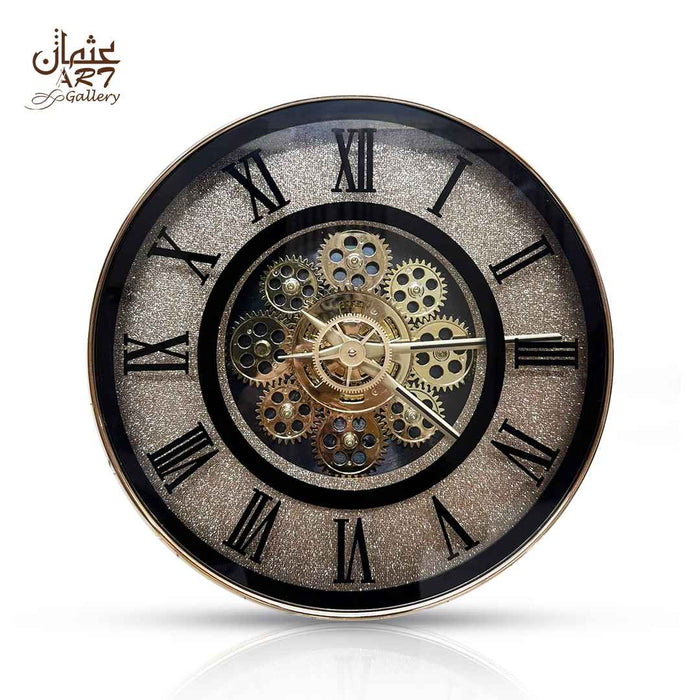
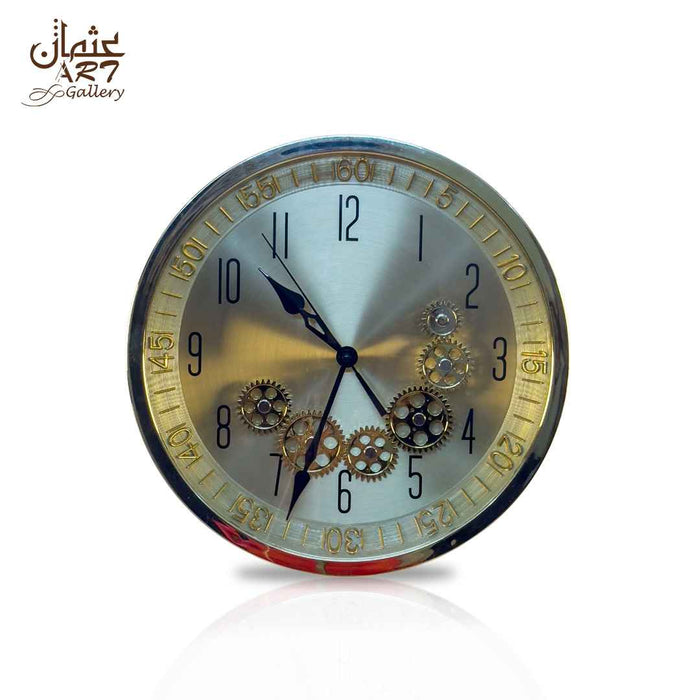
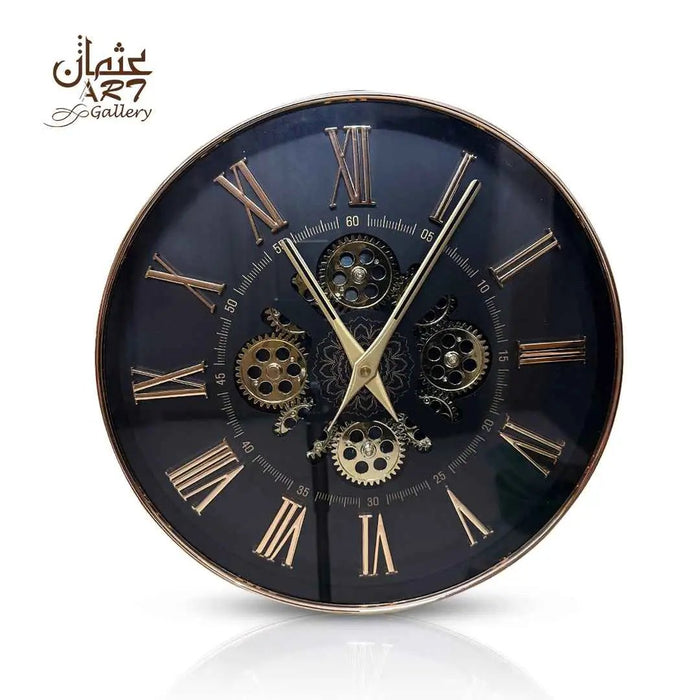
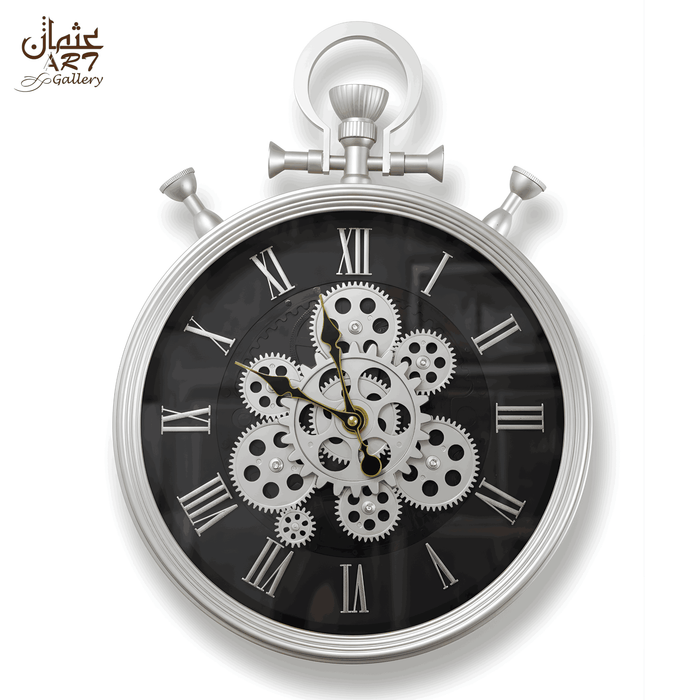
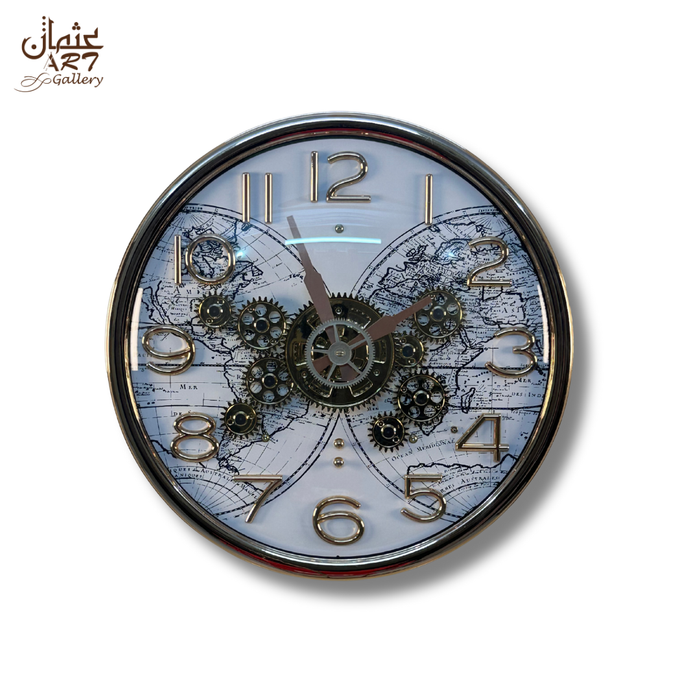
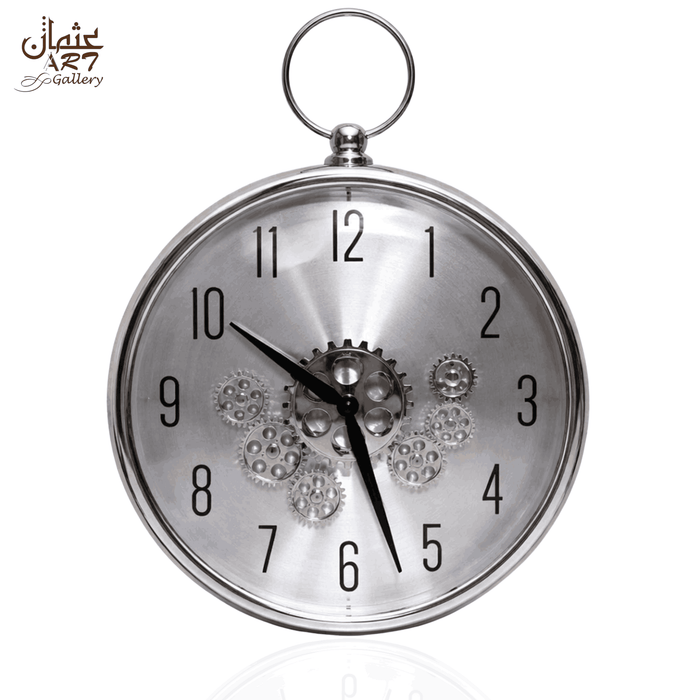
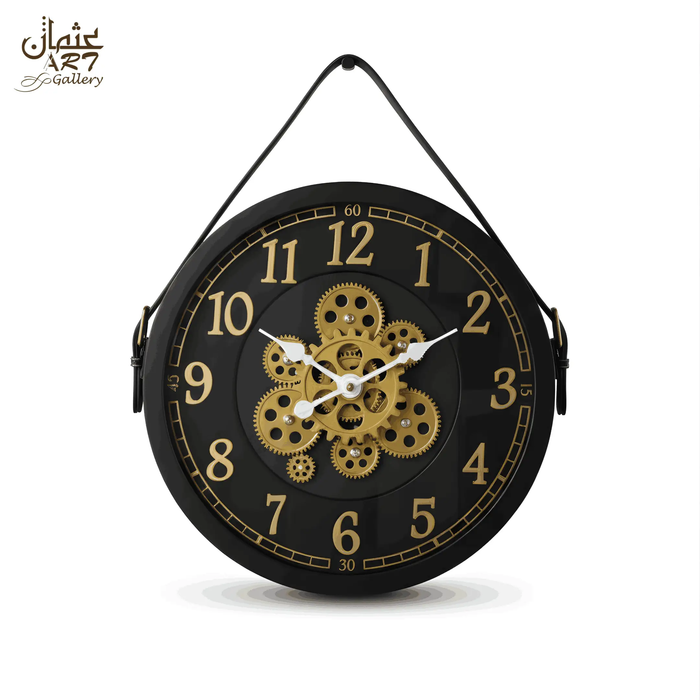
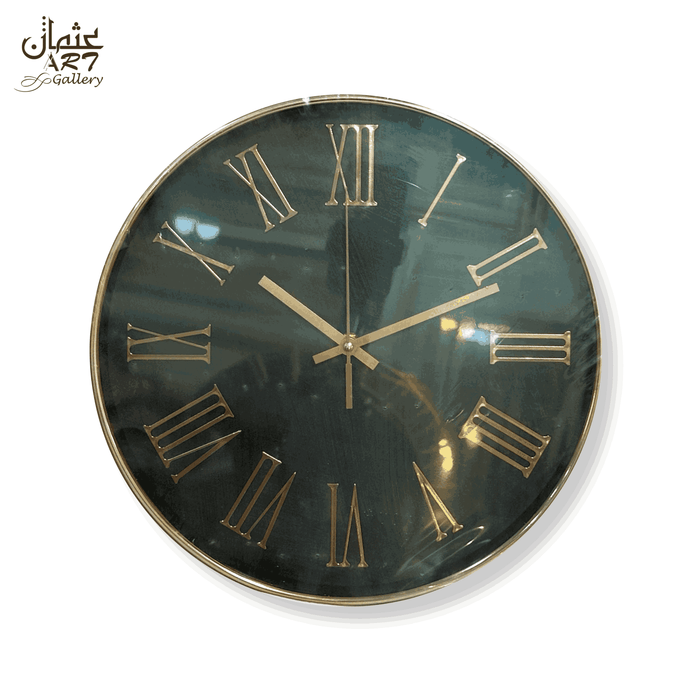
A wall clock can look perfect on a product page and still feel completely different once it is mounted in your home. A clock that seemed substantial online may disappear above a wide sofa, while a large decorative design can make a narrow wall feel crowded.
The easiest way to avoid that problem is to understand how to measure wall clock size before you buy. The process is simple, but it is important to measure the right part of the clock and compare those dimensions with the actual wall space available.
For a round clock, the basic measurement is its diameter: the distance from one outer edge straight across to the opposite edge through the centre. For square and rectangular clocks, measure width × height. For irregular or decorative clocks, such as designs with gears, branches, Roman numerals or extended decorative elements, measure the maximum overall width and height of the complete design.
That distinction matters when shopping for wall clocks online in Pakistan. Product photography can make an item look larger or smaller than it really is, so your measuring tape is more reliable than your screen.
This guide explains wall clock measurements from the basics through room-by-room sizing, mounting height, online shopping checks, visualisation techniques and practical examples.
How Do You Measure Wall Clock Size?
To measure a wall clock correctly, measure the complete external footprint, not just the central dial.
-
For a round clock, measure from one outer edge to the opposite edge through the centre. This is the diameter.
-
Include the outer frame or rim if it contributes to the clock's overall footprint.
-
For a square or rectangular clock, record width × height.
-
For an irregular decorative clock, measure its maximum overall width × maximum overall height.
-
Check the clock's depth as well if it has raised or layered components.
-
Compare the measurements with the usable wall area before purchasing.
For example, if a round clock measures 16 inches from edge to edge, its diameter is approximately 16 inches (40.6 cm). A square clock measuring 12 × 12 inches has a 12-inch width and 12-inch height rather than a 12-inch diameter.
Understanding Wall Clock Measurements
Before choosing a clock, it helps to understand the terminology used in product specifications.
Diameter
Diameter is the straight-line distance across a circle through its centre.
For a round wall clock:
Diameter = edge to edge across the centre
If the complete clock measures 16 inches across, its diameter is 16 inches.
Diameter is not the same as circumference. Circumference measures the distance around the outside of the circle and is not normally the measurement shoppers use to describe the size of a round wall clock.
Radius
The radius is half the diameter.
So a 16-inch-diameter clock has an 8-inch radius.
You generally do not need the radius when shopping for a wall clock, but understanding it helps explain why the centre-to-edge distance is not the advertised "16-inch" measurement.
Width
Width is the horizontal measurement from left to right.
For square, rectangular and irregular clocks, width is often more useful than diameter.
Height
Height is the vertical measurement from top to bottom.
A rectangular clock might therefore be listed as 16 × 12 inches, meaning approximately 16 inches wide and 12 inches high.
Depth
Depth tells you how far the clock projects from the wall.
A clock can have a relatively modest width but still project noticeably because of a thick frame, layered construction, raised numerals or decorative components.
Depth becomes especially relevant in:
-
narrow hallways
-
entrances
-
spaces beside doors
-
areas with passing traffic
-
clocks installed near furniture
Frame Size
The frame is the outer border surrounding the dial. Depending on the design, it may add several centimetres to the overall footprint.
This is why measuring only the dial can produce the wrong result.
Dial Size
The dial is the area containing the hands and time markings.
A product can have a smaller dial inside a larger decorative frame. If you're deciding whether the clock will fit a wall, the complete external dimensions are more important than the dial alone.
Overall Dimensions
"Overall dimensions" should be treated as the most useful information when available because they describe the complete physical footprint.
However, do not assume that every manufacturer uses identical terminology. Always read the individual product specification.
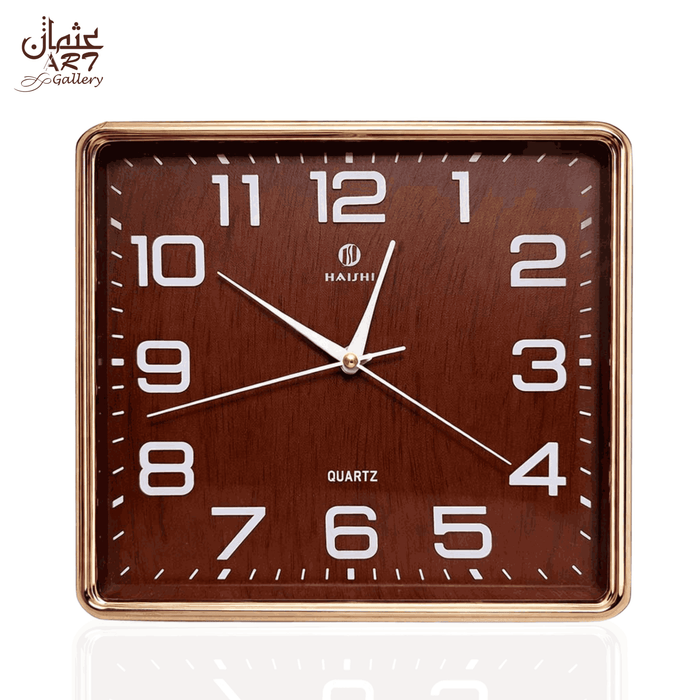
For example, the current WeDecorators listing for the Haish Square Quartz Wall Clock specifies 12 × 12 inches, edge to edge, making its physical footprint straightforward to understand.
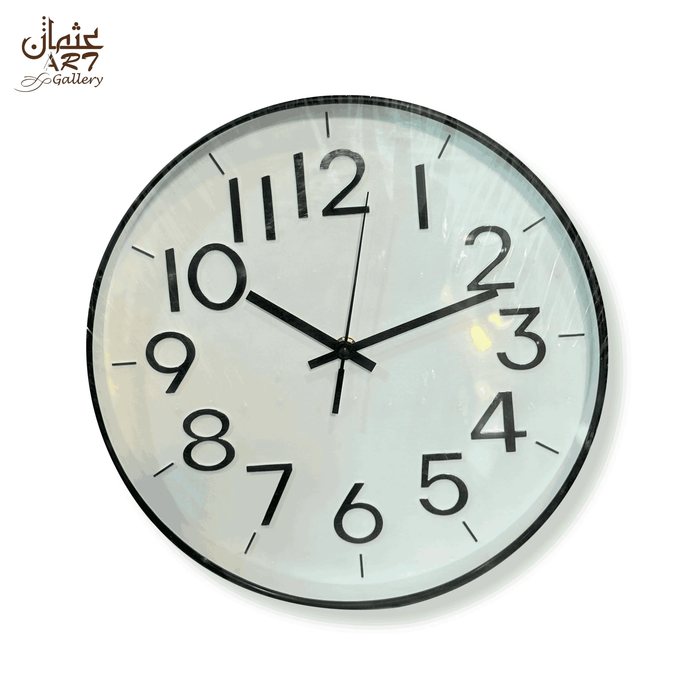
Likewise, the current Silver Resin Wall Clock listing specifies 16 inches in diameter, edge to edge.
These examples demonstrate why checking the exact product dimensions is more useful than relying on a generic assumption about what "12 inch" or "16 inch" means.
How to Measure a Round Wall Clock
Round clocks are the easiest to measure because the main size measurement is the diameter.
Step 1: Place the clock on a flat surface
If the clock is already mounted and you need to measure it, you can measure it in place. However, if it is safe and practical to remove it, placing it flat makes measurement easier.
Use a clean surface where the clock cannot slide.
Step 2: Find the widest point
Look straight across the clock.
You want the greatest distance between two opposite points on the outer edge.
Do not measure from the edge of the dial to the opposite edge if the clock has a frame.
Step 3: Measure edge to edge
Place your measuring tape or ruler at one outer edge and extend it directly across to the opposite outer edge.
The measurement should pass through the centre of the clock.
For a perfectly circular clock, any straight line passing through the centre and connecting the outer edges will give the same diameter.
Step 4: Include the complete outer frame
Suppose the dial itself is 14 inches but the frame extends the clock to 16 inches.
For wall-planning purposes, you should work with approximately 16 inches, because that is the space occupied by the complete clock.
This is particularly important for decorative wall clocks where the outer rim contributes significantly to the design.
Step 5: Record the measurement
Write down the measurement rather than relying on memory.
For example:
Diameter: 16 inches
Then, if necessary:
16 inches × 2.54 = 40.64 cm
So a 16-inch wall clock is approximately 40.6 cm in diameter.
Step 6: Compare the measurement with your wall
The measurement by itself does not tell you whether the clock is appropriate.
A 16-inch clock can look substantial on a small wall but relatively modest on a very wide feature wall.
That is why measuring the wall should happen before you order.
Dial Size vs Complete Clock Size
One of the most common mistakes when people measure a clock is focusing exclusively on the dial.
Imagine a decorative clock with:
-
a 12-inch dial
-
a 1-inch frame around it
-
raised decorative details
-
a wider outer rim
Its total footprint could be considerably larger than the dial.
If you have only 14 inches of available wall width, the dial measurement does not tell you whether the entire clock will fit.
When buying online, look for wording such as:
-
diameter
-
width
-
height
-
edge to edge
-
overall dimensions
-
product dimensions
If the listing is unclear, check the product specifications before ordering rather than estimating from photographs.
How to Measure Square and Rectangular Wall Clocks
Diameter does not apply to square and rectangular clocks.
Instead, measure:
Width × Height
Start with the complete outside edge of the clock.
For example:
| Clock | Width | Height |
|---|---|---|
| Compact square clock | 12 in | 12 in |
| Medium square clock | 16 in | 16 in |
| Large square clock | 20 in | 20 in |
| Rectangular clock | 16 in | 12 in |
A square clock measuring 12 × 12 inches has a footprint of approximately 30.5 × 30.5 cm.
The current WeDecorators Haish Square Quartz Wall Clock is a useful real-world example: its listing gives the dimensions as 12 × 12 inches, edge to edge.
Measure the frame, not only the face
If a square clock has a thick frame, raised border or decorative extension, measure to the furthest outer point.
This prevents an otherwise attractive clock from appearing unexpectedly crowded once it reaches the wall.
Why visual footprint matters
Two clocks can both be described as "12-inch" designs while having different visual effects.
A simple square clock with a thin frame may look relatively restrained.
A heavily framed clock can feel larger because more of the wall is occupied by visible material.
That distinction becomes important when selecting a wall clock for home décor.
How to Measure Irregular and Decorative Wall Clocks
Decorative clocks require more attention because their shape may not fit neatly inside a circle, square or rectangle.
Consider clocks featuring:
-
gears
-
decorative branches
-
Roman numerals
-
artistic extensions
-
layered resin designs
-
raised elements
-
asymmetrical frames
-
decorative spokes
-
sculptural details
For these designs, think in terms of the maximum overall footprint.
Measure the furthest left point to the furthest right point for width.
Then measure the highest point to the lowest point for height.
Example
Suppose an artistic clock has:
-
central circular dial: 14 inches
-
decorative extension on the left
-
decorative extension on the right
-
overall width: 20 inches
-
overall height: 18 inches
Calling it simply a "14-inch clock" could give a misleading impression of how much wall space it needs.
For placement, you should work with approximately:
20 × 18 inches overall
This approach is especially useful for artistic wall clocks because the decorative components are part of the visual composition.
WeDecorators' guidance on artistic clocks similarly emphasises the difference between physical dimensions and visual weight: a highly detailed 16-inch design can appear more visually prominent than a simple 16-inch clock.
Wall Clock Size Chart
The following wall clock size chart is a starting guide, not a rigid rule. The right size depends on wall width, furniture, ceiling height, viewing distance and the visual weight of the design.
| Clock Size | Approx. Centimeters | Typical Use | Recommended Wall Type |
|---|---|---|---|
| 8–10 in | 20–25 cm | Small offices, kitchens, compact accents | Narrow or limited wall areas |
| 12 in | 30.5 cm | Bedrooms, small offices, apartments | Small to medium wall sections |
| 14 in | 35.6 cm | Bedrooms, dining areas, offices | Medium wall sections |
| 16 in | 40.6 cm | Living rooms, bedrooms, dining spaces | Medium to moderately wide walls |
| 18 in | 45.7 cm | Dining areas, bedrooms, living spaces | Medium to wide walls |
| 20 in | 50.8 cm | Living rooms, drawing rooms, feature areas | Wide or relatively open wall sections |
| 24 in | 61 cm | Statement décor, larger living rooms | Wide feature walls |
| 30+ in | 76.2+ cm | Large statement clocks | Large walls, high ceilings, open spaces |
There is no universal rule saying that a particular room must have a particular clock size.
For example, a 16-inch clock can work beautifully in a living room if the wall zone is moderately sized and the design has sufficient visual presence. A minimalist 20-inch clock may still appear understated compared with a highly decorative 16-inch clock.
12 vs 16 vs 20 Inch Wall Clock
When shopping online, 12, 16 and 20 inches are useful reference points because the difference becomes easier to visualise once you convert the measurements.
12-inch wall clock
A 12-inch clock is approximately 30.5 cm across if round.
It is often a practical starting point for:
-
compact apartments
-
bedrooms
-
kitchens
-
smaller offices
-
narrow wall sections
-
hallways
It can also work where a wall already contains artwork, shelving or other décor.
A 12-inch design may feel too small, however, if it is placed alone above a very wide sofa or on a large empty feature wall.
16-inch wall clock
A 16-inch clock is approximately 40.6 cm across.
It sits comfortably in the middle of many sizing decisions and can work in:
-
bedrooms
-
living rooms
-
dining spaces
-
home offices
-
moderate feature walls
As an example, WeDecorators' current Silver Resin Wall Clock is listed as 16 inches in diameter, edge to edge.
Its decorative resin treatment and raised numerals also demonstrate an important point: physical size and visual size are not identical.
20-inch wall clock
A 20-inch round clock is approximately 50.8 cm across.
This size can be useful for:
-
larger living rooms
-
drawing rooms
-
spacious dining areas
-
reception spaces
-
broad feature walls
It gives a stronger decorative presence than a 12-inch clock, but it still needs to be evaluated against the specific wall.
A 20-inch clock can be too large for a narrow wall even if the room itself is large.
How to Choose Wall Clock Size for Each Room
The question "how big should a wall clock be?" cannot be answered using room size alone.
The more useful question is:
How much usable wall space is available, what furniture anchors that space, and how far away will the clock normally be viewed?
Wall Clock Size for Living Room
Living rooms often provide the largest wall zones in a home, but that does not mean the largest clock automatically works.
Start by measuring:
-
the usable wall width
-
the sofa or console width
-
the distance to windows
-
the distance to doors
-
the height of nearby artwork
-
the available space above furniture
If the clock is going above a sofa, consider the sofa as the primary reference point rather than the entire wall.
For a broad three-seat sofa, a tiny clock may disappear visually.
For a narrow sofa or console, an oversized clock can dominate the arrangement.
If you are choosing between a minimalist design and a highly decorative design, remember that visual weight matters as much as dimensions.
For more ideas about integrating contemporary clocks into living spaces, see WeDecorators' guide to modern wall clocks for living rooms.
Wall Clock Size for Drawing Room
Drawing rooms often have more formal furniture arrangements and larger decorative focal points.
A statement clock can work particularly well when:
-
the wall is relatively open
-
furniture is symmetrical
-
the clock has room to breathe
-
surrounding artwork is limited
-
the clock is intended to become a focal point
A large decorative clock does not need to fill the entire wall.
In fact, negative space around it can make the design feel more intentional.
Wall Clock Size for Bedroom
Bedrooms generally benefit from controlled visual scale.
For many bedroom walls, 12–16 inches can be a useful starting range, while larger bedrooms may accommodate a larger clock if the wall is broad.
Think about the clock's viewing position.
A clock that is easy to read from the bed does not necessarily need to be huge.
Also consider movement and sound. If quiet is important, check the product listing for an explicitly stated silent, non-ticking or continuous movement rather than assuming every quartz clock is silent.
For additional bedroom-specific considerations, see wall clocks for bedrooms.
Wall Clock Size for Dining Room
Dining rooms provide an interesting balance between decoration and function.
A clock can be positioned:
-
above a sideboard
-
on an open feature wall
-
beside a dining area
-
within an open-plan dining zone
A 14–20-inch clock can be a useful starting range for many dining walls, but the exact choice should follow the available wall space.
For example, a 12-inch clock may look appropriately restrained in a compact dining nook but too small above a broad sideboard.
In an open-plan home, a larger clock can also help visually define the dining zone.
Wall Clock Size for Home Office
A home office clock should be easy to read without becoming a distraction.
For a small desk area, a compact clock may be enough.
For a larger office, meeting space or reception area, a medium-sized design may be easier to read from different positions.
Consider:
-
desk location
-
viewing distance
-
monitor placement
-
shelving
-
artwork
-
wall width
A clean 12–16-inch clock can be a useful starting point for many office settings, while larger spaces may support larger designs.
Hallway and Entryway
Hallways usually require more careful measurement because the wall may be narrow and people pass relatively close to it.
Before selecting a clock, check:
-
wall width
-
door swing
-
passage clearance
-
clock depth
-
viewing direction
-
nearby switches or fixtures
A smaller clock can be preferable if the wall is narrow.
How to Measure Your Wall Before Buying
Knowing the clock's dimensions is only half the process.
You also need accurate wall measurements.
Step 1: Measure wall width
Measure the full width of the wall section where the clock might go.
If the usable zone is between a door and a window, measure that section rather than the entire wall.
Step 2: Measure usable height
Measure from the relevant furniture or floor level to the upper limit of the usable wall area.
Do not assume that every part of a wall is available. Air conditioners, windows, shelves, wall lights and other features may reduce the practical area.
Step 3: Measure the furniture
If the clock will sit above a sofa, console, sideboard, bed or desk, measure the furniture width.
The clock should relate visually to the furniture below it.
Step 4: Check clearance
Look at nearby:
-
doors
-
windows
-
curtains
-
shelves
-
mirrors
-
artwork
-
lights
-
switches
-
air-conditioning units
The clock needs breathing room.
Step 5: Mark the proposed clock
Before drilling, use masking tape to outline the approximate dimensions.
For a round clock, mark a circle.
For a square or rectangular clock, mark the complete rectangle.
For an irregular design, reproduce the maximum width and height.
Step 6: Step back
Do not judge the scale while standing directly beside the wall.
Move several steps away and look from the normal position where people will see the clock.
This is often more revealing than measuring alone.
How Much Wall Space Should a Clock Take?
There is no single percentage that works for every room.
A useful design principle is proportion.
If the clock is too small relative to the wall:
-
it may look isolated
-
the wall can overpower it
-
the clock may appear like an afterthought
If it is too large:
-
surrounding décor may feel crowded
-
furniture can appear visually compressed
-
the clock may dominate the entire arrangement
One commonly used design starting point is to consider a clock at roughly 40% of the usable wall width in an open wall zone. For example, a 60-inch-wide usable section would produce a starting point of about 24 inches.
But this should not be treated as a scientific standard.
Furniture, ceiling height, clock style and surrounding décor can all justify moving above or below that starting point.
When a clock sits above furniture, use the furniture width as another reference. WeDecorators' large-wall guidance suggests considering the clock in relation to the furniture rather than treating the entire wall as the only measurement.
Wall Clock Height From the Floor
Correct sizing can still look wrong if the clock is mounted at an awkward height.
For a clock on an open wall, a useful starting point is to position the centre of the clock around eye level.
A practical range is approximately 145–155 cm from the floor to the centre, with adjustments based on the room, furniture and ceiling height.
This is a guideline rather than a universal rule.
Above a sofa
If the clock is above a sofa, it generally needs to relate to the sofa rather than simply being placed at eye level.
Leave enough space between the clock and the top of the sofa so the composition does not look cramped.
Above a console
A clock above a console should feel visually connected to the furniture beneath it.
The clock does not need to be mathematically positioned according to one fixed number. Step back and judge the relationship between the clock, console and objects placed on it.
In a hallway
In a hallway, readability and clearance matter.
Avoid placing the clock so high that it becomes difficult to read or so low that it interferes with people moving through the space.
For a more detailed guide, see how high to hang a wall clock from the floor.
How to Measure a Clock Before Buying Online
Online shopping makes size particularly easy to misunderstand.
A product photograph may show a clock above a small console, making it look enormous. Another photograph may show the same size clock on a large wall, making it appear smaller.
Before ordering, check the product page for:
Overall width
For non-round clocks, this tells you how much horizontal space the clock needs.
Overall height
Important for rectangular and irregular designs.
Diameter
For round clocks, confirm the actual diameter.
Depth
Especially important for decorative or layered clocks.
Weight
Weight affects installation requirements and the type of wall fixing you may need.
Material
Material can affect appearance, texture and visual weight.
Mounting information
Check whether the clock is designed for wall mounting and what installation information is supplied.
Product photographs
Use photographs to understand design, but not as your primary measuring tool.
Product specifications
Specifications should take priority over visual estimates.
For Pakistani shoppers buying wall clocks online, this simple habit can prevent an avoidable mismatch: take the product's listed dimensions and reproduce them on your own wall before ordering.
WeDecorators' online buying guidance similarly recommends checking actual dimensions, edge-to-edge measurements, movement information, mounting requirements and product details rather than relying exclusively on lifestyle photographs.
Common Wall Clock Measurement Mistakes
1. Measuring only the dial
The dial may be smaller than the complete clock.
Always check the outer footprint.
2. Ignoring the frame
A thick frame can add significant width.
If the frame reaches the outer edge, include it in your measurement.
3. Confusing diameter with circumference
Diameter is the straight-line distance across a round clock.
Circumference is the distance around it.
They are not interchangeable.
4. Assuming every clock uses diameter
Diameter applies to circles.
Square and rectangular clocks require width and height.
Irregular clocks require maximum overall dimensions.
5. Ignoring decorative extensions
Gears, numerals, branches and artistic components may extend beyond the central face.
Measure the furthest outer points.
6. Looking only at product photos
Photography can distort perceived scale.
A 16-inch clock does not become a 24-inch clock because it is photographed close to the camera.
Use the listed dimensions.
7. Forgetting clock depth
A clock can fit horizontally but still project too far into a narrow passage.
Check depth when placement makes it relevant.
8. Ignoring furniture proportions
A clock should relate to the sofa, console, table, bed or desk beneath it.
Wall width alone does not determine the best size.
9. Not checking the wall width
Buying first and measuring later can leave you with a clock that is technically attractive but visually unsuitable.
Measure before ordering.
10. Forgetting doors and windows
A clock can fit on a wall in theory but clash with a door swing, window trim or curtain.
Measure the usable section.
11. Ignoring viewing distance
A small clock may be perfectly readable from a desk but difficult to see from the other side of a large room.
12. Mixing inches and centimetres incorrectly
Remember:
1 inch = 2.54 cm
Useful conversions include:
-
10 inches = 25.4 cm
-
12 inches = 30.48 cm
-
14 inches = 35.56 cm
-
16 inches = 40.64 cm
-
18 inches = 45.72 cm
-
20 inches = 50.8 cm
-
24 inches = 60.96 cm
-
30 inches = 76.2 cm
How to Visualize Clock Size Before Installation
You do not need sophisticated interior-design software to test a clock's scale.
Paper template method
Cut a piece of cardboard or paper to match the clock's listed dimensions.
For a 20-inch round clock, create a 20-inch-wide circular template.
For a 16 × 12-inch rectangular clock, create a 16 × 12-inch outline.
Hold or temporarily position it where the clock will go.
Then step back.
This is one of the most reliable ways to understand scale before drilling.
Painter's tape method
Use low-tack masking or painter's tape to mark the proposed clock footprint.
For a round clock, mark the approximate diameter.
For an irregular clock, mark its maximum width and height.
Do not rely on a single small piece of tape in the centre. Recreate the complete footprint.
Furniture comparison
Compare the clock with the furniture beneath it.
Ask:
-
Is it disappearing above the sofa?
-
Is it too dominant above the console?
-
Does its width feel connected to the furniture?
-
Does the empty wall around it look intentional?
Phone-camera visualization
Take a photo of the wall from the normal viewing position.
You can use the image to consider composition, but remember that camera perspective can make objects appear larger or smaller depending on distance and lens.
A physical template is more reliable for judging actual size.
Clock Size vs Clock Style
Physical dimensions are only one part of visual scale.
Consider two clocks that are both 16 inches wide.
A minimalist clock with:
-
thin frame
-
simple dial
-
restrained markings
-
low visual contrast
may look relatively light.
A decorative clock with:
-
thick edging
-
reflective metallic elements
-
large numerals
-
layered surfaces
-
strong contrast
-
intricate decorative details
may command much more attention.
This is particularly relevant when selecting decorative wall clocks for a feature wall.
Minimalist clocks
Minimalist designs can work well where you want the clock to blend into the room.
They may suit:
-
modern bedrooms
-
home offices
-
compact apartments
-
clean living spaces
Roman numeral clocks
Large Roman numerals can give a clock greater visual presence without necessarily increasing its physical dimensions.
Resin wall clocks
Resin designs can introduce texture, shine and layered visual detail.
For example, WeDecorators currently lists a Resin Imported Clock at 13 inches in diameter, edge to edge, showing how a relatively compact physical dimension can still be used for a decorative design.
Gear clocks
Gear-inspired clocks can have a much stronger visual footprint because decorative elements extend the design beyond the central dial.
Treat their maximum external dimensions as more important than simply measuring the central face.
Metallic clocks
Silver, gold and reflective finishes can attract attention and therefore feel visually stronger.
Artistic clocks
Artistic wall clocks should be treated partly as wall art.
The surrounding negative space becomes especially important because the clock itself may contain many visual elements.
How to Choose the Right Clock Size for a Feature Wall
A feature wall gives you more freedom, but more freedom also makes proportion important.
Start by identifying the visual zone.
Is the clock going:
-
above a sofa?
-
above a console?
-
beside artwork?
-
on an empty wall?
-
between windows?
-
within an entrance area?
If the clock is the primary focal point, give it enough breathing room to be recognised as the main object.
If the wall already contains:
-
artwork
-
mirrors
-
shelves
-
photographs
-
decorative objects
a smaller clock may be more appropriate.
On a relatively empty wall, a larger statement clock can provide the visual anchor the space needs.
This is one reason large wall clocks can work particularly well in spacious living rooms, reception areas and other areas with substantial negative space.
Once you know the dimensions that work for your wall, you can explore WeDecorators' collection of modern and artistic wall clocks and compare designs without losing sight of the measurements.
Five Real-World Wall Clock Sizing Scenarios
The following examples are illustrative. They are meant to demonstrate the measuring process, not establish universal room-size rules.
Example 1: Small Apartment Bedroom
Wall width: 110 cm
Furniture below: 80 cm dressing table
Available clear area: approximately 90 cm
Possible clock range: 10–14 inches (25–36 cm)
A 12-inch clock would occupy approximately 30.5 cm of width, leaving substantial visual space around it.
A 20-inch clock, at 50.8 cm, could still physically fit, but it may feel unnecessarily dominant depending on the rest of the room.
Example 2: Medium Living-Room Wall
Wall section: 200 cm wide
Sofa: 180 cm wide
Clear wall above sofa: approximately 90 cm high
A 16–24-inch clock could be considered as a starting range.
A 16-inch clock measures about 40.6 cm, while a 20-inch clock measures about 50.8 cm.
If the design is highly decorative, the smaller option may have enough visual weight.
If the clock is minimalist, the larger option may create a stronger focal point.
Example 3: Large Drawing-Room Feature Wall
Usable wall width: 300 cm
Furniture zone: large console or seating arrangement
Design goal: statement focal point
This is a situation where a larger wall clock may make sense.
A 24-inch clock measures about 61 cm.
A 30-inch clock measures about 76.2 cm.
The final decision should depend on the furniture and surrounding artwork rather than simply choosing the largest available size.
Example 4: Dining Area
Wall width: 150 cm
Sideboard: 120 cm wide
Available area above sideboard: approximately 70 cm high
A 16–20-inch clock could be considered.
A 16-inch clock is approximately 40.6 cm wide.
A 20-inch clock is approximately 50.8 cm wide.
Either could work, but a decorative 20-inch clock may need more negative space around it than a simple 20-inch clock.
Example 5: Home Office
Wall width: 100 cm
Desk: 140 cm wide
Viewing distance: approximately 2–3 metres
A 12–16-inch clock may be a sensible starting range.
Prioritise readability and placement over decorative complexity.
The clock should be visible from the normal working position without competing with the monitor or shelves.
When to Choose a Large Wall Clock
Large wall clocks can work particularly well when the room has a large amount of unused wall space.
Consider a larger design when you have:
-
a broad feature wall
-
high ceilings
-
a spacious living room
-
an open-plan area
-
a large reception wall
-
relatively little competing wall décor
A large clock can act as both a timepiece and wall art.
But bigger is not always better
Avoid oversized designs when:
-
the wall is narrow
-
the clock sits close to a door
-
surrounding artwork is already dense
-
the furniture is compact
-
the clock would dominate the room
-
the viewing distance is very short
A large clock should feel intentional, not simply oversized.
When a Small Wall Clock Is Better
Small wall clocks are useful when the wall itself is limited.
They can work especially well in:
-
compact bedrooms
-
small offices
-
kitchens
-
narrow hallways
-
apartment accent walls
-
spaces with existing artwork
-
walls containing several decorative elements
Small does not mean insignificant.
A carefully chosen 10–14-inch clock can complete a small wall without overwhelming it.
The important thing is that the clock remains readable from the normal viewing distance.
A Practical Measurement Checklist Before You Buy
Before placing an online order, take five minutes to record the following:
Your wall
-
Wall width
-
Usable wall height
-
Available clear area
-
Nearby doors
-
Nearby windows
-
Nearby shelves or artwork
Your furniture
-
Sofa width
-
Console width
-
Sideboard width
-
Desk width
-
Bed/headboard width
Your clock
-
Diameter, if round
-
Width
-
Height
-
Depth
-
Weight
-
Frame size
-
Decorative extensions
-
Mounting information
Then compare all three.
This simple process is more reliable than asking only, "Does this clock look big enough?"
How WeDecorators' Products Illustrate Clock Sizing
Product examples can make abstract measurements easier to understand.
The Haish Square Quartz Wall Clock is currently listed at 12 × 12 inches edge to edge, making it a straightforward example of square clock dimensions.
The Silver Resin Wall Clock is listed at 16 inches in diameter edge to edge, making it a useful example of a round clock where diameter directly communicates the external footprint.
WeDecorators also offers resin-style designs where decorative appearance is an important part of the product. The current Resin Imported Clock listing gives its dimension as 13 inches diameter, edge to edge.
The lesson is not that one of these sizes is universally better.
The lesson is that once you understand your wall dimensions, you can compare products on an equal basis.
For shoppers interested in resin designs, you can explore the Resin Wall Clock after measuring your intended wall.
Frequently Asked Questions
How do I measure wall clock size?
For a round wall clock, measure straight from one outer edge to the opposite outer edge through the centre. Include the complete frame when determining the space it occupies. For square or rectangular clocks, measure width × height. For irregular decorative designs, measure the maximum overall width and height.
Is wall clock size measured by diameter?
Usually, diameter is the relevant measurement for a round clock, but you should verify the product listing. Square and rectangular clocks use width and height instead. Decorative or irregular clocks may require overall dimensions.
How do you measure a 12-inch wall clock?
A 12-inch round wall clock measures approximately 12 inches (30.5 cm) from one outer edge to the opposite edge through the centre. If the product has a frame or decorative extensions, confirm whether the stated 12 inches represents the complete edge-to-edge footprint.
What does a 16-inch wall clock mean?
For a round clock, a 16-inch size generally describes a 16-inch diameter, provided the product listing defines the measurement that way. That equals approximately 40.6 cm across.
How big is a 20-inch wall clock in centimetres?
A 20-inch clock is approximately 50.8 cm across if the measurement refers to its diameter.
Should I measure the clock frame or dial?
Measure the complete external clock footprint when deciding whether it will fit your wall. The dial alone can be smaller than the overall clock.
How much bigger should a wall clock be than the furniture below it?
There is no universal required difference. Use the furniture as a visual reference. A clock that is too small can disappear above wide furniture, while an oversized design can overpower a narrow console or sofa.
What size wall clock is best for a living room?
The right size depends on the wall, furniture and design. Medium-to-large clocks can work well in spacious living rooms, while smaller rooms may benefit from compact or medium designs. Measure the wall section and furniture before choosing.
What size wall clock is best for a bedroom?
Many bedrooms work well with clocks around 12–16 inches, but the appropriate size depends on the wall width and viewing distance. Smaller rooms may suit smaller clocks, while larger bedrooms can support more substantial designs.
How high should a wall clock be from the floor?
For an open wall, a useful starting point is to position the centre of the clock around 145–155 cm from the floor. Adjust according to furniture, ceiling height and the room's viewing positions.
How do I measure an irregular-shaped wall clock?
Measure its maximum overall width and maximum overall height, from the furthest points of the complete design. Include gears, decorative branches, numerals, frames and other extensions that affect the footprint.
Should I consider clock depth?
Yes, particularly in hallways, entrances and narrow spaces. A clock with substantial depth may project farther from the wall and require additional clearance.
How can I visualize a clock before buying it online?
Create a paper or cardboard template using the product's actual dimensions, or outline the footprint with removable painter's tape. Step back and view it from the normal position where you will see the clock.
Is a 20-inch wall clock too big for a small room?
Not automatically, but it can be. A 20-inch clock may work if the wall is sufficiently wide and the design has enough breathing room. On a narrow wall or above compact furniture, it may overwhelm the composition.
What is the difference between clock diameter and clock dimensions?
Diameter describes the distance across a round clock. Dimensions is a broader term that can include width, height and depth. A square clock, for example, might be listed as 12 × 12 inches rather than by diameter.
Does the clock's decorative style affect its apparent size?
Yes. Thick frames, large numerals, reflective finishes, gears, layered details and strong contrast can make a clock feel visually larger than a simpler clock with identical physical dimensions.
Should I measure the whole wall or only the section where the clock will go?
Measure the usable section where the clock will actually be installed. If the space is between a window and a door, for example, that zone matters more than the total wall width.
Final Takeaway: Measure First, Then Choose
Choosing the right wall clock becomes much easier when you stop judging size from photographs and start measuring the actual space.
For a round clock, measure the diameter from edge to edge through the centre. For square and rectangular clocks, use width × height. For irregular and decorative designs, measure the maximum overall footprint.
Then measure the wall.
Consider the furniture beneath the clock, surrounding artwork, doors and windows, viewing distance and mounting height. Remember that a clock's physical dimensions and visual weight are not always the same.
For Pakistani homeowners and shoppers buying wall clocks online in Pakistan, the most useful habit is simple: check the product specifications, reproduce the dimensions on your wall, and only then decide whether the design is right for your space.
Once you know the dimensions that work, you can concentrate on the enjoyable part—choosing the colour, finish and style that complements your home.
Explore WeDecorators' modern and artistic wall clocks and compare your measured wall space with the listed product dimensions before ordering.
SEO Deliverables
SEO Title
How to Measure Wall Clock Size Correctly Before Buying
Meta Title
How to Measure Wall Clock Size Before Buying
Meta Description
Learn how to measure wall clock size, compare diameter and dimensions, choose the right size for each room, and buy confidently online in Pakistan.
URL Slug
/blogs/news/how-to-measure-wall-clock-size
Primary Keyword
how to measure wall clock size
Secondary Keywords
-
how to measure a wall clock
-
measure clock diameter
-
wall clock size chart
-
wall clock measurements
-
clock dimensions
-
wall clock diameter
-
how big should a wall clock be
-
how to choose wall clock size
-
wall clock size for living room
-
wall clock size for bedroom
-
wall clock size for dining room
-
wall clock size for office
-
12 inch wall clock
-
16 inch wall clock
-
20 inch wall clock
-
large wall clocks
-
small wall clocks
-
wall clock dimensions
-
clock size guide
-
wall clock placement
-
wall clock height from floor
-
measuring a wall for a clock
-
wall clock for home décor
-
decorative wall clocks
-
modern wall clocks
-
artistic wall clocks
-
wall clocks in Pakistan
-
buy wall clocks online in Pakistan
Suggested Featured Image
A clean interior-design image showing a measuring tape being used to measure the diameter of a round decorative wall clock, with the clock positioned above a sofa or console and subtle measurement markings showing both inches and centimetres.
Suggested Image Alt Text
How to measure wall clock size with a measuring tape before buying
Suggested Image File Name
how-to-measure-wall-clock-size-before-buying.jpg
FAQ Schema Questions
-
How do I measure wall clock size?
-
Is wall clock size measured by diameter?
-
How do you measure a 12-inch wall clock?
-
What does a 16-inch wall clock mean?
-
How big is a 20-inch wall clock in centimetres?
-
Should I measure the clock frame or dial?
-
How much bigger should a wall clock be than the furniture below it?
-
What size wall clock is best for a living room?
-
What size wall clock is best for a bedroom?
-
How high should a wall clock be from the floor?
-
How do I measure an irregular-shaped wall clock?
-
Should I consider clock depth?
-
How can I visualize a clock before buying it online?
-
Is a 20-inch wall clock too big for a small room?
-
What is the difference between clock diameter and clock dimensions?
