
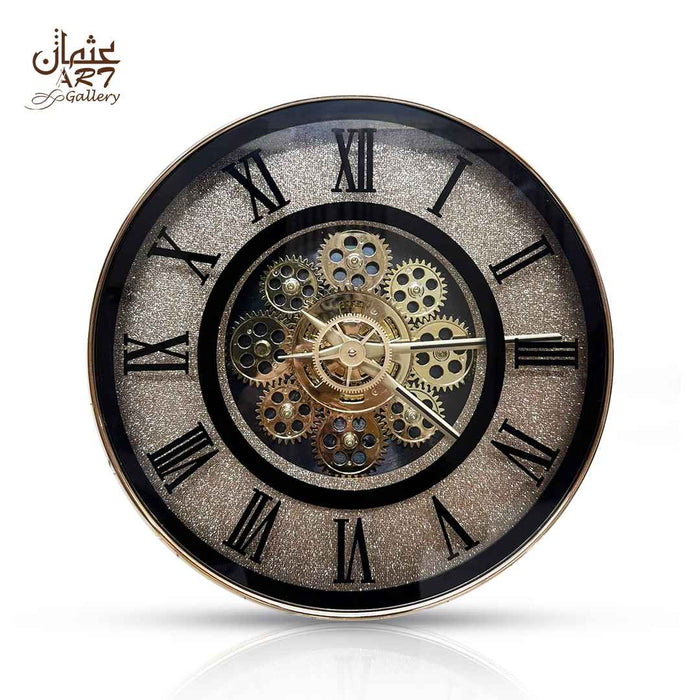
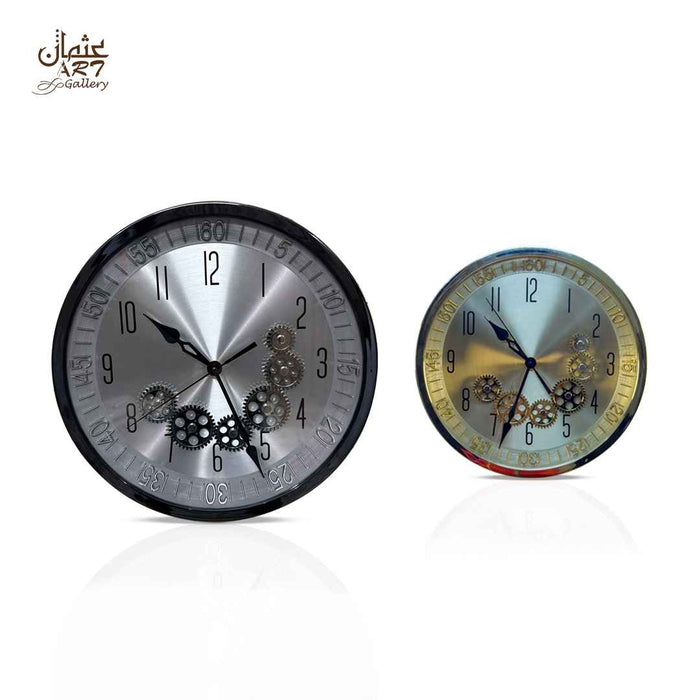
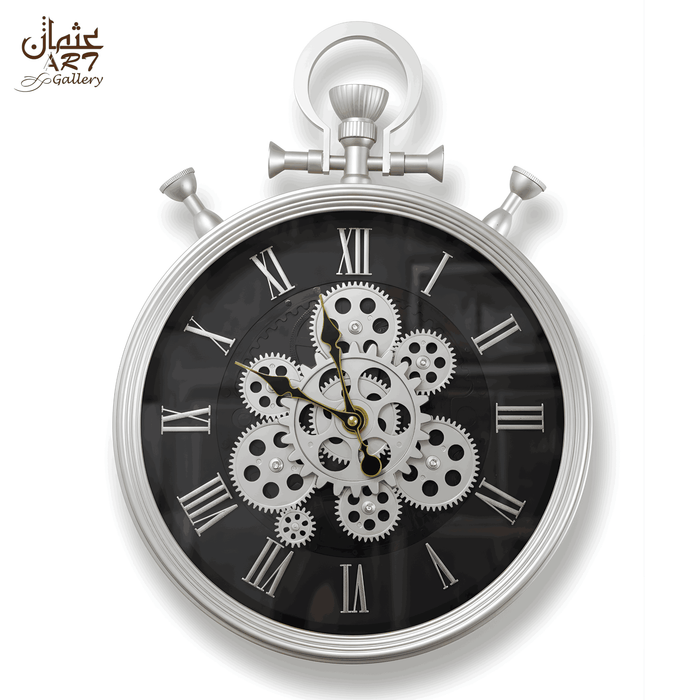
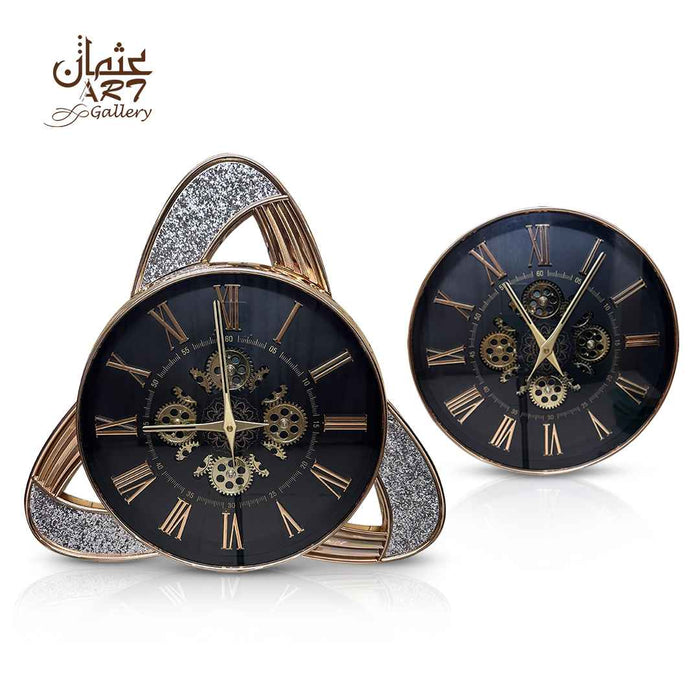
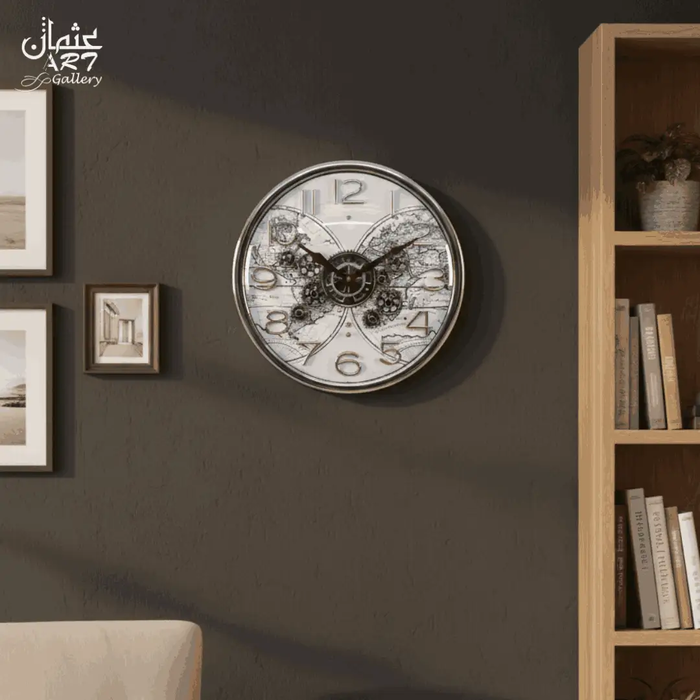
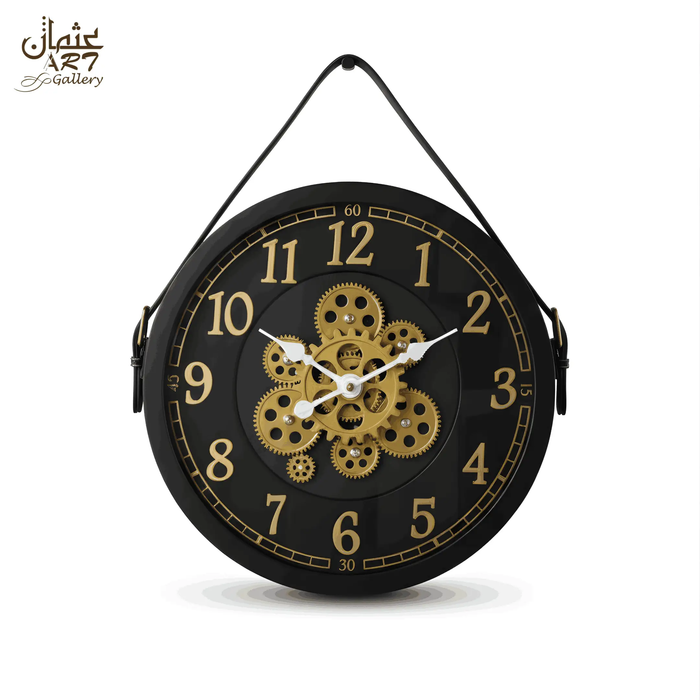
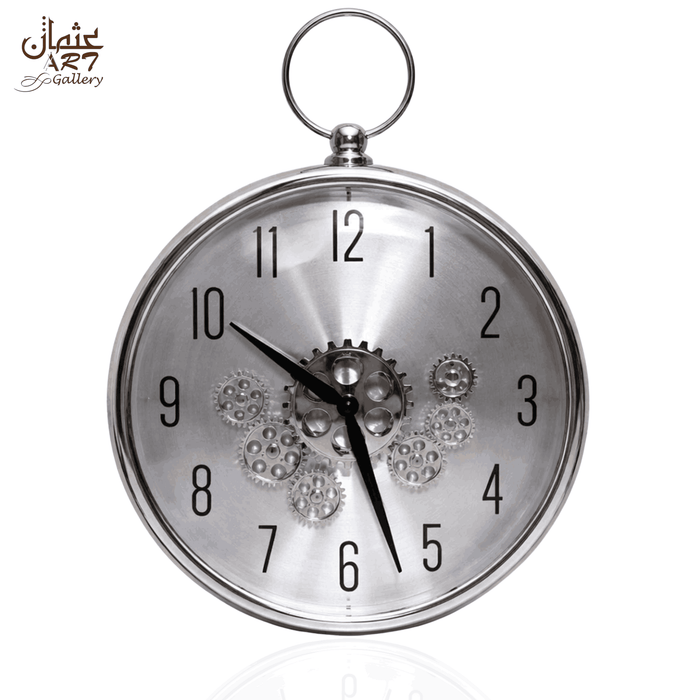
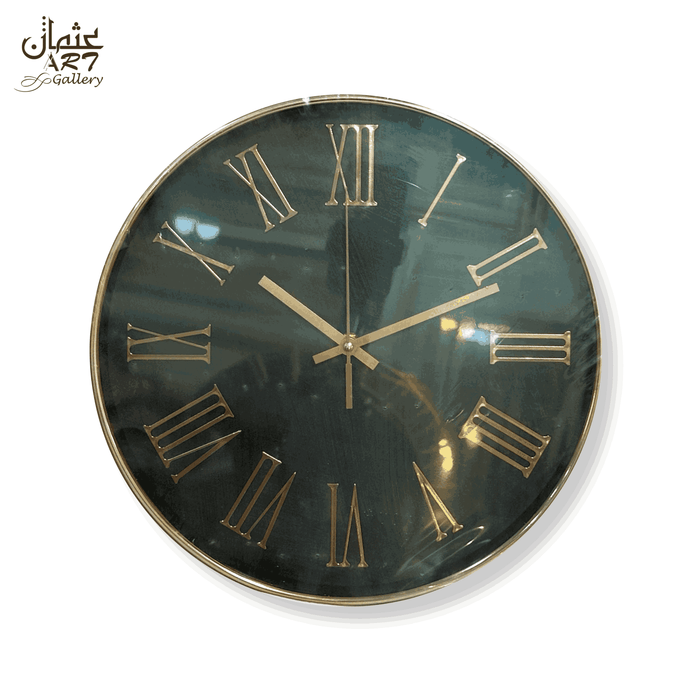
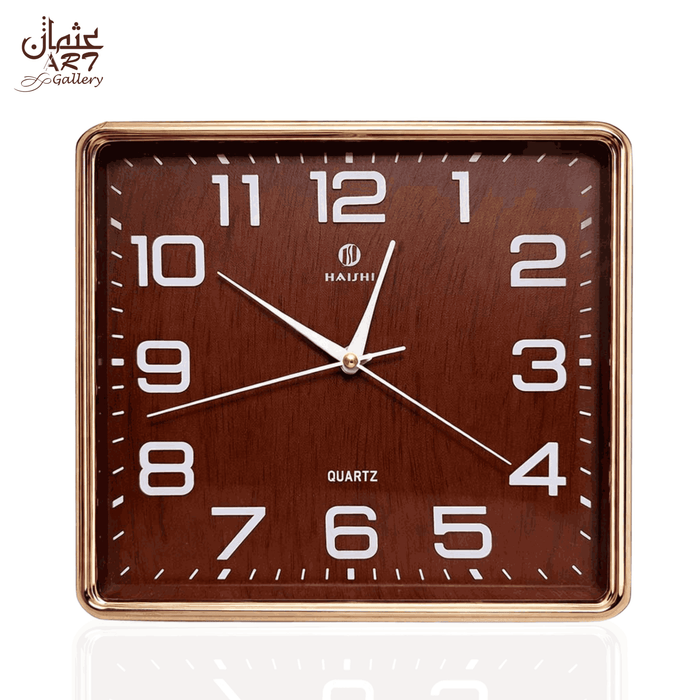
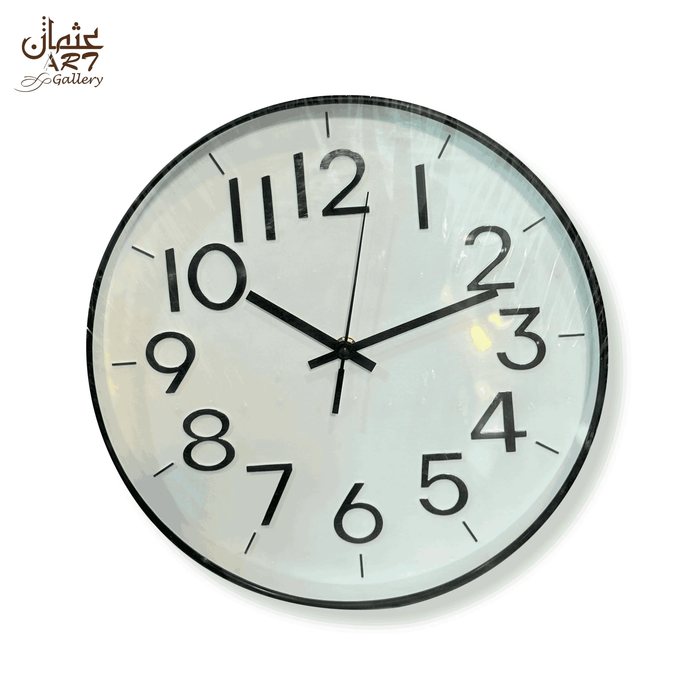
Quartz wall clocks are among the most familiar household clocks, but the word quartz is often misunderstood. Quartz describes the technology regulating the clock's timekeeping. It does not describe the clock's shape, colour or decorative style. A quartz clock can therefore be round, square, minimalist, decorative, analogue, battery powered, or fitted with a continuous sweep movement where that feature is specifically stated.
This guide explains how quartz movement works, how quartz differs from analogue and mechanical terminology, why some quartz clocks tick while others move more smoothly, what to check about batteries, and how to choose suitable sizes and styles. It also compares current WeDecorators quartz wall clocks for shoppers in Pakistan using verified product information rather than assumptions.
Quartz Wall Clocks: Key Takeaways
- Quartz describes the movement technology, not the appearance of the clock.
- An analogue wall clock can use quartz movement because analogue describes the hands and dial.
- Household quartz wall clocks are commonly battery powered, but the exact battery type and quantity should be verified for each product.
- Quartz does not automatically mean silent. Some movements tick while others use smoother sweep or continuous movement.
- Only describe a clock as silent or non-ticking when its specification explicitly says so.
- A straightforward quartz clock may cost less than a large decorative clock because fewer decorative materials and mechanisms are involved.
- Physical dimensions and visual weight both influence how large a clock appears on a wall.
- Visible moving gears do not prove that a clock uses mechanical timekeeping.
- Check current dimensions, movement, sound behaviour, battery requirements and price before ordering.
What Is a Quartz Wall Clock?
A quartz wall clock uses an electronic oscillator regulated by a quartz crystal to create stable timing intervals. An electronic circuit processes those oscillations and the clock mechanism converts the timing signal into the movement needed to display the time.
The process can be simplified into four stages:
- A battery or another power source supplies electrical energy.
- A quartz crystal oscillates at a regular frequency.
- An electronic circuit counts and divides that frequency into useful timing intervals.
- The clock mechanism moves the hands or updates the display.
The National Institute of Standards and Technology explains that quartz clocks commonly use crystals vibrating at 32,768 Hz. Electronic circuitry divides that frequency to produce the timing intervals used by the clock.
The important shopping point is simple. Quartz tells you how time is regulated. It does not tell you what the clock looks like.
How Does Quartz Clock Movement Work?
Quartz has a useful electrical property called the piezoelectric effect. When incorporated into an appropriate electronic circuit, a quartz crystal can oscillate at a highly regular frequency.
Many quartz timekeeping systems use a crystal with a frequency of 32,768 Hz. This number is particularly convenient for electronic timekeeping because it can be repeatedly divided by two until a one-second timing interval is produced.
The clock does not need the shopper to perform any of this calculation. It happens inside the movement.
A simplified quartz wall clock works like this:
Battery → electronic circuit → quartz oscillator → divided timing signal → motor → clock hands
In an analogue quartz wall clock, the timing circuit ultimately controls a small motor and gear train that positions the second, minute and hour hands.
This also explains why quartz and analogue are not competing technologies. The quartz oscillator can regulate the time while an analogue dial and hands display it.
Quartz technology is widely used because a small crystal oscillator can provide practical, stable everyday timekeeping without the winding system associated with traditional mechanical movements. However, movement quality still varies between products. Quartz should therefore be treated as a technology category, not a universal guarantee that every clock performs identically.
The Quartz Clock 5-Part Check
Before comparing quartz wall clocks, separate the product into five characteristics.
1. Movement
Check whether the listing explicitly states quartz movement. Do not identify a movement solely from the appearance of the dial.
2. Display
Determine whether the clock is analogue or digital. An analogue quartz clock uses hands, while a digital quartz clock displays numbers electronically.
3. Sound Behaviour
Look for explicit descriptions such as ticking, sweep, continuous movement, silent or non-ticking. Do not assume the answer from the word quartz.
4. Power
Check battery type, battery quantity and whether batteries are supplied. Decorative moving parts may sometimes have separate power requirements.
5. Size and Style
Finally, compare the exact dimensions, dial readability, colour and decorative weight with the wall where the clock will be installed.
Quartz vs Analogue: What Is the Difference?
Quartz and analogue are not opposites. Quartz describes how a clock regulates time. Analogue describes how the clock displays time, normally through hour and minute hands positioned over a dial.
| Term | What It Describes | Example |
|---|---|---|
| Quartz | Timekeeping technology | Quartz movement |
| Analogue | Display format | Dial with hour and minute hands |
| Battery powered | Energy source | AA battery where specified |
| Silent sweep | Hand movement and sound characteristic | Smoother continuous hand movement |
| Decorative | Visual role | Metallic, gear-inspired or artistic dial |
A single wall clock can therefore be quartz, analogue, battery powered, square and continuous sweep at the same time.
Quartz Wall Clock vs Mechanical Wall Clock
A quartz clock uses an electronic oscillator and circuit to regulate time. A genuine mechanical clock instead uses stored mechanical energy, a gear train and a regulating system such as an escapement working with a pendulum or another oscillator.
| Feature | Quartz Wall Clock | Mechanical Wall Clock |
|---|---|---|
| Time regulation | Quartz crystal oscillator and electronics | Mechanical regulator and escapement |
| Typical household power | Often battery powered | May use a wound spring or weight |
| Routine ownership | Usually straightforward | Depends heavily on movement design |
| Visible gears required? | No | No |
| Can have decorative moving gears? | Yes | Possibly |
| Battery commonly required? | Often | Depends on movement |
| Decorative possibilities | Minimalist to highly decorative | Traditional to decorative |
| Most important verification | Movement, sound and power specification | Actual timekeeping mechanism |
A clock can show moving gears while a separate quartz movement keeps the time. For a deeper explanation, read the mechanical wall clock guide.
Are Quartz Wall Clocks Accurate?
Quartz technology is widely used because quartz oscillators provide stable, practical everyday timekeeping relative to their cost and size. NIST explains that common quartz clocks use a high-frequency crystal oscillator and electronically divide that frequency into timing intervals.
That does not mean every consumer quartz movement keeps identical time.
Practical performance can be influenced by:
- crystal tolerances;
- movement and circuit quality;
- battery condition;
- temperature;
- manufacturing variation;
- age or damage to the movement.
For that reason, avoid treating “quartz” as a promise of perfect accuracy. It identifies the basic timekeeping technology.
Are Quartz Wall Clocks Silent?
Not necessarily. Quartz describes how the clock regulates time. It does not by itself describe how much sound the movement produces.
Step or Ticking Quartz Movement
Many analogue quartz clocks advance the second hand in visible steps. Depending on the movement and room environment, this can produce a noticeable recurring tick.
Continuous or Sweep Quartz Movement
Other quartz movements move the second hand more smoothly. These are commonly described as sweep or continuous movements and may produce less noticeable ticking.
Even then, the correct approach is to rely on the product specification. A clock should only be described as silent when the manufacturer or seller explicitly confirms that characteristic.
| Movement Description | Typical Visual Behaviour | Sound Expectation | What to Verify |
|---|---|---|---|
| Standard quartz | Often stepped | May tick | Movement specification |
| Sweep quartz | Smoother second-hand movement | May be quieter | Whether silence is explicitly claimed |
| Silent continuous movement | Smooth movement | Designed for low-noise operation | Explicit manufacturer or seller specification |
| Quartz with moving decorative gears | Hands plus rotating decorative elements | More than one potential noise source | Clock movement and gear motor separately |
Are Quartz Wall Clocks Battery Operated?
Most household quartz wall clocks are commonly battery operated because the oscillator, circuit and motor need only a modest electrical power source. However, the phrase quartz wall clock does not reveal the exact battery specification.
Before ordering, check:
- battery size;
- number of batteries;
- whether batteries are included;
- whether decorative gears require separate batteries;
- how easily the battery compartment can be accessed after mounting.
An AA battery is common in wall-clock movements, but it should never be assumed for a particular product unless the listing confirms it.
Benefits of Quartz Wall Clocks
Reliable Everyday Timekeeping
Quartz regulation is well suited to everyday domestic and office use because a stable electronic oscillator controls the timing process.
Easy Ownership
A conventional battery-operated quartz clock generally requires little day-to-day attention beyond checking the time and replacing its battery when required.
Broad Price Range
Quartz movements appear in straightforward budget-friendly clocks as well as larger decorative products. Movement type alone does not determine the final price.
Wide Range of Designs
Quartz technology can sit behind minimalist white dials, black contemporary clocks, square office clocks, round designs and decorative gear-style faces.
Compact Options
Quartz movements can be housed inside relatively compact designs, making them practical for kitchens, studies, bedrooms and office corridors.
Analogue Readability
A clear analogue quartz dial can make checking the time quick from across a room, particularly when numerals and hands contrast strongly with the background.
Limitations to Consider
- Battery replacement: battery-powered models eventually require replacement batteries.
- Possible ticking: quartz does not guarantee silent operation.
- Movement quality varies: not every quartz mechanism performs identically.
- Simple models may have less visual presence: basic clocks may prioritise function rather than decoration.
- Compact clocks can disappear on wide walls: physical scale still matters.
- Quartz does not mean premium quality: movement technology is only one component of the complete product.
Main Quartz Wall Clock Styles
Minimalist White Quartz Wall Clocks
A white dial with simple black markers produces a light visual footprint and strong contrast. This approach works particularly well in kitchens, offices, studies and restrained contemporary rooms.
Black Quartz Wall Clocks
Black clocks create greater visual contrast on white, cream and lighter neutral walls. Bold numerals can also improve legibility when the dial design remains uncluttered.
Square Quartz Wall Clocks
A square clock introduces stronger geometry than the conventional circular dial. Compact square clocks can work particularly well above desks, on kitchen walls or in office corridors.
Round Quartz Wall Clocks
The round dial remains highly versatile. Depending on its frame, numerals and finish, it can look practical, contemporary, traditional or highly decorative.
Decorative Moving-Gear Quartz Clocks
Moving gears do not automatically make a clock mechanically regulated. A quartz movement can control the hands while visible gears rotate separately for decoration.
This distinction matters whenever exposed gears appear in product photography. Verify both the timekeeping movement and the role of the visible gears.
| Quartz Style | Visual Character | Suitable Rooms | Useful Wall Colours | Main Buying Check |
|---|---|---|---|---|
| Minimal white | Light and restrained | Kitchen, study, office | Grey, beige, coloured walls | Marker readability |
| Black | Higher contrast | Living room, office | White, cream, light grey | Dial contrast |
| Square | Structured geometry | Office, kitchen, bedroom | Most neutral schemes | Exact width and height |
| Round | Familiar and versatile | Most rooms | Depends on finish | Diameter |
| Moving gear | More visual activity | Living room, reception | Plain backgrounds often work well | Gear behaviour and power |
If you want to compare these styles with decorative and statement designs, browse the WeDecorators wall clock collection.
How to Choose the Right Quartz Wall Clock Size
Do not choose a clock solely because its price and colour look right. Check its actual dimensions against the intended wall.
Consider:
- available wall width;
- width of the sofa, console or desk below;
- normal viewing distance;
- numeral size;
- surrounding artwork or shelves;
- frame thickness;
- visual complexity.
A compact clock can work well in a kitchen or study but appear undersized on a large living-room feature wall. Conversely, a visually dense clock can feel larger than its measurements suggest.
For a more detailed process, use the wall clock size guide.
Functional Size vs Decorative Presence
Two clocks with similar measurements can create very different visual weight.
| Clock Characteristic | Likely Visual Effect |
|---|---|
| Thin white frame | Visually lighter |
| Black dial | Stronger contrast |
| Square shape | More structured appearance |
| Large numerals | Greater readability from distance |
| Moving decorative gears | Greater visual activity |
| Minimal markers | Cleaner appearance |
Measure the clock physically, then consider its decorative presence separately.
Best Quartz Clock Style by Room
| Room | Priority | Suggested Quartz Style | Sound Consideration | Size Consideration |
|---|---|---|---|---|
| Bedroom | Low distraction | Clear minimalist or square clock | Verify silent or sweep specification | Avoid overwhelming the wall |
| Living room | Scale and decoration | Round, black or decorative quartz | Usually secondary to design, unless room is very quiet | Consider furniture width and viewing distance |
| Kitchen | Fast readability | Simple analogue quartz | Usually moderate priority | Compact but visible from work areas |
| Study | Readability with minimal distraction | Square or minimalist | Low-noise movement useful | Desk-scale wall section |
| Office | Visibility | High-contrast analogue clock | Depends on room use | Readable from normal working distance |
| Hallway | Proportion | Compact round or square clock | Usually lower priority | Avoid excessive projection or width |
Which Wall Colours Work With Quartz Clocks?
| Wall Colour | Useful Clock Finish | Typical Effect |
|---|---|---|
| White | Black, copper, black/gold | Clear contrast |
| Cream | Black, copper, warm metallic | Warm contrast |
| Beige | Black, dark grey, copper | Defined focal point |
| Grey | White, black, chrome | Contemporary neutral pairing |
| Charcoal | White, chrome, light metallic | High visibility |
| Navy | White, gold, copper | Strong light-dark contrast |
| Green | White, black, warm metallic | Depends on shade and surrounding décor |
These are starting points rather than fixed rules. Existing furniture, lighting, floor finishes and nearby décor can change how the same clock appears.
Four WeDecorators Quartz Wall Clocks to Compare
The following comparison uses live WeDecorators information checked on 29 August 2026. Missing specifications are shown as not specified rather than inferred.
| Product | Size | Shape | Colour | Movement | Sound | Special Feature | Best Fit |
|---|---|---|---|---|---|---|---|
| White Quartz | Not specified. “Standard” listed | Not formally specified | Several white, black, gold and grey combinations listed | Quartz | Not specified | Minimal white-background styling | Simple contemporary interiors |
| Black Quartz | Not specified. “Standard” listed | Not specified | White and Black variants | Quartz | Not specified | Bold numerals and glossy styling | Higher-contrast interiors |
| Haish Square Quartz | 12 × 12 inches edge to edge | Square | White, dark/black and Copper | Quartz | Silent continuous sweep stated | Fibre frame and bold analogue numerals | Bedroom, study, kitchen or office |
| Round Quartz | Unconfirmed. “Small” listed | Round | Specification conflict | Quartz stated in description | Not specified | Moving gears claimed in description but should be reconfirmed | Decorative use after specification confirmation |
White Quartz
The White Quartz wall clock is currently the simplest option in this group. Its live description identifies a white background, slim black markers and quartz movement. Its current displayed price is Rs.3,499.
The page lists the dimension only as “Standard”, so an exact inch measurement should not be published until WeDecorators adds one. Silence and battery type are also not currently specified.
Black Quartz
The Black Quartz clock currently costs Rs.3,499 and is described with bold numerals and a glossy finish. White and Black colour variants are shown.
Again, dimensions are listed only as “Standard”. The product should not be described as silent, non-ticking or AA-powered without additional verification.
Haish Square Quartz Wall Clock
The Haish Square Quartz Wall Clock currently has the clearest specification of the four.
Its page lists:
- 12 × 12-inch edge-to-edge dimensions;
- quartz movement;
- square analogue display;
- fibre frame;
- bold numerals;
- White, dark and Copper variants;
- silent continuous sweep movement.
This makes it the strongest current WeDecorators option for a shopper specifically seeking a compact quartz clock with an explicitly stated low-noise movement. Its current displayed price is Rs.4,499.
Round Quartz
The Round Quartz clock requires additional specification work before its decorative details should be used confidently.
The live description currently refers to a round black-and-gold quartz clock with exposed moving gears. However, the product's variant fields show black/white and green/white combinations, while size is listed only as “Small”.
Because these fields conflict, colour, exact size and gear behaviour should be treated as unconfirmed until the listing is corrected.
Which WeDecorators Quartz Clock Should You Choose?
Choose White Quartz If...
You want a relatively simple quartz design and prefer a lighter, restrained visual appearance. Confirm its exact measurements before ordering.
Choose Black Quartz If...
You want stronger contrast and bold numeral styling for a lighter wall. Do not assume silent movement because that specification is not currently stated.
Choose Haish Square If...
You want confirmed 12 × 12-inch dimensions and specifically value the product page's stated silent continuous sweep movement.
Choose Round Quartz If...
You like a more decorative round format but are willing to confirm colour, size and moving-gear specifications before ordering. The current listing contains conflicting information.
Affordable Quartz Wall Clocks
Affordable wall clocks should be judged by whether their features match the buyer's requirements at a sensible cost, not simply by which product has the lowest number on the price tag.
A straightforward quartz clock may cost less than a large resin or moving-gear design because the buyer is paying for fewer decorative materials and mechanisms. That does not make every quartz clock inexpensive, nor does it mean a cheaper model is automatically better value.
If the priority is simply clear time display for a kitchen, bedroom, study or office, spending more for complex decorative construction may provide little practical benefit. Conversely, a living-room feature wall may justify spending more for additional scale or visual character.
For broader pricing information, see the wall clock price in Pakistan guide.
Quartz Wall Clock Price in Pakistan
The price of a quartz wall clock in Pakistan can vary according to far more than the movement alone.
Important price drivers include:
- size;
- movement quality;
- frame construction;
- dial materials;
- numeral treatment;
- silent or sweep movement where specified;
- decorative mechanisms;
- finish;
- seller;
- import status where confirmed;
- current promotions.
On 29 August 2026, the supplied WeDecorators quartz examples were displayed between Rs.3,499 and Rs.4,499. These prices can change, so they should be checked on the relevant product page before purchase rather than treated as permanent pricing.
How to Buy a Quartz Wall Clock in Pakistan
Buying wall clocks online is easier when each listing is checked in the same order.
- Dimensions: find exact width and height or diameter.
- Movement: confirm quartz is explicitly stated.
- Display: determine whether it is analogue or digital.
- Battery: check type and quantity.
- Sound: look for explicit ticking, sweep or silent information.
- Readability: assess numerals, markers and contrast.
- Colour: compare the actual variant with your room.
- Frame: check stated material where available.
- Mounting: confirm installation requirements.
- Price: check the current PKR amount rather than an old screenshot.
- Availability: verify the selected variant can be ordered.
- Delivery: review current delivery information.
- Returns: read current return or replacement conditions.
- Machine replacement: check whether movement-related support applies.
For broader ecommerce guidance, see the guide to buying wall clocks online in Pakistan.
Quartz Clock Buying Checklist
- ☐ Quartz movement is explicitly specified.
- ☐ I know whether the display is analogue.
- ☐ I checked whether the movement ticks or sweeps.
- ☐ I know the required battery type.
- ☐ I checked whether batteries are included.
- ☐ I know the exact dimensions.
- ☐ The numerals or markers are readable.
- ☐ The finish suits the wall colour.
- ☐ The size suits the furniture below.
- ☐ I checked the current PKR price.
- ☐ I checked delivery information.
- ☐ I checked current return and replacement terms.
Common Quartz Wall Clock Buying Mistakes
1. Assuming quartz means silent
Correction: check for an explicit silent, sweep or non-ticking specification.
2. Confusing quartz with analogue
Correction: remember that quartz describes movement while analogue describes display.
3. Assuming every quartz clock uses the same battery
Correction: verify battery type and quantity for the individual model.
4. Buying without checking dimensions
Correction: compare measured dimensions with the intended wall before ordering.
5. Choosing solely by lowest price
Correction: compare readability, movement, sound, size and construction as well.
6. Ignoring wall contrast
Correction: make sure the dial and hands remain legible against the surrounding colour scheme.
7. Buying a compact clock for a very wide feature wall
Correction: evaluate the clock's visual scale relative to furniture and available wall space.
8. Assuming moving gears prove mechanical timekeeping
Correction: check which mechanism actually controls the hands.
9. Ignoring battery accessibility
Correction: consider how easily batteries can be replaced after mounting.
10. Ignoring sound behaviour in bedrooms and studies
Correction: prioritise an explicitly verified low-noise movement where sound sensitivity matters.
11. Assuming all quartz movements perform identically
Correction: movement quality and operating conditions can differ.
12. Estimating physical size from product photography
Correction: use stated measurements. Lifestyle images can distort perceived scale.
How to Care for a Quartz Wall Clock
Routine care is generally simple.
- Use the battery specification recommended for the clock.
- Replace depleted batteries when necessary.
- Keep battery contacts dry and clean.
- Dust the frame and dial exterior with a soft microfibre cloth.
- Avoid allowing cleaning liquid to enter the movement.
- Clean glass or clear covers carefully using an appropriate method for the material.
- Do not dismantle the clock movement unnecessarily.
- Follow seller or manufacturer guidance if the movement develops a fault.
Frequently Asked Questions About Quartz Wall Clocks
What is a quartz wall clock?
A quartz wall clock uses an electronic oscillator regulated by a quartz crystal to control timekeeping. An electronic circuit processes the crystal's regular oscillations and the movement uses those timing signals to operate the clock display.
How does a quartz wall clock work?
Electrical energy powers a circuit containing a quartz crystal oscillator. The oscillator produces a regular frequency, which the circuit divides into useful time intervals. In an analogue quartz clock, those intervals ultimately control a motor that moves the hands.
Are quartz wall clocks accurate?
Quartz technology generally provides stable and reliable everyday timekeeping. However, performance differs between movements and can be influenced by crystal tolerance, temperature, battery condition and manufacturing quality. Quartz should not be treated as a guarantee that every clock has identical accuracy.
Are quartz wall clocks silent?
No. Some quartz movements produce an audible tick as the second hand advances. Others use sweep or continuous movement designed to operate more quietly. Only call a specific quartz clock silent when the product specification explicitly confirms it.
Do quartz wall clocks use batteries?
Household quartz wall clocks are commonly battery powered, but battery requirements vary. Always check the product listing for battery type, quantity and whether batteries are supplied.
What battery does a quartz wall clock use?
AA batteries are common in household wall-clock movements, but quartz technology does not require every product to use the same battery. Some clocks, particularly designs with separate decorative mechanisms, may have different or additional requirements.
What is the difference between quartz and analogue clocks?
Quartz describes the timekeeping technology. Analogue describes a display that uses hands positioned around a dial. A clock can therefore be both quartz and analogue at the same time.
What is the difference between quartz and mechanical clocks?
A quartz clock uses an electronically regulated quartz oscillator. A genuine mechanical clock uses stored mechanical energy, gears and a regulating mechanism. Visible gears alone do not establish whether the timekeeping movement is mechanical.
What is a silent sweep quartz clock?
A silent sweep quartz clock uses a movement designed to make the second hand move more smoothly rather than advancing through prominent one-second steps. The term “silent” should still be taken from the actual product specification rather than assumed from the word sweep.
Are quartz wall clocks affordable?
Many straightforward quartz clocks sit at relatively accessible price points because they do not require elaborate decorative construction. However, quartz movement also appears in larger and more decorative products, so movement type alone does not determine whether a clock is inexpensive.
What size quartz wall clock should I buy?
Choose according to the available wall, furniture width, viewing distance and dial readability. A compact clock may work well in a kitchen or study but look lost on a wide living-room wall. Always check actual dimensions rather than judging size from photographs.
Where can I buy quartz wall clocks in Pakistan?
Quartz wall clocks are available through Pakistani marketplaces and specialist home décor retailers. When ordering online, compare exact dimensions, movement, sound specification, battery requirements, current PKR price, delivery information and return terms before choosing a model.
Final Thoughts
Quartz wall clocks make more sense once their specifications are separated clearly. Quartz describes the timekeeping movement. Analogue describes a display with hands. Battery powered describes the energy source. Sweep and ticking describe movement behaviour, while minimalist, square, round and decorative describe the clock's visual character.
That distinction prevents several common buying mistakes. Do not assume a quartz clock is silent. Do not assume every model uses one AA battery. Do not assume visible moving gears make a clock mechanically regulated. Most importantly, do not estimate the size of a clock from photography when actual measurements are available.
For Pakistani shoppers, the most useful comparison is therefore not simply quartz versus non-quartz. Compare movement, display, sound, battery requirements, dimensions, readability, room suitability and current price together.
Once you know those requirements, you can explore current wall clock designs from WeDecorators and verify the live specification of the model that best matches your wall.


